Trump's Unhinged Rants Expose a Leader Losing Control of His Own War
Trump's Unhinged Rants Show Leader Losing War Control

Trump's Unhinged Rants Expose a Leader Losing Control of His Own War

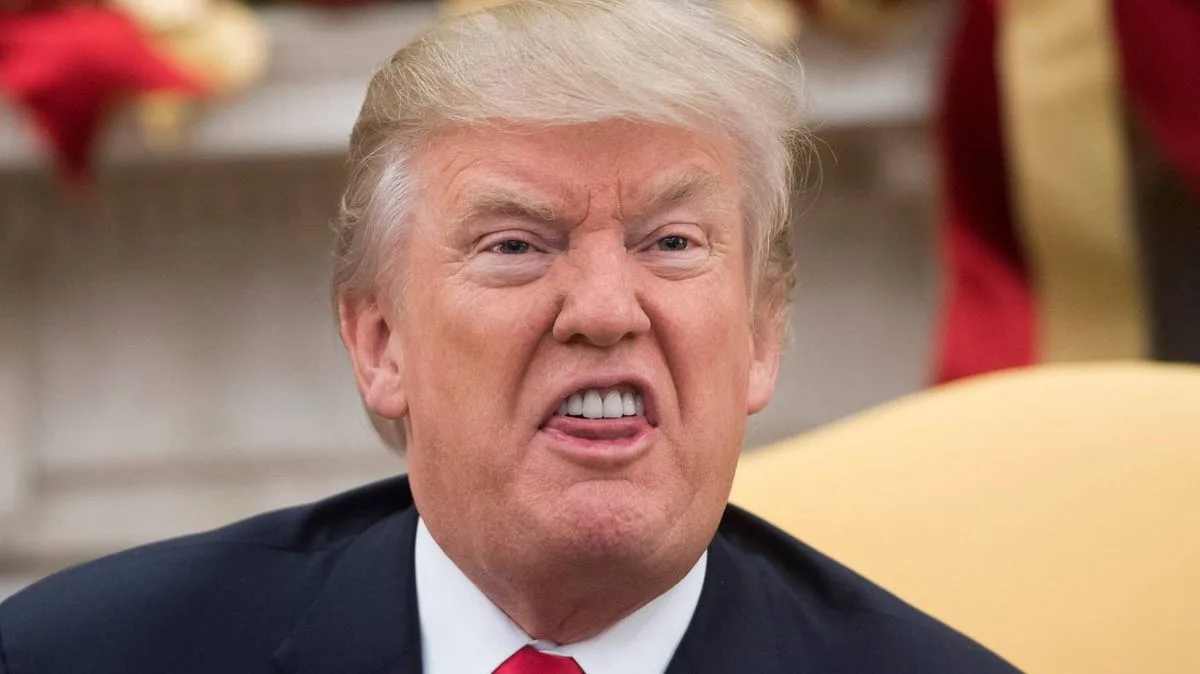
The words are not merely shocking. They are profoundly unhinged. "Power Plant Day… Bridge Day… Open the f***in' Strait… you crazy b*******… or you'll be living in Hell." This expletive-laden tirade, posted in a frenzied social media outburst, reads less like the measured voice of the leader of the free world and more like the rant of a barroom bully spoiling for a physical confrontation.

Yet this is Donald Trump, the President of the United States, broadcasting directly to the global community. This disturbing communication represents what American leadership has tragically become under his chaotic administration. The post lays bare something far more dangerous than mere political bluster. It reveals a man visibly losing control of international events, of coherent military strategy, and increasingly of his own emotional stability and public composure.

A President Flailing as His War Spirals Out of Control

Donald Trump is not projecting strength or decisive command. He is flailing desperately, lashing out verbally as the severe consequences of a Middle Eastern war he recklessly and needlessly escalated begin to close in around him from all sides. This is the stark truth his administration can no longer hide or effectively spin. The self-proclaimed "Escalator-in-Chief" has now backed himself into a perilous geopolitical corner from which there exists no simple or face-saving escape route.

Wide Pickt banner — collaborative shopping lists app for Telegram, phone mockup with grocery list

His options have narrowed to two deeply flawed paths. Either he follows through on his violent threats, escalating the regional conflict further and risking a catastrophic war that could engulf the entire Middle East while sending destructive shockwaves across the global economy and security landscape. Or he backs down yet again, declares some hollow, manufactured "victory," and in doing so, exposes the complete emptiness and fragility of his own aggressive rhetoric for the entire world to see. Neither path demonstrates strength. Both represent significant strategic and diplomatic failures.

The Bully's Playbook Fails on the World Stage

For a man who meticulously built his public image on notions of dominance and intimidation, this situation represents the ultimate political and strategic trap. Trump has spent an entire lifetime bullying his way through complex problems, relying on threats, coercion, financial payoffs, and theatrical walkaways. That approach may have provided short-term gains in volatile business deals and reality television theatrics. It catastrophically fails on the intricate and high-stakes world stage of international diplomacy and warfare.

Iran is not a contractor to be intimidated. The Middle East is not a corporate boardroom to be cleared with a raised voice and a signed cheque. Confronted with this immutable reality, Trump is resorting to the only playbook he genuinely knows and understands: escalate the violent language, raise the geopolitical stakes recklessly, and desperately hope the opposing side blinks first out of fear. However, this is not a game. The language itself should alarm every rational observer paying attention.

  • The profanity is unprecedented for a sitting U.S. president.
  • The threats are crude and explicitly violent.
  • The embedded Islamophobia of phrases like "Praise be to Allah" dropped into a tirade aimed at a Muslim nation reeks of profound ignorance at best and something far uglier and more divisive at worst.

This communication is not diplomacy. It is pure provocation wrapped in the language of mockery and explicit menace. It is profoundly beneath the dignity of the office he holds. More critically, it is actively dangerous. Because words from the President of the United States carry immense global weight. They signal strategic intent. They shape international perceptions. They possess the power to calm a burgeoning crisis or inflame it into an uncontrollable conflagration. In this critical instance, Trump has deliberately and repeatedly chosen to inflame.

Pickt after-article banner — collaborative shopping lists app with family illustration

A Pattern of Instability Amidst Soaring Stakes

This is not an isolated verbal outburst. It fits a deeply concerning pattern that is becoming impossible for allies and analysts to ignore. Trump rose to political power in part by viciously attacking his predecessor, Joe Biden, over perceived mental fragility, weaponising age in a manner many found grotesque yet politically effective in the moment. He tirelessly painted himself as the strong, decisive, and stable alternative.

Now, that very question is being asked in earnest about Trump himself. Because social media posts of this nature do not project strength or stability. They suggest profound emotional and strategic instability. They suggest a leader utterly untethered from the grave gravity of the moment, someone who treats the spectre of war like a television spectacle and deadly threats like crude punchlines. Even his most loyal political sycophants must privately be questioning where this reckless trajectory is ultimately heading.

Meanwhile, the real-world stakes could not conceivably be higher. American troops are already in direct harm's way on the ground. The conflict shows signs of spreading geographically. Global financial markets are jittery and volatile. Long-standing allies are deeply uneasy and privately alarmed. Adversaries are watching closely for signs of weakness. And at the volatile centre of it all stands a man issuing threats that sound less like coherent strategy and more like a dangerous, impulsive dare. This is precisely how regional crises spiral into global catastrophes.

The Damning Reality of Self-Inflicted Crisis

The most damning strategic reality is this: Donald Trump created this perilous moment through his own choices. He deliberately chose military escalation over diplomatic restraint. He opted for confrontation over strategic clarity. Now, possessing no clear endgame or exit strategy, he is improvising dangerously in public view, and the entire international community is left to manage the potentially catastrophic consequences.

  1. This raises a fundamental question that can no longer be avoided by the American political establishment.
  2. At what critical point does the United States decide that enough is truly enough?
  3. Because this behaviour is not normal presidential conduct.
  4. It is not acceptable for a global superpower.
  5. It is not sustainable for international security.

The United States of America is not meant to be governed in this manner, with critical foreign policy dictated by erratic social media rants and threats that read as if they belong graffiti on a pub wall rather than in the annals of serious global diplomacy. There is simply too much at stake for the entire world.

The international community is watching a president who appears increasingly boxed in by his own rhetoric, increasingly desperate for a victory he cannot achieve, and increasingly volatile in his communications. A man who explicitly promised to end foreign wars now appears tragically trapped in one of his own making, with no clear pathway out and no demonstrable sign he comprehends the profound danger he is actively fuelling with every tweet and post.

History will judge this moment harshly. But the urgent question for America and its institutions is whether the nation is prepared to act decisively before that final historical judgment is irrevocably written. Because leaving a situation of this magnitude and volatility to simply run its chaotic course is not an exhibition of strength. It is a profound abdication of leadership responsibility. And the ultimate cost, in lives and global stability, could be nothing short of catastrophic.