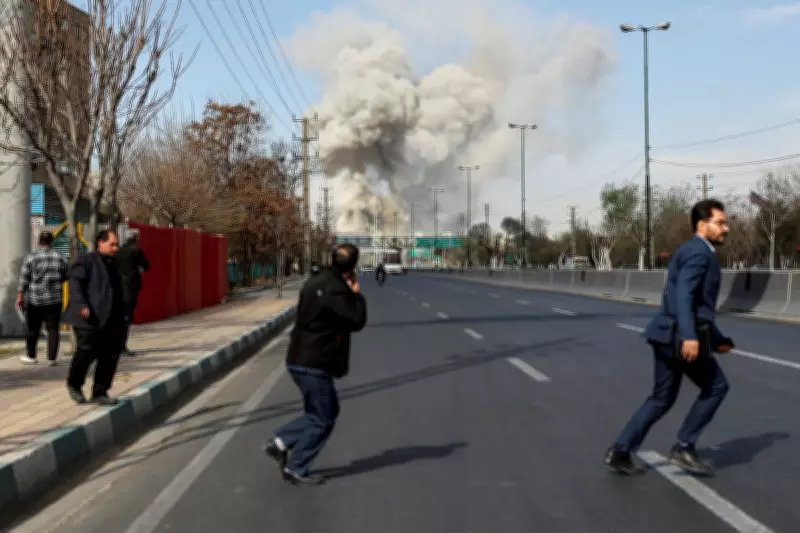
Trump's Iran Conflict Escalates Across 14 Nations, Plunging Middle East Into Crisis
The burgeoning conflict in the Middle East, significantly intensified by the Trump administration's military actions against Iran, has now expanded its devastating reach to fourteen countries, creating a regional crisis of unprecedented scale. As the conflict enters its seventh day, Israel has ramped up its offensive operations in Lebanon, forcing thousands of civilians to evacuate their homes amid escalating violence.
Widespread Regional Attacks and Casualties
Iran has launched retaliatory strikes against multiple nations across the region, targeting both military and civilian infrastructure. Hundreds of missiles and drones have struck locations in the United Arab Emirates, Saudi Arabia, Oman, Bahrain, Kuwait, and Qatar, severely damaging regional stability and leaving thousands of international travelers stranded abroad. Civilian targets including hotels and airports throughout the Gulf region have sustained significant damage from these attacks.
Defense Secretary Pete Hegseth has declared that the United States has "only just begun" its military engagement in the Iran conflict, with President Donald Trump asserting in an NBC interview that the pace and intensity of U.S. strikes will continue unabated. Trump emphasized his objective to "go in and clean out everything" to facilitate leadership change in Iran.

International Military Responses
European nations have been compelled to respond to the expanding conflict. Britain has deployed a destroyer to Cyprus following a drone strike on the RAF Akrotiri airbase, while France announced it would send the Charles de Gaulle aircraft carrier to the Mediterranean in response to what it termed an 'unstable situation' developing in the region.
The conflict has triggered defensive actions across multiple nations. Air defense systems in Azerbaijan and near Turkey have been activated, while Sri Lankan naval authorities are working to prevent further attacks in their waters after a U.S. submarine sank an Iranian frigate, resulting in at least 87 casualties.
Country-Specific Impacts and Casualties
Iran: U.S.-Israeli attacks have targeted numerous military sites and government buildings across Iran, including the office of Iran's supreme leader in Tehran where Ayatollah Khamenei was killed. The Iranian Red Crescent reports at least 1,045 fatalities, though it remains unclear whether this figure includes Islamic Revolutionary Guard Corps military casualties. According to the U.S.-based Human Rights Activists News Agency, civilian deaths in Iran total 1,168, including 194 children under 18. A particularly devastating strike on a girls' elementary school in Minab killed at least 165 people, many of them schoolgirls, prompting outrage from human rights organizations and calls for investigation from the United Nations.
Israel: Iranian military responses have included missile and drone attacks on Israel, striking civilian targets according to Israeli authorities. At least 10 people have been killed, including nine in Beit Shemesh after a missile evaded Israeli air defenses. Prime Minister Benjamin Netanyahu visited the attack site, while Iranian President Masoud Pezeshkian stated that avenging the U.S.-Israeli attacks represented Iran's "legitimate right and duty."
Lebanon: Israeli military strikes on Lebanon, including the capital Beirut, have intensified throughout the week following rocket attacks by Iran-backed Hezbollah militants. The Lebanese health ministry reports 123 fatalities and 683 injuries resulting from Israeli attacks, with no reported Israeli fatalities from Hezbollah attacks. Israel has issued evacuation orders for southern Beirut after entering southern Lebanon and displacing thousands of villagers.

Gulf Nations: Multiple attacks have struck various Gulf countries. The U.S. embassy in Riyadh, Saudi Arabia, was hit by two drones causing limited fire, while the Duqm commercial port in Oman sustained drone attack damage. In Qatar, authorities reported shooting down two Iranian aircraft, seven ballistic missiles, and several unmanned drones after multiple attacks on Doha. Bahrain experienced missile attacks on the U.S. Navy's 5th Fleet service center and residential buildings in Manama. The UAE reported several strikes, including one fatality and multiple injuries at Zayed International Airport and damage to Dubai's Palm Hotel.
Cyprus: The United Kingdom confirmed that strikes hit the RAF Akrotiri airbase, targeting its runway, with two additional drones intercepted on Monday. Britain has deployed a warship and helicopters equipped with counter-drone technology to defend the base.
Turkey: NATO air and missile defenses in the eastern Mediterranean shot down an Iranian ballistic missile traveling toward Turkey, which Turkish officials stated had veered off course from an unspecified military target in Cyprus. Turkey has called for restraint to prevent further escalation.
Sri Lanka: An American submarine sank the Iranian frigate Iris Dena off Sri Lanka's southern coast, thousands of miles from the Gulf region. Hospital authorities in Galle reported 87 bodies recovered, with 32 survivors receiving treatment and approximately 60 people unaccounted for from an estimated 180 crew members.
Azerbaijan: Four Iranian drones crashed into a school and airport in Azerbaijan, injuring at least four people. Authorities in Nakhchivan, near the Iranian border, reported a drone collision with an airport terminal building causing significant explosion damage, with the government vowing the attack would "not remain unanswered."
Escalating Military Operations
U.S. Central Command reports its navy has destroyed 30 Iranian ships, increased from 20 reported previously. Admiral Brad Cooper stated that the United States had struck nearly 200 targets inside Iran within the last 72 hours alone. The weekend attacks represent the second combined U.S.-Israeli strikes against Iran in eight months, following a 12-day war in June 2024 that significantly weakened Iran's air defenses, military leadership, and nuclear program.
As the conflict shows no signs of abating, the international community faces mounting concerns about further escalation and the humanitarian consequences affecting multiple nations across the Middle East and beyond.