Trump's 'Regime Capture' Strategy for Iran Meets Skepticism from Analysts
Donald Trump has expressed a desire to apply his "regime capture" model, recently executed in Venezuela, to Iran following the death of its supreme leader, Ayatollah Ali Khamenei. However, experts caution that replicating this approach in Tehran presents significant challenges due to Iran's long-standing ideological hostility towards the United States and its complex political landscape.
Historical Context and Diplomatic Rupture
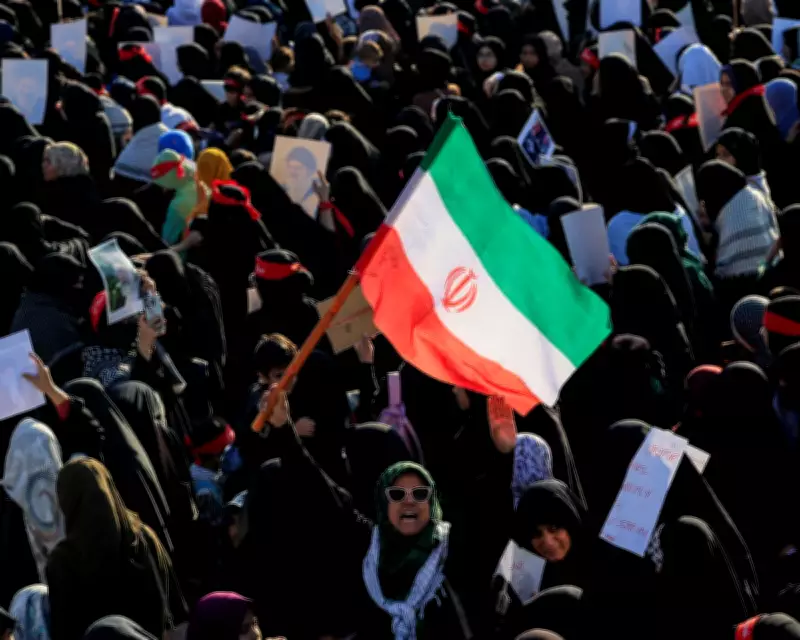
Iran has maintained no diplomatic relations with the US since 1980, when ties were severed after revolutionaries stormed the US embassy in Tehran and took hostages. This contrasts sharply with Venezuela, where diplomatic links persisted until 2019. The Iranian populace has historically viewed the US as an ideological adversary, with anti-American sentiment embedded in the regime's foundations since the 1979 revolution.
Expert Analysis on Feasibility
Benjamin Gedan, a former White House national security council staff director, noted that "turning Iran into a pliable kind of puppet regime is much less practical than in Venezuela." He emphasized that Venezuela's government had prior inclinations to cooperate with the US, whereas Iran's deep-seated antipathy complicates such efforts. Alex Vatanka of the Middle East Institute described Trump's involvement in choosing Iran's next leader as "beyond delusional," questioning the viability of imposing a Venezuela-style scenario.

Internal Dynamics and External Influence
The real power in selecting Iran's successor lies with the Revolutionary Guards, which controls military and economic sectors. Naysan Rafati, a senior Iran analyst, suggested that while the US and regime insiders might share an interest in continuity, this could alienate Iran's population, still reeling from recent protests. He warned that "finding enough voices within the regime to accept change" is a major hurdle.
Comparative Challenges with Venezuela
Trump's strategy in Venezuela involved minimal US military engagement, leading to the installation of a pro-US leader. However, experts highlight that Iran is better armed and geographically distant, making similar interventions riskier. Gedan added that it is premature to deem the Venezuela strategy a long-term success, as autonomy might reassert itself over time.
Conclusion: A Daunting Prospect
In summary, while Trump envisions extending his "decapitate and delegate" approach to Iran, analysts unanimously point to historical animosities, internal resistance, and geopolitical realities as formidable obstacles. The path to regime change in Iran appears far more intricate and uncertain than in Venezuela.