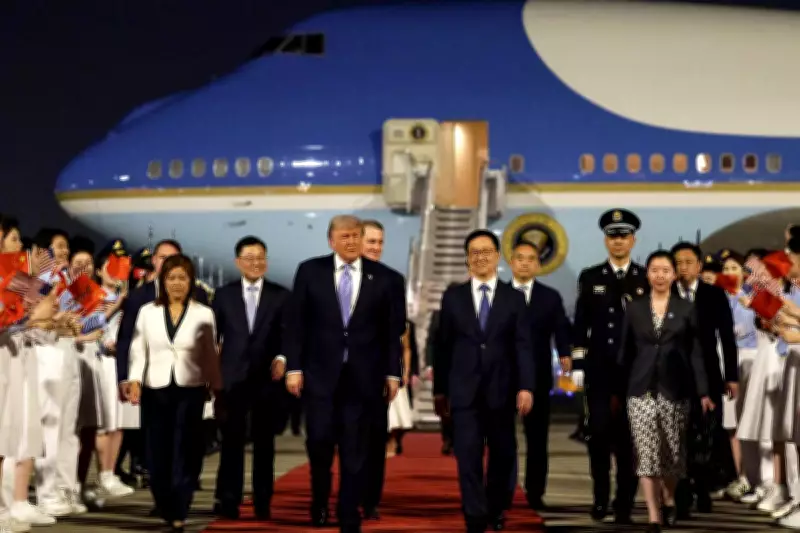
President Donald Trump's state visit to the People's Republic of China, accompanied by a billionaire entourage, marks a pivotal moment in global geopolitics. The first high-level meeting between the "G2" superpowers in nearly a decade underscores who now runs the planet, as almost half of global GDP is accounted for by these two nations. No conflict on Earth fails to affect their interests, and the future of climate change, artificial intelligence, and the war in Iran hinges on their relationship.
Historic Meeting After Years of Tension
This summit is the first such encounter since President Trump hosted Xi Jinping at Mar-a-Lago in 2017. It is considered one of the most consequential since Richard Nixon's historic trip to see Chairman Mao in 1972, which ended decades of open hostility. While the golden age of Sino-American relations may have passed as China challenges US hegemony, there are hopes for rapprochement.
Iran Crisis at the Forefront
The most pressing issue is Trump's war of choice with Iran. China, which relies on the Gulf region for nearly half its oil supply and imports 12% from Iran, is directly affected by the US Navy blockade of Iranian ports. Beijing has condemned the policy as "irresponsible and dangerous," warning it could undermine a fragile ceasefire. The blockade also prevents Tehran from obtaining military supplies from China, which, along with Russia, has supported the theocratic regime. President Xi is well-positioned to pressure Iran into a settlement before the war harms China's economy.

Energy and Economic Stakes
China's plentiful reserves of oil and domestic coal have shielded it from the worst of the energy crisis, but not indefinitely. President Trump faces a choice: maintain his blockade and absolutist stance on Iran's peace proposals, risking a global economic slump, or enlist Xi to broker a deal via Pakistan to end the immediate crisis and open talks on nuclear weapons. Tehran would likely accept such a deal, allowing Trump to pose as a statesman, albeit sharing credit with Xi for reopening the Strait of Hormuz.
Economic Integration and Trust Issues
The US delegation includes Tesla's Elon Musk and Apple's Tim Cook, promising closer industrial and technological integration to build trust and defuse tensions. This is urgent after Trump's tariff war with China last year, which saw retaliation from Xi and a US Supreme Court ruling voiding parts of the policy. Trust remains a problem: America is unwilling to export sensitive technology to China, suspecting intellectual property theft and trade malpractice, while Trump cannot accept China's cost and quality advantages in electric cars and solar panels.
Taiwan: A Common Interest
The status of Taiwan may prove the easiest issue to resolve. Trump has been equivocal about defending Taiwan's de facto independence, tilting US security policy toward the Indo-Pacific. If he maintains the traditional "one China" approach, Taiwan can continue its superconductor production, benefiting both Chinese and US tech companies. As a by-product, the threat of a Chinese invasion recedes. Taiwan, once a barrier to US-China relations, has become their most precious common interest—something to build on, provided Trump avoids rash statements on Truth Social.