
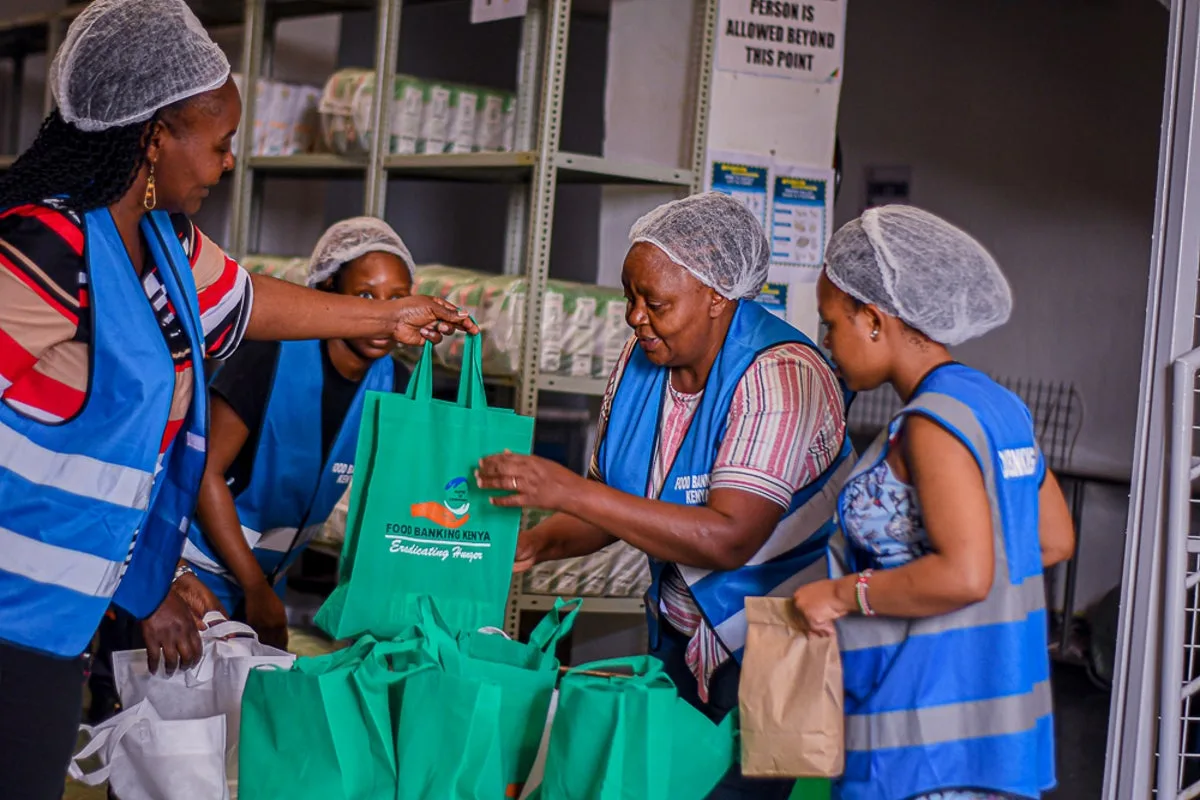
Food banks across Africa have reported a surge in demand for their services following deep cuts to foreign aid, primarily by the United States under Donald Trump, but also including reductions from the UK. Organisations in Kenya, South Africa and Nigeria say the withdrawal of funding, notably from the US Agency for International Development (USAID), is leaving them unable to meet the needs of vulnerable communities.
Food Forward South Africa, the continent's largest food banking organisation, said demand has climbed since the start of the year and is expected to rise further as USAID grants expire. Food Banking Kenya has seen a 300 per cent increase in demand, while the Lagos Food Bank in Nigeria is also anticipating shortages. John Gathungu, chief executive of Food Banking Kenya, described the numbers as "absolutely huge" and "completely unimaginable".
The strain has led to tragic consequences. Mr Gathungu recounted an incident where the Kenyan Red Cross, a partner organisation also affected by the cuts, alerted his office to a mother of three who had not eaten for three days. "By the time our delivery driver arrived, it was already too late – the woman had actually committed suicide," he said.
In May, USAID terminated more than 80 per cent of its contracts, with an estimated loss of $260m (£191m) in Kenya, $224m in South Africa and $178m in Nigeria. The wider picture is also bleak: Oxfam has warned that G7 aid spending is set to decline for a third consecutive year, with the US cutting $33bn, the UK $5bn, Germany $3.5bn and France $3bn year-on-year. Public services, including HIV care in South Africa and food aid in Nigeria, have been severely degraded.
Food Banking Kenya provided more than 20 million meals last year, relying largely on farm surpluses, but now has to manage deliveries with strict recipient lists. Many charitable partners depended on USAID funding, with one planned school meal programme for 20,000 children put on hold before the food bank stepped in. Kenya, where 46 per cent of people live on less than $3 a day, is a major agricultural exporter yet faces acute food insecurity.




