
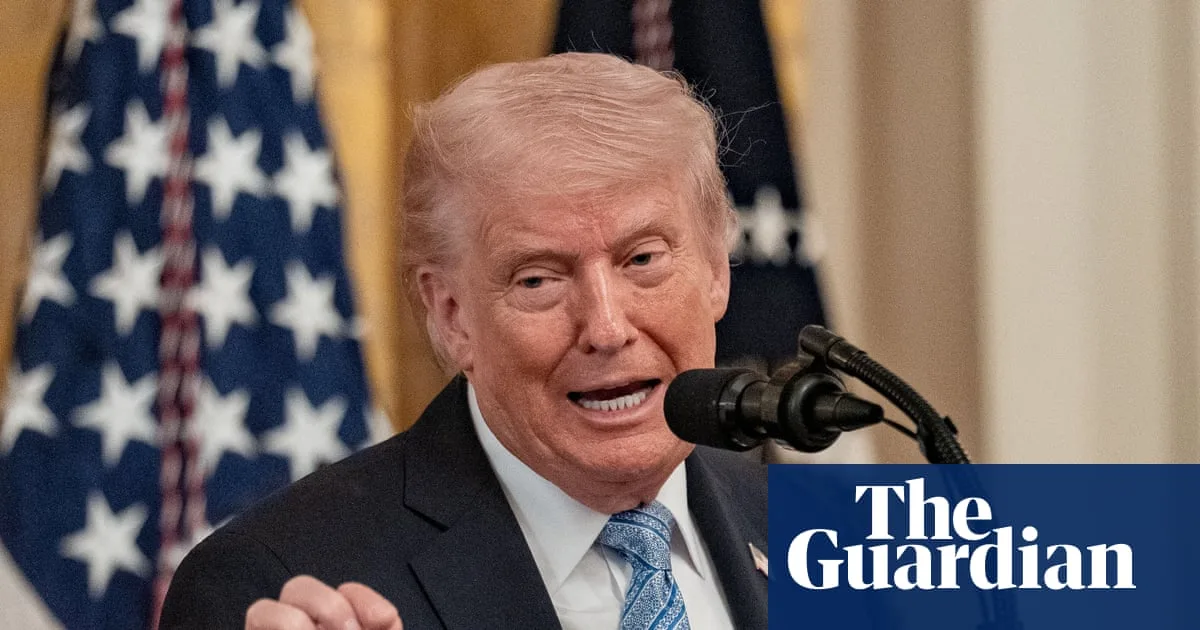
Another day, another hairpin turn in the world of Donald Trump’s foreign policy. The weekend was all about war, with Trump insisting Iran had not yet “paid a big enough price”. Tuesday brought Project Freedom, styled as a grand “humanitarian gesture” to allow trapped ships and their crews to escape the Gulf, but also aimed at weakening Iran’s chokehold on the Strait of Hormuz. By the early hours of Wednesday, the president announced “Great Progress has been made toward a Complete and Final Agreement”, pausing Project Freedom to give negotiations a chance.
The three approaches on three consecutive days all attempt to wrestle with the same hard facts: the regime in Iran is unlikely to collapse or surrender the right to enrich uranium no matter how many bombs are dropped; Tehran has shown its capacity to close the Strait of Hormuz; and a total blockade of the Gulf hurts the US economy as well as Iran. Together, these facts form a steel box in which the Trump administration, largely through its own actions, finds itself trapped. The repeated policy changes show the president flailing inside this trap, looking for an exit other than humiliation or a forever war.
The terms on the table became clearer on Wednesday. Axios and Reuters reported that the US, Iran and their Pakistani mediators were close to an agreement on a one-page “memorandum of understanding” to declare an end to the war and begin a 30-day negotiating period for resolving disputes over Iran’s nuclear programme, US sanctions and Iran’s frozen assets. Both sides would lift their parallel blockades of the Strait of Hormuz over the course of the talks. Trump’s announcement brought down the oil price and boosted stock markets, but the situation remains tenuous.
Iran’s Islamic Revolutionary Guard Corps said the reopening of the Strait of Hormuz could be possible, but did not give a straight reply on the reported proposal. The foreign ministry said the proposal was under review, while Ebrahim Rezaei, spokesperson for the Iranian parliament’s national security and foreign policy commission, rejected it as an “American wishlist, not a reality”. Tehran has said it wants the blockade to end first, before discussing anything else.
The reported proposal suggests a compromise on uranium enrichment of 12 or 15 years, compared to Iran’s prewar offer of five years and the US demand of 20. Iran would also accept the permanent return of IAEA inspectors and export its stockpile of highly enriched uranium, possibly to the US. In return, Iran’s frozen assets would be released in stages and sanctions lifted progressively. It is a very ambitious agenda, with countless ways it could fall apart. Neither side wants to go back to war, but both apparently believe more fighting could improve their position at the negotiating table – an unstable set of circumstances for hammering out peace.




