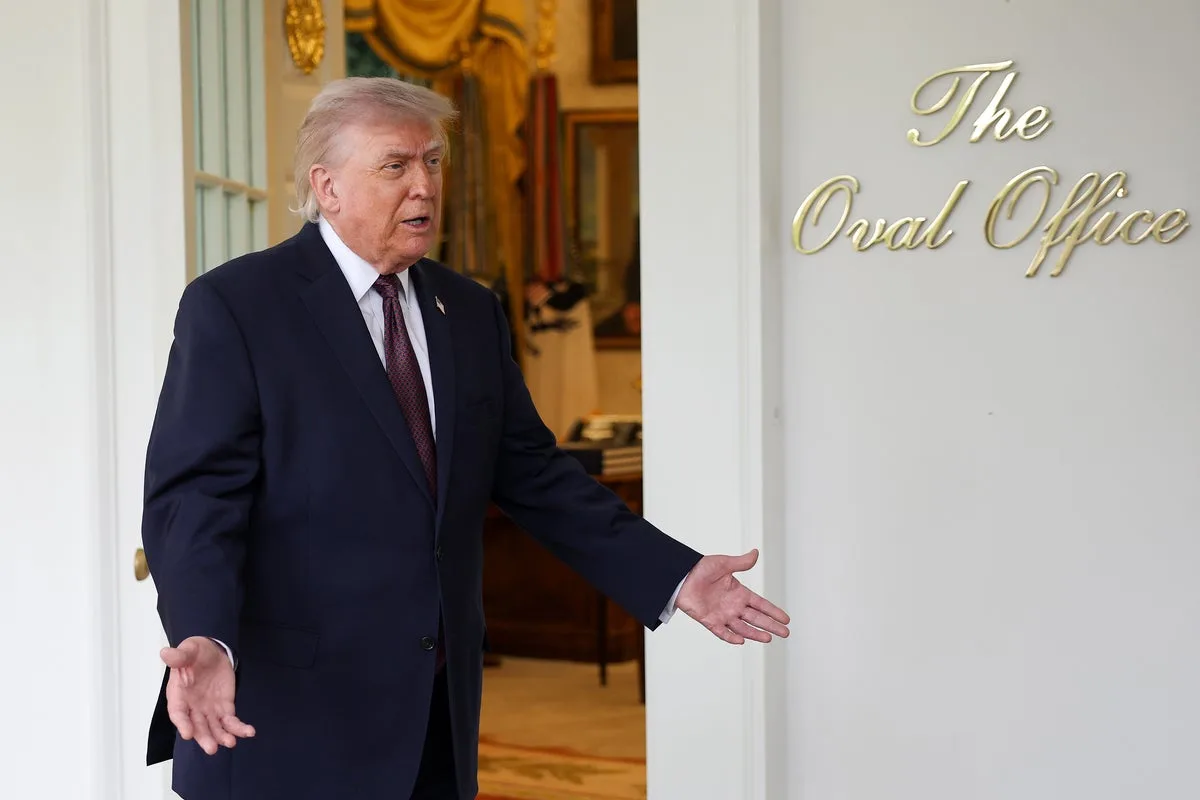
In a striking diplomatic gesture, former US President Donald Trump has offered to 'permanently' open the strategic Strait of Hormuz as a favour to China, with crucial Iran peace talks scheduled to resume next week. The controversial proposal comes as Trump seeks to repair relations with Beijing ahead of his anticipated visit next month, declaring that Chinese leader Xi Jinping will 'give me a big, fat hug' for opening the vital waterway.
Escalating Tensions and Naval Blockade
Trump's blockade of Iranian ports this week has severely angered the Chinese government, which purchases approximately 90 percent of Iran's oil exports that flow through the Strait of Hormuz. This maritime choke point handles an estimated one-fifth of global oil and gas shipments, making it a critical artery for international energy markets.
Washington has now agreed in principle to meet with counterparts from Tehran following rare diplomatic rebukes from Beijing. Pakistan is being considered as a potential venue for these negotiations, despite previous talks collapsing there within just 21 hours last Saturday.
Iran's Retaliatory Threats
Iran's armed forces have threatened to significantly expand their influence over regional shipping lanes by potentially blocking the Persian Gulf, the Sea of Oman, and the Red Sea if the United States continues its naval blockade. The Red Sea connects to the Suez Canal, which facilitates about 15 percent of global trade, amplifying the economic stakes of any disruption.
Reports have suggested that both the US and Iran are considering extending their current ceasefire by two weeks to allow for further peace negotiations. However, White House Press Secretary Karoline Leavitt firmly denied that the administration had formally requested any extension, stating that such claims were 'not true.'
Leavitt emphasized, 'We remain very much engaged in these negotiations. You heard from the vice president [JD Vance] directly and the President this week that these conversations are productive and ongoing, and that's where we are right now.' She added that the United States 'feel good about the prospects of a deal.'
Trump's Social Media Declaration
On his Truth Social platform, Trump posted, 'China is very happy that I am permanently opening the Strait of Hormuz. I am doing it for them, also – and the World. This situation will never happen again.' He claimed that the Chinese premier had assured him Beijing is not providing weapons to Iran, despite intelligence reports suggesting Chinese assistance in targeting US bases.
Trump added, 'We are working together smartly, and very well! Doesn't that beat fighting? But remember, we are very good at fighting, if we have to – far better than anyone else!'
Contradictory Positions and Grand Bargain
This offer to China represents the latest in a series of bold and sometimes contradictory positions from the former president. Trump initially threatened to bomb Kharg Island before requesting allied assistance to reopen the Strait, only to subsequently implement the blockade that currently stands.
In earlier media appearances, Trump told Fox News that the Iran conflict was 'close to over' and predicted 'an amazing two days ahead.' Vice President JD Vance suggested Trump is pursuing a 'grand bargain' where Washington might offer Tehran sanctions relief in exchange for ending the naval blockade.
Vance cautioned, 'There is a lot of mistrust between Iran and the United States of America. You are not going to solve that problem overnight.'
Military Buildup and Regional Implications
For now, America continues to prevent any vessel from entering or leaving Iranian ports, with at least eight ships ordered to reverse course. Approximately 15 US warships and thousands of troops are enforcing the blockade, directing refused vessels to designated holding areas.
Iran has threatened to instruct the Houthis, its proxy militia in Yemen, to block the Red Sea in retaliation. Ali Abdollahi, commander of Iran's Khatam al-Anbiya Central Headquarters, described America's siege as 'a prelude to a violation of the ceasefire.'
Thousands more US troops are expected to arrive in the region in coming days, including 6,000 personnel aboard the aircraft carrier USS George H.W. Bush accompanied by several escort warships.
Nuclear Sticking Points and Regional Conflicts
Press Secretary Leavitt stated that Trump 'has wisely kept all options on the table' should Iran fail to reach 'a deal that is acceptable to the United States.' Reports indicate that Tehran's refusal to cease uranium enrichment for at least 20 years was a key sticking point that caused talks to collapse last Saturday.
Foreign ministry spokesman Esmaeil Baqaei asserted that Iran's right to peaceful nuclear energy use could not be 'taken away under pressure or through war.'
Meanwhile, in a separate but related development, the Israel Defense Forces claimed to have struck 200 Hezbollah sites within 24 hours. This followed the first meeting between Israel and Lebanon in over three decades, held in Washington on Monday, where discussions focused on disarming the Iranian-backed terror group.
Israel and Hezbollah were reportedly considering a US-proposed ceasefire to their conflict, with Israeli Prime Minister Benjamin Netanyahu scheduled to present it to his cabinet. Reports suggested the ceasefire could take effect immediately upon approval.






