Trump's Hormuz Blockade Set to Commence Amid Iranian Warnings of Gas Price Surge
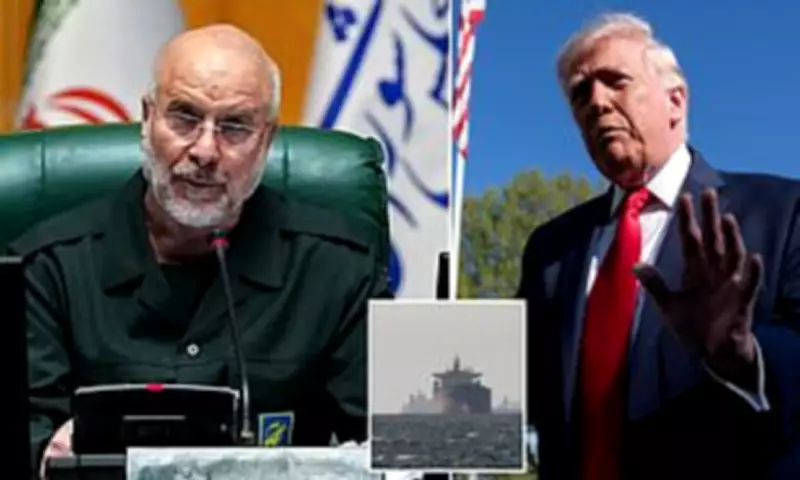
Former President Donald Trump's announced naval blockade of the strategic Strait of Hormuz is scheduled to begin at 10 am Eastern Time on Monday, as Iranian leadership issued stark warnings that American consumers should prepare for even steeper increases in gasoline prices. The blockade, targeting all maritime traffic entering and exiting Iranian ports, was confirmed by US Central Command following Trump's declaration on his Truth Social platform.
Blockade Details and Immediate Market Impact
In a Sunday post, Trump stated that naval assets would 'begin the process of blockading any all ships trying to enter' the vital waterway. CENTCOM subsequently advised all mariners operating in the Gulf of Oman and Strait of Hormuz approaches to contact US naval forces on bridge-to-bridge channel 16. The command clarified that vessels traveling to and from non-Iranian ports through the strait would not be impeded.
The announcement triggered immediate volatility in global oil markets. During early Sunday night trading, US crude oil prices jumped eight percent to $104.24 per barrel, while Brent crude, the international benchmark, rose seven percent to $102.29. These increases continue dramatic swings observed since late February, when Brent crude traded around $70 before surging past $119 at points during heightened tensions.

Iranian Retaliation Threats and Economic Warnings
Iranian Supreme Leader Mojtaba Khamenei promised that Iran possesses 'large, untouched levers' to retaliate against the blockade, dismissing pressure from 'tweets and imaginary plans.' Parliament Speaker Mohammad Bagher Ghalibaf, who led negotiations with US Vice President JD Vance on behalf of Iran, delivered a pointed warning to American citizens via The New York Times: 'soon you'll be nostalgic for $4-$5 gas.'
Rachel Ziemba of the Center for a New American Progress suggested that opportunities for diplomatic de-escalation have likely closed. 'The de-escalation window for the global economy, such as it was, is over for now,' she told The Wall Street Journal. 'Iran is betting they can hold out longer than the US and the global economy.'
Strategic Significance and Military Considerations
The Strait of Hormuz represents one of the world's most crucial maritime chokepoints, typically facilitating the transit of approximately one-fifth of globally traded oil daily. Major exporters including Saudi Arabia, Iraq, the United Arab Emirates, Kuwait, and Iran rely heavily on this corridor.
Despite Trump's assertion that the Iranian naval threat has been eliminated following US military actions since February 28, experts caution that significant risks remain. Farzin Nadimi, a senior fellow at the Washington Institute, indicated that more than sixty percent of Iran's Islamic Revolutionary Guard Corps fast-attack craft and speedboat fleet remains operational. These smaller, agile vessels are adept at controlling the narrow strait—only about 35 kilometers wide—through missile deployments, mining operations, and harassment of commercial shipping.
David Des Roches, a former Pentagon director for Persian Gulf policy, noted that Iran's 'asymmetrical strategy is working,' potentially placing US servicemen in vulnerable positions.
Legal and International Dimensions
Acting Attorney General Todd Blanche announced via social media that the Department of Justice will support the blockade, vowing to 'vigorously prosecute anyone who buys or sells sanctioned Iranian oil.' Trump further instructed the US Navy to interdict vessels in international waters that have paid tolls to Iran, declaring 'No one who pays an illegal toll will have safe passage on the high seas.'
Internationally, Trump claimed NATO would 'begrudgingly' support US efforts while criticizing the alliance as 'shameful.' He specifically targeted UK Prime Minister Sir Keir Starmer, comparing him to Nazi appeaser Neville Chamberlain after Starmer stated Britain would send equipment 'after the war is over.' A UK government spokesperson countered that Britain will not participate in the blockade, instead supporting 'freedom of navigation and the opening of the Strait of Hormuz.'

Ceasefire Context and Negotiation Breakdown
The blockade announcement follows the collapse of peace talks in Islamabad led by Vice President JD Vance. A US official familiar with the deliberations told The Daily Mail that Iranian negotiators initially misunderstood America's core objective: preventing Iran from obtaining nuclear weapons. Although Vance corrected this misunderstanding and believes a deal remains possible, the official stated Iran must recognize changed ground realities before serious negotiations can resume.
This development occurs amid a fragile two-week ceasefire agreement between Trump and Tehran, wherein Iran agreed to halt hostilities in exchange for strait access. Since the ceasefire began, marine trackers report over forty commercial vessels have transited the strait, though Iran has warned via radio that unauthorized ships risk destruction and has implemented traffic limitations reducing daily passages from over one hundred to about a dozen.
White House spokeswoman Anna Kelly asserted that US military actions have achieved 'the largest elimination of a navy over a three-week period since World War II,' destroying Iran's ballistic missile capabilities to secure long-term energy flow. The USS Franklin Petersen and USS Michael Murphy are currently positioned in the strait to enforce the blockade as global markets brace for prolonged disruption.