In a significant diplomatic development, US President Donald Trump announced on Tuesday that he is indefinitely extending a ceasefire with Iran. This decision came at the formal request of Pakistan, which has been actively mediating talks between the two nations. The extension will remain in effect until Iran submits a proposal in response to US negotiating positions or until discussions reach a conclusive end, one way or another.
Trump's Announcement on Truth Social
President Trump detailed his directive in a post on his social media platform, Truth Social. He stated, "I have therefore directed our Military to continue the Blockade and, in all other respects, remain ready and able, and will therefore extend the Ceasefire until such time as their proposal is submitted, and discussions are concluded, one way or the other." This move effectively buys additional time for the United States and Iran to pursue a nuclear agreement aimed at ending the ongoing conflict.
Vice-President Vance's Cancelled Trip and Emergency Meetings
Earlier on Tuesday, Vice-President JD Vance called off a planned trip to Islamabad. Sources familiar with the matter indicated that this cancellation was due to a lack of response from Tehran regarding their participation in the talks. However, it was noted that Vance could travel immediately should Iran provide a positive response. Later in the day, Vance was observed arriving at the White House for emergency meetings, which were also set to include US Secretary of State Marco Rubio.

Trump's Conciliatory Tone Amidst Earlier Threats
Trump's announcement marks a shift towards a more conciliatory approach, following a weekend during which he told advisers he was reluctant to extend the ceasefire unless Iran reopened the Strait of Hormuz. He reiterated this stance in an interview with CNBC's Squawk Box on Tuesday, asserting, "I expect to be bombing because I think that's a better attitude to go in with. We're ready to go. The military is raring to go." When questioned about extending the ceasefire, he responded, "I don't want to do that. We don't have that much time."
Despite his harsh rhetoric, Trump expressed belief that a deal remains possible. His negotiating team, led by Vance, special envoy Steve Witkoff, and his son-in-law Jared Kushner, has also shown optimism about reaching an agreement with Iran, according to insiders.
Focus on Cash-for-Uranium Deal
The previous round of negotiations in Islamabad heavily centered on a potential agreement where the United States would release $20 billion in frozen funds or provide equivalent sanctions relief. In exchange, Iran would transfer its stockpile of highly enriched uranium to the US. Trump's negotiators view this cash-for-uranium framework as having the highest chance of success, arguing that financial incentives are crucial for Iran's leaders as they contend with an economy severely impacted by sanctions and the costs of the current conflict.
Although Trump initially agreed to this framework, with Vance maintaining communication via conference calls to ensure presidential approval, he publicly declared on Friday that he would not release any funds to Iran. This inconsistency has led to confusion and whiplash between war and peace discussions, becoming a hallmark of Trump's approach to the war.
Ongoing Volatility in Trump's Statements
On Monday, Trump vacillated between suggesting a potential deal was imminent and warning that "lots of bombs" would "start going off" if negotiations failed. Earlier in the month, he made extreme threats, including the potential extinction of "a whole civilization" in Iran, and claimed that Iranian civilians were welcoming US strikes on the country's infrastructure.
Iran's Response and Diplomatic Tensions
In Tehran, Iran's parliamentary speaker, Mohammad Bagher Ghalibaf, posted on X early Tuesday, stating, "we do not accept negotiations under the shadow of threats." He accused Washington of seeking Iranian surrender rather than a genuine settlement. This highlights the deep-seated tensions and mistrust that continue to complicate diplomatic efforts.
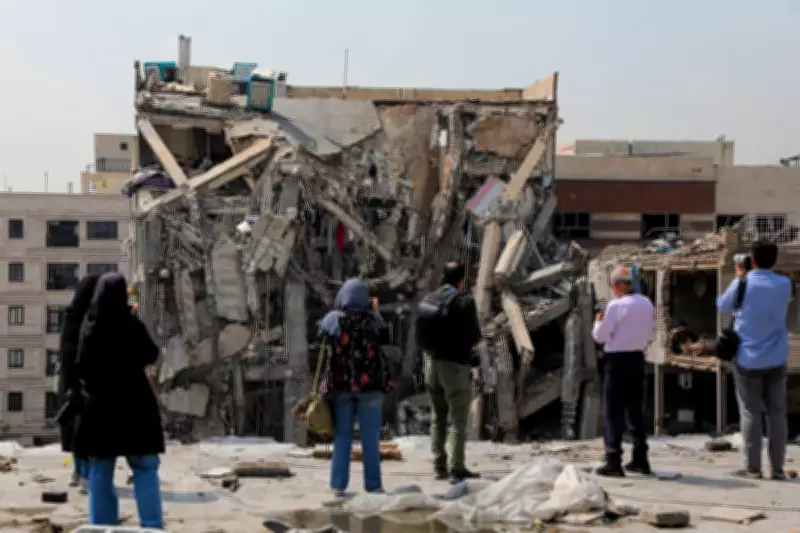
Meanwhile, representatives from over a dozen foreign diplomatic missions, UN offices, and media outlets viewed damage at sites previously targeted by US-Israeli strikes in Tehran on 20 April, underscoring the tangible impacts of the conflict.