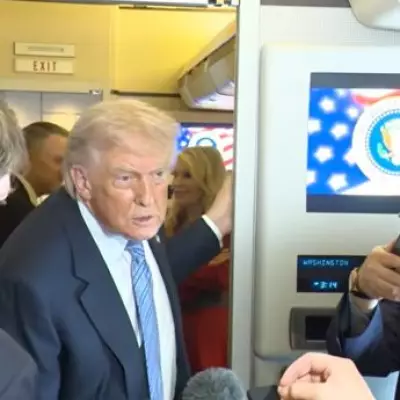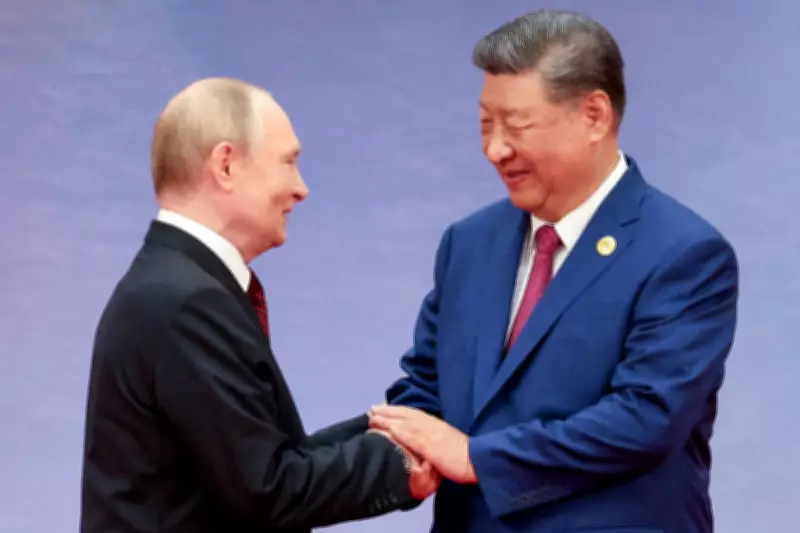
During President Trump's state visit to China, President Xi Jinping referenced the Thucydides Trap, drawing a parallel between US-China rivalry and the ancient Peloponnesian War. Xi warned that mishandling Taiwan could lead to conflict, prompting Trump to pause an $11bn arms deal with Taipei. Days later, Vladimir Putin arrived in Beijing for the 25th anniversary of the Sino-Russian Treaty of Good-Neighbourliness, receiving a warm welcome as an equal, despite the growing power imbalance between the two nations.
Power Dynamics Shift
Russia's economy now rivals Italy's, while China's matches the US. Russia has become a supplier of commodities like oil and gas to China, with a second trans-Siberian pipeline on the agenda. In return, China provides advanced technology and financial support, propping up Russia's war effort in Ukraine. Putin faces domestic challenges from inflation and the protracted conflict, having lost key allies like Syria and Iran.
China's Ascendancy
Xi Jinping, cultivating a Mao-style personality cult, extends Chinese influence globally through the Belt and Road Initiative. The geopolitical optics confirm this as China's century, with the US unable to bully China over trade. Trump's tariff escalation was matched by China, reminding him that 'trade wars have no winner.'

Western Dilemma
The West struggles to respond to a more assertive China, which has a poor human rights record and threatens Taiwan. To avoid the Thucydides Trap, the West must forge a pragmatic relationship recognizing China's legitimate aspiration for peaceful reunification. China, in turn, should leverage its influence to end conflicts in Iran and Ukraine, benefiting from its economic ties with the US and Europe over Russia or Iran.
Ultimately, Xi Jinping is unlikely to study Trump's 'The Art of the Deal,' as the vision for a deal with China seems elusive to the current US administration.