Thailand has successfully negotiated a crucial agreement with Iran to ensure the safe transit of its oil vessels through the strategically vital Strait of Hormuz, Prime Minister Anutin Charnvirakul confirmed on Saturday. This development is poised to significantly alleviate mounting concerns over fuel imports in Southeast Asia, where supply difficulties have become increasingly pronounced.
Navigating Regional Tensions
Since late February, Iran has imposed restrictions on cargo ship movements through the Strait of Hormuz following military operations initiated by the United States and Israel against Tehran. The Strait serves as a critical maritime corridor, facilitating the transport of approximately 80% of the crude oil and liquefied natural gas destined for Asian markets from the Middle East.
Commodities shipping through this narrow passage has plummeted by an estimated 95% since the onset of conflict, creating severe disruptions in global energy supply chains. Southeast Asian nations, including Thailand, have experienced acute fuel shortages, with lengthy queues at petrol stations becoming commonplace across the region.

Security Concerns and Stranded Assets
Maritime security reports indicate nearly a dozen commercial vessels have been attacked this month in the Gulf, Strait of Hormuz, or Gulf of Oman. Among these incidents was a Thai bulk carrier transiting the Strait of Hormuz, resulting in three crew members currently missing.
The British naval maritime security agency UKMTO has documented these attacks, highlighting the precarious situation for international shipping. Since hostilities began, hundreds of vessels and approximately 20,000 seafarers have been effectively stranded within the Gulf region, unable to navigate safely through contested waters.
Iran's Strategic Positioning
Tehran has explicitly stated that the Strait remains closed to vessels from the United States, Israel, and countries militarily aligned with them. In an official circular issued earlier this week, Iranian authorities declared that "aggressor parties – namely, the US and the Israeli regime – as well as other participants in the aggression, do not qualify for innocent or non-hostile passage."
However, Iran announced on Friday that it would grant safe passage through the Strait for "friendly nations," specifically naming China, Russia, India, Iraq, and Pakistan. This selective access policy reflects Tehran's strategic maneuvering amid escalating regional tensions.
Thailand's Diplomatic Achievement
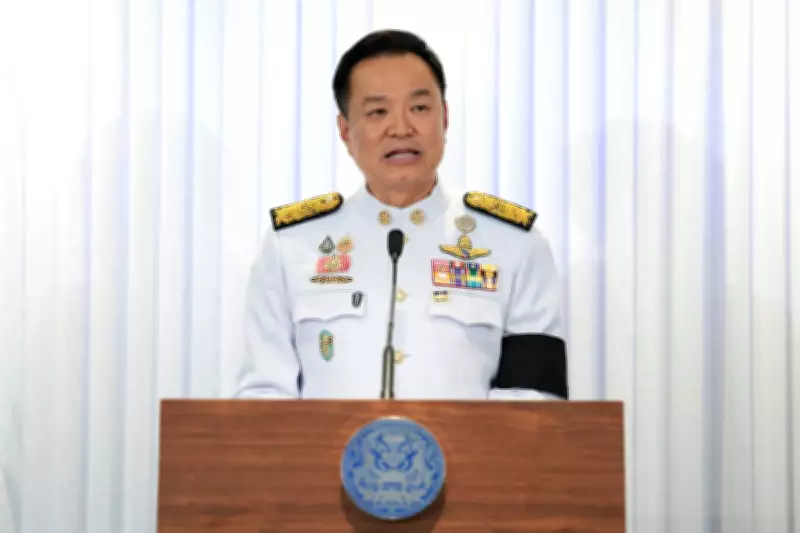
Prime Minister Anutin Charnvirakul, speaking at a press conference, revealed that "an agreement has been reached to allow Thai oil tankers to transit safely through the Strait of Hormuz." The newly elected leader emphasized that this diplomatic breakthrough would directly address concerns regarding Thailand's fuel import security.
This announcement follows Mr. Charnvirakul's public apology on Friday regarding fuel price volatility, during which he acknowledged his government's initial misjudgment of the Middle East situation. While urging citizens not to panic and assuring them of sufficient domestic fuel supplies, the prime minister now expresses greater confidence that "disruptions like those seen in early March will not recur."
Regional Implications and Future Outlook
The Thailand-Iran agreement represents a significant diplomatic achievement for Bangkok, potentially stabilizing fuel supplies across Southeast Asia. As the region grapples with energy security challenges, this bilateral arrangement demonstrates how middle-power nations are navigating complex geopolitical landscapes to secure essential resources.
Prime Minister Charnvirakul concluded by stating his government would "continue to adapt to evolving situations," suggesting further diplomatic initiatives may follow as Thailand seeks to insulate its economy from regional instability. The successful negotiation highlights Thailand's growing diplomatic agency in international affairs, particularly regarding energy security matters affecting its 70 million citizens.