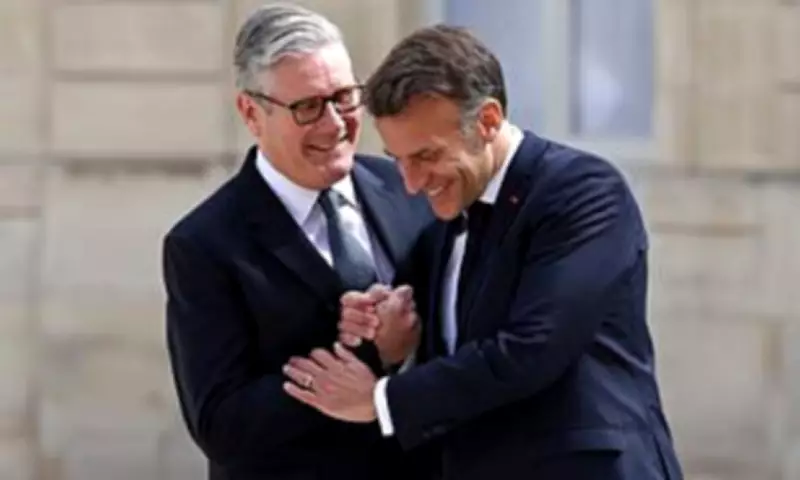
Prime Minister Sir Keir Starmer arrived in Paris with a determined smile, setting aside domestic political controversies to engage in crucial international diplomacy. His meeting with French President Emmanuel Macron at the Elysee Palace focused squarely on addressing the blockade of the Strait of Hormuz, a critical global shipping artery for oil and gas.
High-Stakes Diplomatic Engagement
The warm greeting between the two leaders preceded a significant conference involving representatives from forty nations and the International Maritime Organisation. This gathering aims to formulate concrete plans for a multinational mission dedicated to protecting freedom of navigation through the strait, which has been effectively closed by Iran since late February.
The Core of the Crisis
The blockade represents a direct retaliation by Tehran against joint military strikes initiated by the United States and Israel. This action has created severe disruptions to global energy supplies, prompting urgent international concern. In a countermove, US President Donald Trump has implemented his own blockade targeting Iran's oil ports, aiming to cripple the nation's fossil fuel revenue stream while calling on allied countries to help break Tehran's strategic hold on the waterway.

Speaking to broadcasters ahead of the talks, Sir Keir Starmer emphasised the fundamental principles guiding the coalition-building effort. 'It is very important that we build a coalition of countries around the principle that the ceasefire should be permanent, there should be a deal, and that the Strait of Hormuz is open,' he stated firmly.
A Coordinated Multinational Response
Accompanied by Foreign Secretary Yvette Cooper and Chief of the Defence Staff Sir Richard Knighton, the Prime Minister was expected to deliver a clear message during the conference. 'Emmanuel Macron and I are clear in our commitment to establish a multinational initiative to protect freedom of navigation,' his planned remarks outlined. 'We must reassure commercial shipping and support mine clearance operations to ensure a return to global stability and security.'
The diplomatic push in Paris coincides with a fragile ten-day ceasefire between Lebanon and Israel coming into effect. This development is seen as a potential catalyst that could help extend the ceasefire to include Iran, the US, and Israel, thereby creating the necessary conditions to resume maritime traffic through the contested strait.
Strategic Planning and Operational Realities
The discussions in the French capital will be followed by a detailed multinational military planning summit scheduled for next week at the UK's permanent joint headquarters in Northwood, north-west London. This sequential approach underscores the seriousness with which participating nations are treating the security challenge.
However, significant operational hurdles remain. It is considered highly improbable that any country involved in Friday's talks will commit naval assets to the Strait of Hormuz while active hostilities persist. The considerable risk of vessels being targeted from the Iranian coastline renders such a deployment too dangerous under current circumstances.
The absence of key players—namely the United States, Israel, and Iran—from the Paris conference presents an additional layer of complexity. Despite this, Sir Keir Starmer expressed cautious optimism that the meeting could yield substantive progress toward a collective security framework, even without direct participation from all conflicting parties.