

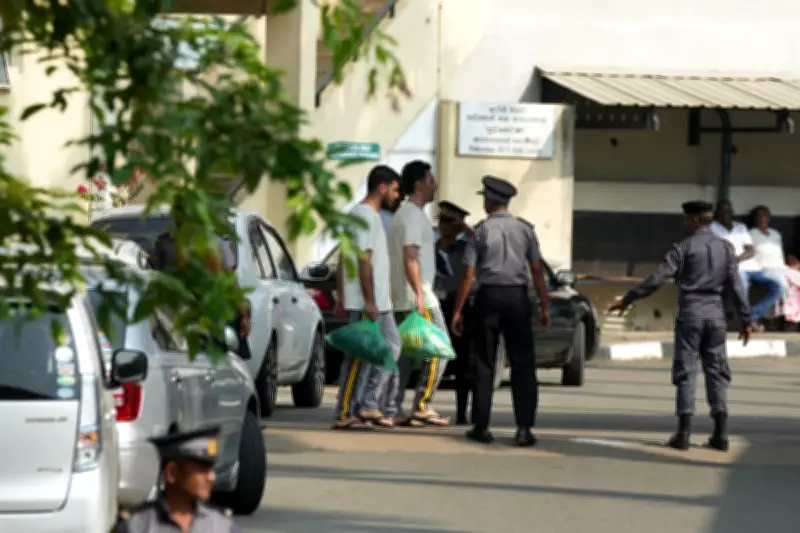
Sri Lanka has initiated the transfer of more than 200 sailors from an Iranian vessel to shore after the ship sought assistance while anchored outside the nation's territorial waters. This development occurs amidst escalating tensions in the Indian Ocean, following the sinking of an Iranian warship by a United States submarine earlier this week.
Naval Operations and Humanitarian Response
Sri Lanka navy spokesman Commander Buddhika Sampath confirmed that the sailors from the IRIS Bushehr are being brought first to the port of Colombo. Subsequently, the vessel will be relocated to an eastern port on the island. "The disembarkation is in progress," Sampath stated, noting that after medical examinations and immigration procedures, the sailors will be transported to the naval base at Welisara, approximately 20 kilometers north of Colombo.
Background of the Incident
The Sri Lankan government's decision to assume control of the Iranian ship follows a significant military event. On Wednesday, a U.S. submarine sank the Iranian warship IRIS Dena off the coast of Sri Lanka. This attack represents one of the rare instances since World War II where a submarine has successfully targeted and sunk a surface warship. It also highlights the expanding scope of the ongoing U.S.-Israeli military campaign against Iran.

Prior to the incident, the IRIS Dena had participated in naval exercises hosted by India before proceeding into international waters en route to its home port. According to India's Defense Ministry, at least 74 countries, including the United States Navy, took part in these events, which involved reconnaissance aircraft and maritime patrol drills. In the aftermath of the attack, the Sri Lankan navy conducted rescue operations, saving 32 sailors and recovering 87 bodies.
International Reactions and Diplomatic Statements
Iran's Foreign Minister, Abbas Araghchi, condemned the sinking as an "atrocity at sea" and warned that the United States would "bitterly regret" the attack. Meanwhile, Sri Lankan President Anura Kumara Dissanayake addressed the situation late Thursday, explaining that authorities decided to take control of the IRIS Bushehr after consultations with Iranian officials and the ship's captain. The decision was prompted by a mechanical failure, with one of the ship's engines becoming inoperative.
"We have to understand that this is not an ordinary situation. It's a request by a ship belonging to one party to enter into our port. We have to consider that according to the international treaties and conventions," President Dissanayake told journalists. In a separate statement on Friday via social media, he emphasized, "No civilian should die in wars. Our approach is that every single life is as precious as our own."
Strategic Implications and Sri Lanka's Position
The IRIS Bushehr has been previously described in Iranian media reports as a navy logistics ship equipped with a helicopter pad. This episode underscores how the conflict involving Iran is widening beyond the Middle East and spilling into the Indian Ocean. This expansion places strategically located Sri Lanka in a delicate position as it attempts to balance humanitarian obligations, international maritime law, and its longstanding policy of non-alignment.
President Dissanayake detailed that some crew members will remain on board to assist the Sri Lankan navy in navigating the vessel to Trincomalee on the island's northeast coast, about 265 kilometers from Colombo. The remaining sailors will be accommodated at a naval base. He reiterated Sri Lanka's commitment to neutrality and humanitarian principles, stating, "We have followed a very clear stance. We will not be biased to any state nor will we be submissive to any state."
This incident highlights the complex geopolitical dynamics at play in the Indian Ocean region, with Sri Lanka navigating a path between major powers while adhering to international norms and its own diplomatic traditions.






