
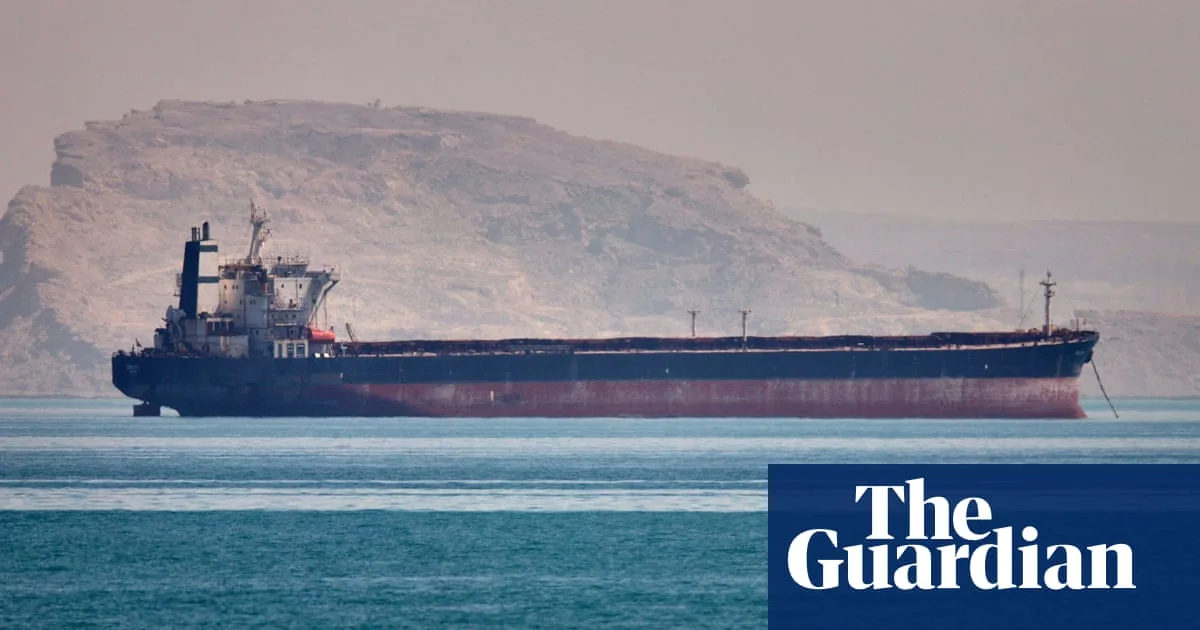
The global shipping industry has raised concerns about the safety of vessels transiting the Strait of Hormuz after US President Donald Trump announced a plan to guide stranded ships out of the waterway. Trump's proposal, dubbed 'Project Freedom', was described as a humanitarian gesture, but within hours, Iran's Fars news agency reported that a US warship had been struck by two missiles after ignoring warnings. The US denied the incident.
Brent crude oil prices surged over 5% to $114.45 per barrel amid reports of a missile threat in the United Arab Emirates and a fire on a South Korean vessel in the Gulf. The US Central Command (Centcom) stated that two US-flagged merchant ships had successfully transited the strait, but industry experts questioned the sustainability of the operation.
Sascha Meijer, general secretary of the seafarers' union Nautilus, said seafarers stuck in the strait would appreciate protection but questioned whether the offer was sufficient or could create more danger. Oil tanker captain Raman Kapoor, stranded in the strait, told BBC Radio 4 that he would not risk attempting to leave without crew consent and a thorough assessment.
Jakob Larsen, chief safety and security officer at shipping group Bimco, noted that without Iran's consent for safe transit, it was unclear whether the Iranian threat could be neutralised. He warned of potential hostilities if 'Project Freedom' proceeds. Centcom said US support would include guided-missile destroyers, over 100 aircraft, unmanned platforms, and 15,000 service members.
About 20% of global oil and LNG typically passes through the Strait of Hormuz, but traffic has virtually halted since the US-Israeli war with Iran began on 28 February. The crisis threatens to tip the global economy into recession, with oil prices about 50% higher than pre-conflict levels.




