Trump Administration's Shifting Rationales for Iran War Reveal Policy Confusion
When the United States initiated Operation Epic Fury last Saturday, the Trump administration faced a critical communications challenge: justifying the onset of war with Iran to the American public, Congress, and the global community. In times of conflict, propaganda and talking points typically proliferate, yet the administration has struggled to present a unified narrative. Contradictory statements have emerged, some clashing with each other and others directly opposing President Donald Trump's own words. Senior officials have delivered incompatible explanations within hours, underscoring a profound lack of coherence in war aims. This article traces how the story has evolved over the first week of hostilities.
The Truth Social Video: A Multifaceted Announcement
On 28 February, Trump announced the war via an eight-minute video on Truth Social at 2:30 AM ET. He framed Operation Epic Fury as a defensive response to decades of Iranian aggression while simultaneously advocating for Iranian liberation. In his address, objectives multiplied rapidly, including destroying Iranian missiles, obliterating their missile industry, and invoking historical grievances like the 1979 hostage crisis. He referenced groups such as Hezbollah and Hamas, urging Iranians to "seize this moment" and "take back your country." Trump also labeled the campaign as an effort to "eliminate the imminent nuclear threat," setting a tone of urgency and broad ambition.
Early Shifts and Diplomatic Ambiguity
Later on 28 February, after initial strikes commenced, Trump offered a flexible perspective in an interview with Axios. He presented a multiple-choice approach to the war, suggesting options ranging from prolonged occupation to a swift punitive action lasting "two or three days." This remark hinted at potential diplomatic solutions but established a pattern of inconsistency. Separately, The Washington Post reported that Trump told them the goal was "freedom" for the Iranian people, adding another layer to the administration's messaging.

Legal Justifications at the United Nations
Also on 28 February, the US mission to the United Nations invoked Article 51 of the UN Charter, citing self-defense against Iran's missile arsenal and nuclear ambitions. US Ambassador Mike Waltz asserted that diplomatic efforts had been exhausted and that actions were lawful. He controversially claimed that "the Iranian people, who are celebrating in the streets," were not complaining, attempting to frame the war as popular among Iranians.
Contradictions in Congressional Briefings
On 1 March, Pentagon briefers reportedly informed congressional staff that Iran had no plans to strike US forces unless Israel attacked first, undermining the White House's "imminent threat" narrative. This revelation highlighted internal discrepancies between military and political communications.
Pentagon Press Briefings: Mixed Messages
At the first Pentagon briefing on 2 March, Pete Hegseth described the war as retaliation for Iranian behavior with "laser-focused" objectives, including destroying missile capabilities and preventing nuclear weapons. He denied it was a regime-change war but noted "the regime sure did change." Hegseth contrasted the operation with past conflicts like Iraq and Afghanistan, emphasizing decisiveness. Joint Chiefs Chair General Dan Caine added that achieving military objectives would require time and effort, introducing a note of caution.
Rubio's Admission and Retraction
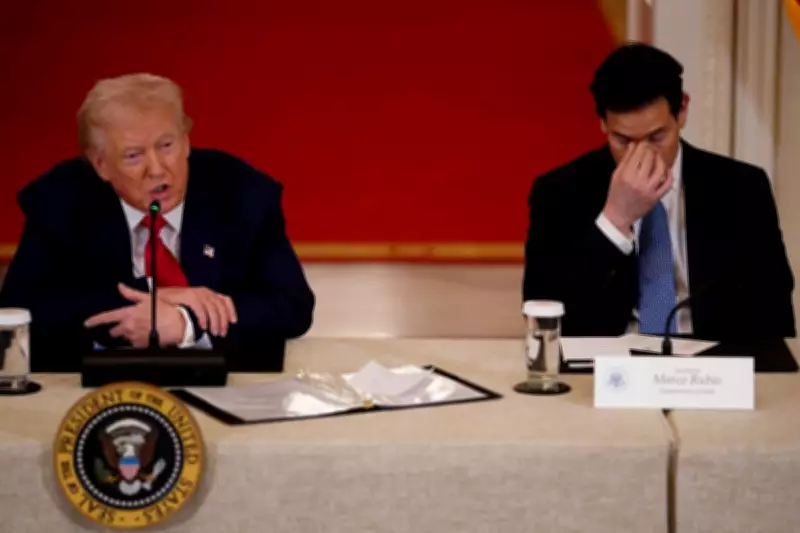
Hours later, Secretary of State Marco Rubio provided a different explanation, stating that the US preemptively struck because Israel planned a unilateral action, which would trigger Iranian retaliation against American forces. He affirmed an "imminent threat" based on this scenario. However, on 3 March, Trump contradicted Rubio, insisting the decision was his own and driven by Iranian intentions, not Israeli actions. Rubio then partially retracted his remarks, claiming they were taken out of context and reiterating that the operation was necessary regardless.

Evolving Objectives and New Justifications
By 4 March, Hegseth's second briefing portrayed the war as both near-victory and an ongoing campaign, with six American service members killed. He introduced a new justification, alleging an Iranian assassination plot against Trump, stating, "Iran tried to kill President Trump, and President Trump got the last laugh." This added a personal dimension to the conflict previously unemphasized.
Maximalist Statements and Clarifications
On 6 March, Trump posted on Truth Social demanding "UNCONDITIONAL SURRENDER" from Iran and envisioning a future where Iran becomes "economically bigger, better, and stronger." This maximalist stance contradicted earlier limited objectives and suggested long-term involvement. White House Press Secretary Karoline Leavitt later clarified that "unconditional surrender" simply means Iran no longer poses a threat, attempting to reconcile the statement with prior messaging.
Throughout the week, the Trump administration's rationales have shifted from defensive actions and nuclear threats to regime change and preemptive strikes, revealing a fragmented and inconsistent policy approach. This confusion has raised questions about the war's true aims and the administration's strategic coherence.