
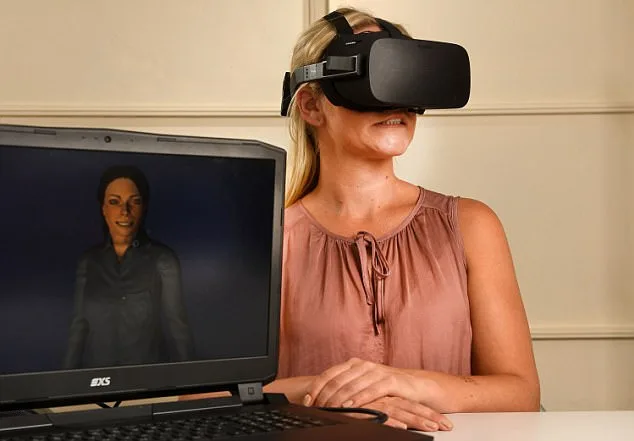
Pioneering NHS specialists are using virtual-reality (VR) computer game-style technology to treat facial paralysis, a condition affecting thousands of Britons. The therapy aims to help patients who find it too traumatic to look at their own 'changed' reflections after paralysis.
The VR goggles encourage sufferers to perform regular facial exercises needed to regain muscle function by watching an avatar's face instead of their own. The headset is fitted with ten electrodes that feed back how the muscles are moving in different parts of the patient's face, with the avatar mirroring expressions such as frowning and smiling.
Facial palsy expert Charles Nduka, consultant plastic surgeon at Queen Victoria Hospital in East Grinstead, is leading the trial. He explained that daily physiotherapy is vital to 're-educate' damaged nerve fibres, but many patients find gazing at their reflections so distressing that they fail to exercise regularly. 'Visual feedback is vital to successful exercising. Now, facial sensors incorporated into virtual reality goggles offer these patients an avatar to look at instead,' he said.
Lacey May, a 29-year-old who lost feeling in the right side of her face during labour seven years ago, is hoping to join the trial. She described the experience of using the goggles as 'unbelievable' because the avatar reflected her muscles working, allowing her to see how to balance them out. 'My dream is to get back my smile,' she said.
The four-month, 40-patient trial is set to start next year. Mr Nduka is developing the system with technology company Emteq, Facial Palsy UK, and Nottingham Trent and Coventry universities. For more information, visit facialpalsy.org.uk.




