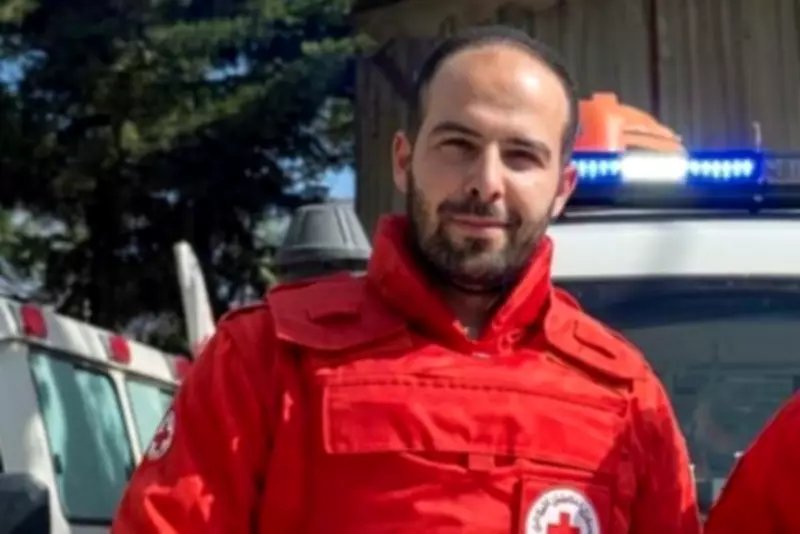
Tributes Pour In for 'Hero' Red Cross Paramedic Killed in Israeli Drone Strike in Lebanon
The night before his death, 31-year-old Red Cross paramedic Hassan Badawi called his pregnant wife, describing the Israeli bombing in Lebanon as "everywhere" but insisting he could not abandon the wounded. The following day, Badawi was killed in an Israeli drone attack while carrying a patient on a stretcher from an ambulance, according to local reports. His colleague survived the strike.
A Selfless 'Hero' Remembered by His Family
In emotional comments to Al Jazeera, Badawi's mother, Ahlam Badawi, and father, Ali Badawi, remembered their son as a selfless "hero" who "in every war, used to be the first to go." At his funeral on Monday, Ahlam said through tears, "God used to be merciful on me and used to bring him to me safe. This time God took him from me." Badawi, a father-of-two, is the second Lebanese Red Cross responder to be killed this month.
Escalating Attacks on Healthcare Workers in Southern Lebanon
Badawi is one of 89 medics who have been killed in Israeli strikes on southern Lebanon since 2 March, as reported on Tuesday. The World Health Organisation stated there have been over 100 attacks on healthcare during Israeli strikes in Lebanon. The International Committee of the Red Cross warned that "the scale and scope of military operations in southern Lebanon" has reached "devastating" proportions, putting health and medical care at severe risk.

Hachem Osseiran, ICRC spokesperson for the Middle East, said, "Without continued and sustained support, medical facilities in southern Lebanon could face the risk of closing down." The WHO had previously warned on 9 April that facilities could be days away from running out of supplies.
Hospitals Under Siege and a Humanitarian Catastrophe
Relentless strikes have forced nurses and medics to effectively "move in" to hospitals with their families to continue working, as these facilities are considered "sanctuaries" safe from bombing. However, hospitals are not entirely secure; on Monday, a government hospital in Tebnine, southern Lebanon, was damaged in a nearby Israeli attack. Strikes on roads have also severely restricted access to medicine and essential aid.
The situation in southern Lebanon is described as a "humanitarian catastrophe," with intensifying hostilities and severe constraints on movement due to security conditions. Many civilians remain in the area despite evacuation notices.
International Condemnation and Calls for Protection
The Lebanese Red Cross has deployed 125 ambulances, supporting over 11,000 patients and providing health assistance to more than 22,000 individuals. Agnès Durr, head of the ICRC delegation in Lebanon, emphasized, "The loss of those who dedicate their lives to saving others is deeply troubling, given the impact it has on civilians who depend on their assistance. Humanitarian and medical personnel must be protected and enabled to access and assist the wounded, and to return."
The British Medical Association has condemned attacks on medical workers as "violations of medical neutrality and international humanitarian law," while Amnesty International warned of Israel using the same "deadly playbook" as in previous conflicts in Lebanon in 2024.
The Israeli military told The Independent that "the incident is under review," adding it had targeted "a Hezbollah terrorist who operated adjacent to IDF soldiers in the Bint Jbeil area in southern Lebanon. Reports were received regarding a Red Cross team injured in the strike." This comes as Israeli and Lebanese officials met for formal talks in Washington on Tuesday, the first such meeting in decades.