In a significant political development, Peru's defence and foreign ministers have resigned following the interim president's decision to stall a major $3.5 billion deal for US F-16 fighter jets. The move has sparked controversy and raised questions about Peru's defence strategy and diplomatic relations with the United States.
Ministers Step Down Over Deferred Decision
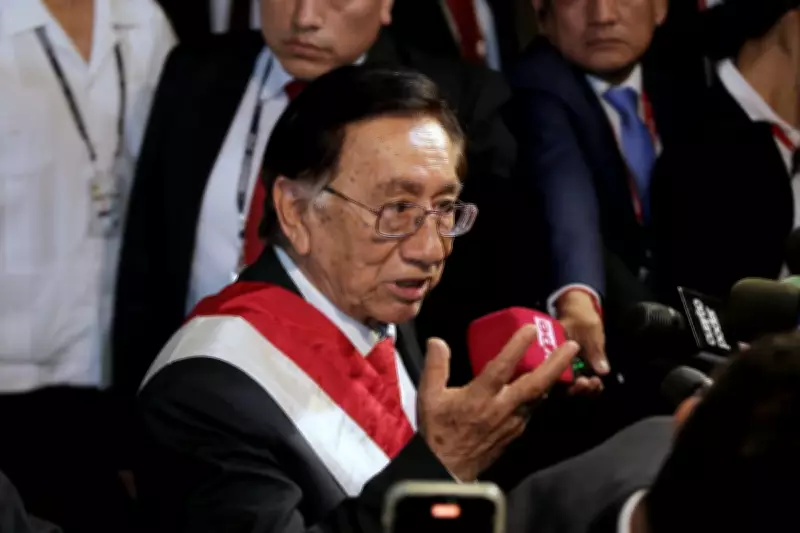
On Wednesday, Defence Minister Carlos Díaz and Foreign Minister Hugo de Zela both stepped down from their positions. Their resignations came after interim President José María Balcázar announced he would defer the decision on purchasing 24 F-16 fighter jets from US-based Lockheed Martin to his successor, who will emerge from a presidential runoff vote in June.
Balcázar argued that as a temporary leader, he lacks the legitimacy to commit such a large sum of money, stating, "For us to commit such a large sum of money to the incoming government would be a poor practice for a transitional government."

Contract Signed Despite Presidential Stance
In a surprising twist, Defence Minister Díaz revealed that officials from the Ministry of Defence signed the contract for the aircraft purchase on Monday, even without Balcázar's approval, as stipulated under the deal. This action underscores the internal conflict within the government over the procurement.
Díaz's resignation letter, obtained by The Associated Press, warned that postponing the purchase "could compromise" Peru's interests. Both ministers stated at a news conference that they had unsuccessfully tried to persuade Balcázar to proceed with the agreement.
Allegations of Misleading the Public
Speaking to a local radio station, Foreign Minister de Zela accused Balcázar of misleading the public about the contract details. Díaz added that specific aspects of the deal remain undisclosed due to their classified nature, further complicating the transparency of the situation.
US Reaction and Diplomatic Tensions
US Ambassador Bernie Navarro reacted strongly to the announcement, posting on X that if Peru "negotiates in bad faith" or undermines US interests, he would take measures at his disposal. Although he did not elaborate, this statement highlights the diplomatic tensions arising from the stalled deal.
Background of the Fighter Jet Purchase
The deal traces back to 2024, when then-President Dina Boluarte's government announced Peru would allocate $3.5 billion to purchase 24 fighter jets. The funding was planned through domestic borrowing of $2 billion in 2025 and $1.5 billion in 2026. Other companies that submitted bids included Swedish Saab and French Dassault Aviation, but Lockheed Martin's F-16s were selected.
Political Context in Peru
Peru's political landscape remains turbulent. In February, Congress elected Balcázar as the country's eighth president in a decade, replacing another interim leader ousted over corruption allegations just four months into his term. This instability adds complexity to defence procurement decisions.
Currently, Peru is holding a presidential runoff on June 7, with votes still being counted from the first round on April 12. Officials are sifting through tally sheets from remote areas and Peruvian consulates abroad, indicating a closely contested election process.
The resignations of key ministers over the F-16 deal underscore the challenges facing Peru's interim government as it navigates defence priorities, economic commitments, and international relations amidst ongoing political transitions.