
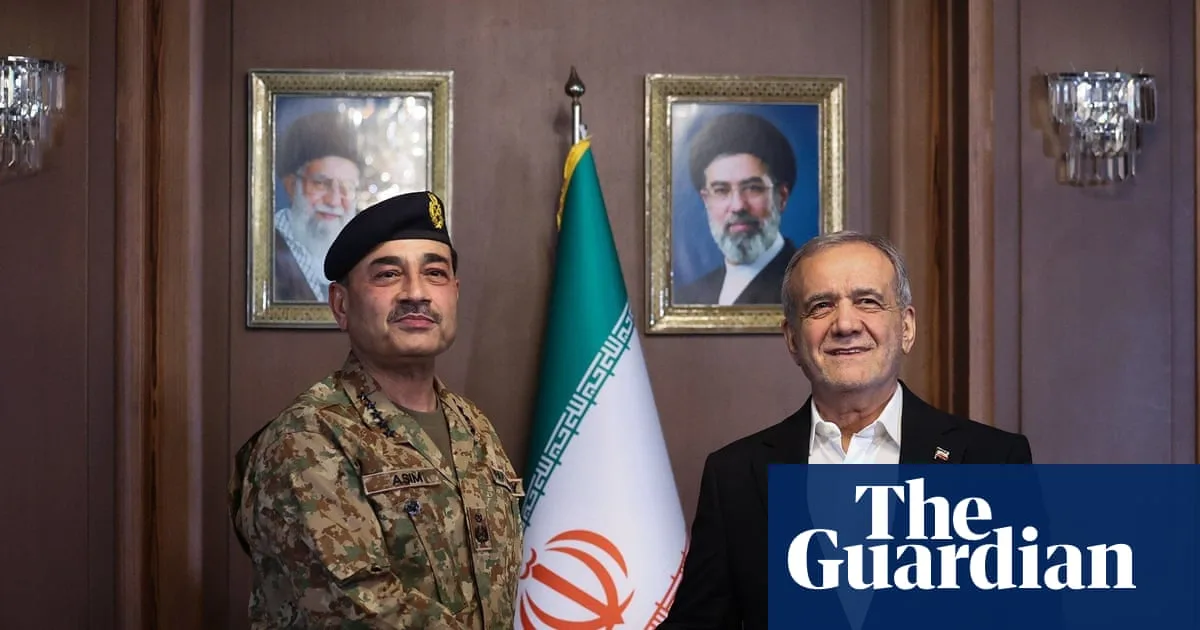
Field Marshal Asim Munir, Pakistan’s army chief, has emerged as an unexpected mediator in the conflict between the US and Iran. On Wednesday, he flew to Tehran and was greeted by Iran’s foreign minister, Abbas Araghchi, as part of renewed diplomatic efforts. The visit came just days after US vice-president JD Vance left Islamabad following 21 hours of unsuccessful talks.
Munir carried a fresh proposal from Washington for a new round of negotiations in Islamabad next week. US President Donald Trump, despite imposing a naval blockade on the Strait of Hormuz, praised Munir’s “fantastic” efforts. The army chief has been a key conduit between the two sides, earning trust from both US and Iranian leadership.
Analysts note that Pakistan’s foreign policy is heavily shaped by its military, with Rawalpindi, the army’s headquarters, coordinating negotiations rather than the civilian government. Former Pakistani ambassador Maleeha Lodhi described Munir as “the driving force” behind the mediation, adding that “without him this would not work”. She said the foreign ministry is “just a junior partner”.
Munir’s role as peacemaker marks a shift from his earlier focus on domestic issues. Since his appointment in 2022, he has concentrated on consolidating power and crushing political opposition. However, over the past 18 months, he has cultivated strong ties in Washington, Riyadh and Tehran, including two White House visits and a defence pact with Saudi Arabia.
His influence stems partly from rebuilding US-Pakistan relations under Trump, including extraditing high-profile terrorists and praising Trump’s intervention in India-Pakistan tensions. Munir’s proactive diplomacy, described by Lodhi as “not laid-back”, has positioned him as a crucial intermediary in the Iran-US standoff.




