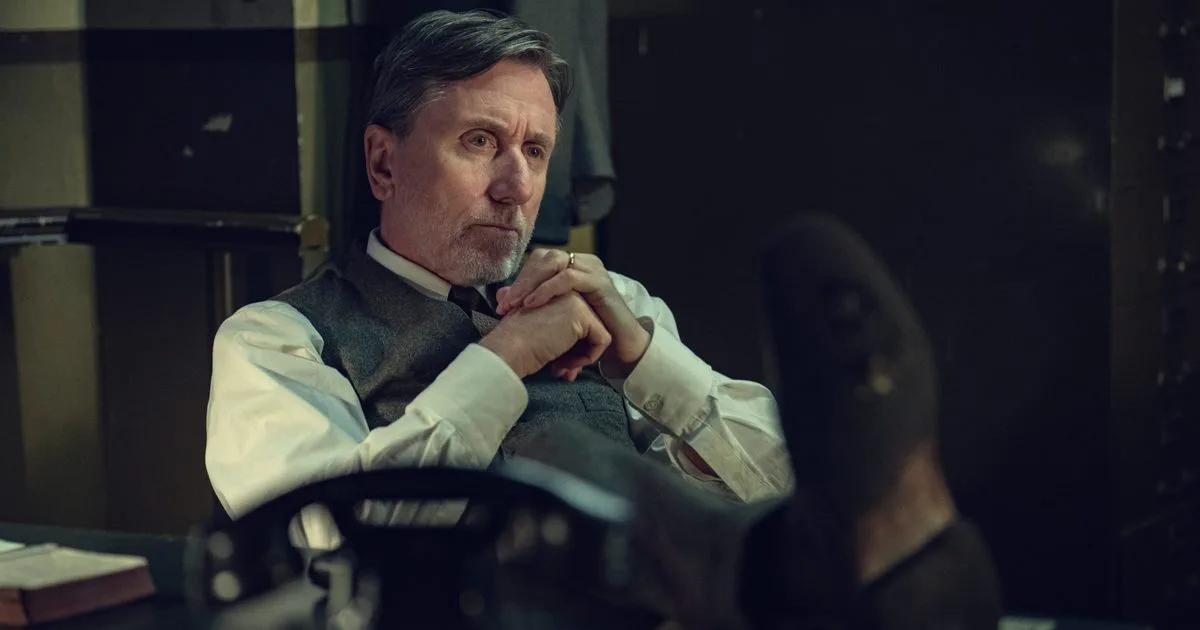
The Real History Behind the Peaky Blinders Nazi Bank Forgery Plot
The Nazi scheme to devastate the British economy, as portrayed in the latest Peaky Blinders film, might appear to be the wild invention of a creative screenwriter. However, the actual events are even more bizarre and compelling than any fictional narrative.
Operation Bernhard: A Factual Foundation
During the Second World War, the Nazis indeed launched a massive initiative aimed at financially destabilising Britain. Known as Operation Bernhard, this remains one of the largest and most sophisticated counterfeiting operations ever undertaken. The story gained renewed attention through the documentary series The Last Hunt for Nazi Gold, which investigated a remote Austrian Alpine lake where thousands of these forged banknotes were discarded as the Third Reich fell.
The Forced Labour Behind the Forgeries
The most astonishing aspect of this tale is not the counterfeit currency itself, but the individuals coerced into producing it. The concept of attacking Britain via its sterling currency emerged early in the war within Nazi security circles. They believed that eroding confidence in the pound could cripple Britain's capacity to fund its military efforts.
Bernhard Krüger, a meticulous SS officer, was tasked with executing this plan. His approach was brutally pragmatic: he recruited Europe's finest printers and counterfeiters from concentration camps. Prisoners with expertise in printing, engraving, or graphic design were identified across Nazi-occupied territories and transported to Sachsenhausen concentration camp near Berlin.
These prisoners were housed in a sealed compound called Block 19, where conditions were marginally better than elsewhere in the camp—they received beds, sufficient food, and even newspapers. Yet, their survival hinged entirely on their ability to create flawless forgeries; failure likely meant execution.
The Unlikely Team of Master Forgers
The group assembled at Sachsenhausen comprised a unique collection of talents. Key members included:
- Salomon Smolianoff, a Russian-born engraver with a pre-war history of counterfeiting banknotes across Europe, whose exceptional skills were vital to the operation.
- Adolf Burger, a Slovak printer arrested for forging baptismal certificates to aid Jews, who later documented the surreal tension of producing forgeries for the Nazis while relying on that very skill to stay alive.
- Oskar Stein, another craftsman whose technical precision helped replicate the intricate designs of British currency.
Together, they established what became the most advanced counterfeiting workshop in history. Forging British banknotes was an immense challenge, as pre-war Bank of England notes were among the world's most difficult to reproduce. The paper, made from linen fibres rather than wood pulp, required months of experimentation to mimic accurately.
The Success and Deployment of the Forgeries
Under intense SS pressure, the Sachsenhausen team succeeded by 1943, producing forgeries so convincing that even trained bankers often could not distinguish them from genuine notes. In total, the Nazis printed an estimated £132 million worth of counterfeit British currency—a staggering sum at the time.
The original plan involved scattering forged notes over Britain via aircraft to incite panic, but this was abandoned when German intelligence surmised that Britons might simply keep the money. Instead, the notes were used covertly to finance Nazi intelligence operations across Europe, paying agents and purchasing supplies, with large amounts laundered through neutral countries' banks.
Britain's Response and the Aftermath
By 1943, the Bank of England became aware of high-quality counterfeits circulating internationally. In response, it ceased issuing notes of £10 and above, and post-war, Britain introduced redesigned banknotes with enhanced security features. While Operation Bernhard did not collapse the pound, it forced a reevaluation of currency security.
As the Third Reich crumbled in 1945, the SS tried to erase evidence of the operation. The forgers were evacuated and mostly liberated by American troops, later leading quiet lives. The printing equipment and vast quantities of forged notes were dumped into Lake Toplitz in the Austrian Alps, where they remained until recovered by divers in the late 1950s.
A Modern Encounter with History
Recently, a forged £10 note from Operation Bernhard was discovered at Colin Narbeth & Son, a historic currency specialist in London. At first glance, it appears authentic, with elegant typography and a watermark, but experts can detect subtle discrepancies in layout. This relic serves as a tangible reminder of the operation's sophistication and the enduring secrets of its creators.
The Peaky Blinders film brings this extraordinary chapter of history to life, highlighting how reality can surpass imagination in its strangeness.




