
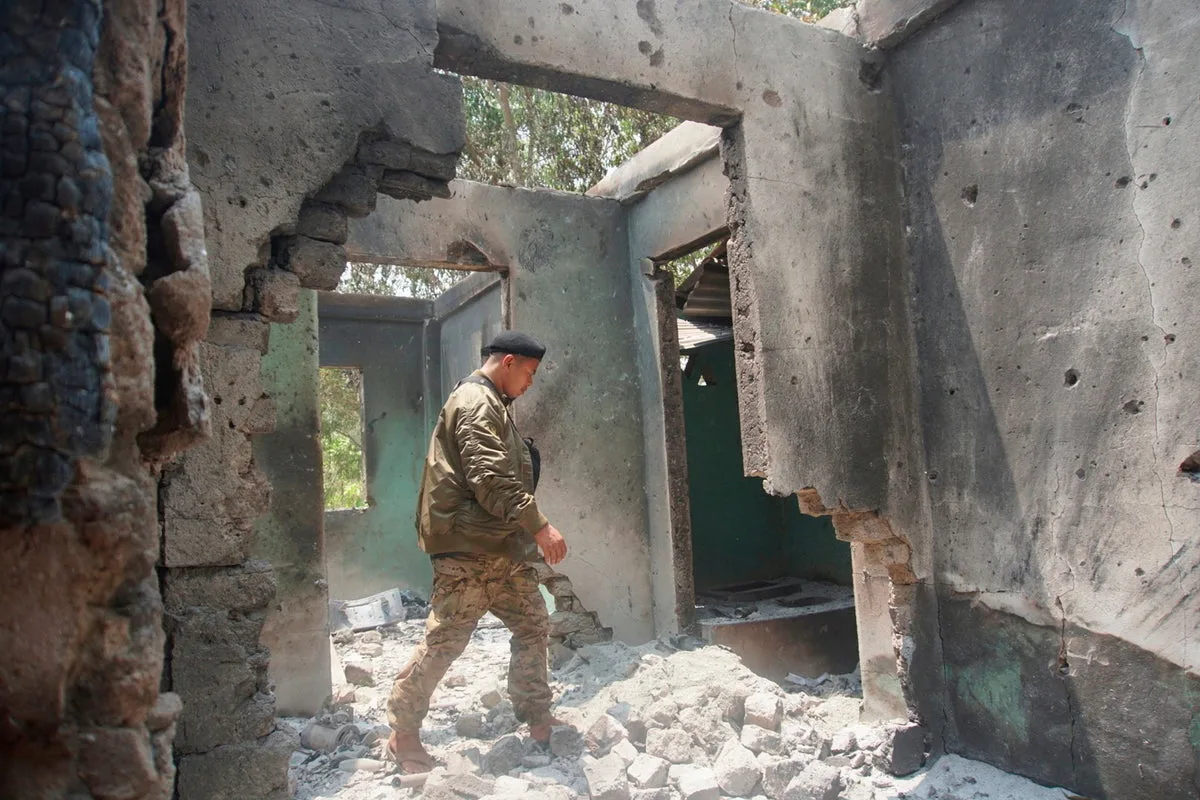
A little more than a year ago, Myanmar's military was on the back foot in the country's civil war, pushed out of large areas in the north by an alliance of seasoned militias and forced into defensive action elsewhere by established groups and new pro-democracy guerrillas. However, with its ranks swollen by tens of thousands of new conscripts, the Tatmadaw has reversed some losses and appears poised to resume the offensive, while some opposition groups have left the fight and others have been weakened by infighting and supply issues.
“I think we're nearing a crescendo here where the Tatmadaw is going to reassert itself and the resistance movement is going to peter out,” said Morgan Michaels, a Singapore-based analyst with the International Institute of Strategic Studies. “That doesn't mean armed resistance will peter out — armed resistance will always continue in Myanmar until there's a comprehensive, negotiated political solution, but the Tatmadaw has retaken the strategic initiative.”
After five years of fighting that has killed tens of thousands, including some 8,000 civilians, and displaced millions, there is a general weariness among both fighters and the population, said Aung Thu Nyein, a political analyst from Myanmar now in Thailand. “There are many saying that the local population doesn't care much who will win the war, but (just want) to stop fighting,” he said.
China, a major arms supplier to the Tatmadaw along with Russia, is pressing for stability in Myanmar to secure its investments in mines, pipelines and other infrastructure. Beijing initially supported the Three Brotherhood Alliance offensive in October 2023 but has since cut arms supplies to the militias and pressured them to stop fighting. Two of the three alliance members agreed to ceasefires last year, leaving only the Arakan Army still actively fighting the Tatmadaw in Rakhine state.
In the face of an anticipated intensification of attacks, the Burma Liberation Democratic Front, a pro-democracy group, said there is a need for top-level coordination of resistance operations between established Ethnic Armed Organizations and the shadow National Unity Government. However, it acknowledged differences in strategy and tactics, and warned that the Tatmadaw is actively attempting to divide revolutionary forces.




