
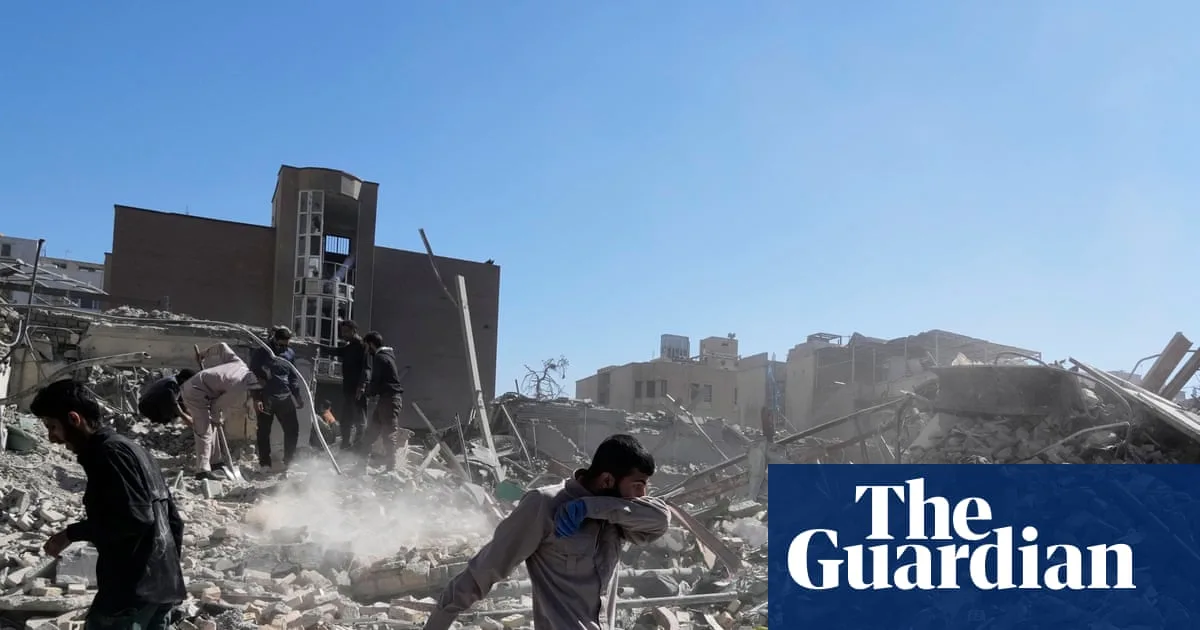
Iranian drones struck the US embassy in Riyadh as Tehran continued waves of retaliatory strikes in the Gulf and Israel. Israeli soldiers began operating in southern Lebanon on the fourth day of an increasingly regional war. A near-total internet blackout has made verifying civilian casualties difficult, but multiple sources report rising death tolls.
The US-based Human Rights Activists news agency reported at least 742 civilians killed, including 176 children, with hundreds more cases under review. The Iranian Red Crescent Society stated 787 deaths, while Norway-based Hengaw counted at least 1,500 deaths, including 200 civilians and 1,300 Iranian military members. The figures are expected to rise as the conflict continues.
Donald Trump said on Monday that the US campaign was initially projected to last four to five weeks but could 'go far longer than that'. The US state department urged Americans to leave more than a dozen Middle Eastern countries, including Saudi Arabia and the UAE, as the situation worsens.
Legal experts consulted by The Guardian agreed that the initial US strikes were unlawful under international law. Professor Susan Breau of the Institute of Advanced Legal Studies stated, 'There doesn't seem to be any evidence of an imminent threat by Iran.' The US constitution requires Congress to formally declare war, but the president did not seek prior approval.
Spain denied the US permission to use jointly operated military bases for what it called an 'unjustified' assault. Trump criticised the UK for taking too long to approve American use of its airbases. The Strait of Hormuz, controlled by Iran and a key route for a fifth of global seaborne oil, is now effectively closed, causing oil prices to jump and raising fears of global cost-of-living pressures.




