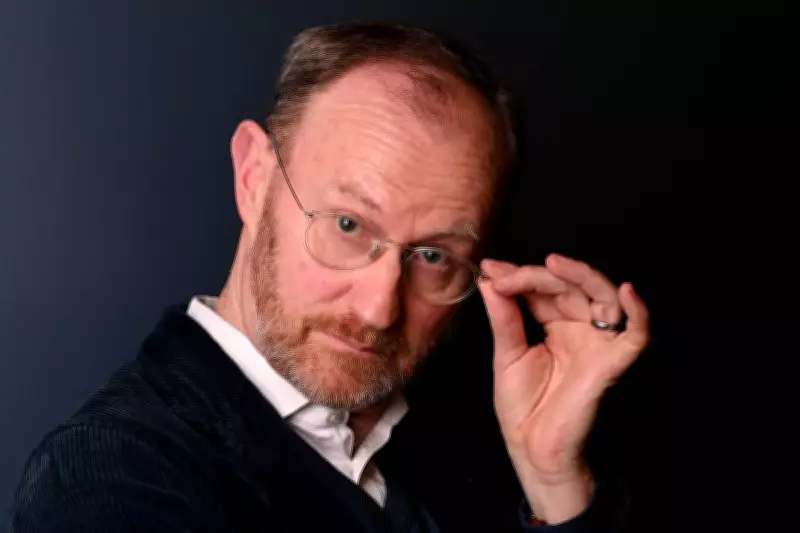
Mark Gatiss Confronts Fascism in Brecht Revival at Royal Shakespeare Company
Mark Gatiss, the acclaimed writer and actor celebrated for his work on Sherlock, Doctor Who, and The League of Gentlemen, is taking on a chilling role in a revival of Bertolt Brecht's 1941 play, The Resistible Rise of Arturo Ui. In this production at the Royal Shakespeare Company, Gatiss portrays a character modelled on Adolf Hitler, reimagined as a vegetable-peddling mobster in 1930s Chicago. The play, written in just two weeks, mirrors Hitler's ascent to power, and Gatiss describes it as "like a big sketch – it's deliberately cartoony," yet notes that "there are parts of it that are chilling."
A Timely Warning Against Fascist Resurgence
Gatiss, speaking from Stratford-upon-Avon where the play is directed by Seán Linnen, reflects on the urgency of the production in today's political climate. He observes that the British once comforted themselves with the myth that fascism was "not to our taste," often invoking a "Blitz Spirit" narrative. However, he warns that this complacency is dangerous, citing George Orwell's insight that fascism in Britain would be disguised, perhaps as a "cheery policeman," using national symbols like the lion and unicorn rather than overt emblems like the swastika.
The actor points to contemporary figures such as Donald Trump and Nigel Farage, whose ideologies have drawn accusations of fascist tendencies. Gatiss expresses concern that even if American fascism falters, its influence could spread, noting the narrative that Farage might become Prime Minister. "It almost feels inevitable, and that's what's very frightening – because those 'inevitabilities' have a way of coming true," he says, highlighting the power of such perceptions in shaping political realities.

Brecht's Legacy and Theatrical Provocation
Gatiss delves into the irony of performing Brecht's work, given the playwright's own authoritarian reputation. Posthumous biographies reveal Brecht as a figure who took credit for others' work and was compared to Hitler by close associates. "It's quite startling how monstrous [Brecht] was," Gatiss remarks, adding that the term "Brechtian" has become a trademark of sorts, overshadowing the collaborative nature of his productions.
Despite this, Gatiss sees theatre as a vital platform for political statement, more so than television, which he believes has become less overtly political. He cites exceptions like Mr Bates vs the Post Office, which sparked real-world change, but acknowledges that plays like Arturo Ui may not "shift the world off its axis." Yet, he insists on the importance of microcosmic efforts, stating, "That's all you can do. I don't think it means that plays don't have any power, because I think they really do."
From Sci-Fi Fandom to Political Commentary
Gatiss's career spans from his early days as a Doctor Who fan and writer to his collaborations with Steven Moffat on Sherlock and Dracula. He describes himself as both a "politics junkie" and an unabashed nerd, quoting Star Trek and reflecting on nostalgia. When asked about a potential Sherlock return, he notes the public's enduring curiosity but laments how such discussions often devolve into clickbait.
His recent roles include blockbuster films like Fantastic Four: First Steps and Mission: Impossible – The Final Reckoning, but he values the liberty of theatre for provocative storytelling. Gatiss's optimism has been tested by current events, leading him to limit news consumption due to its "debilitating" effect. He recalls filmmaker Nicholas Meyer's bleak view of the future as "ashes," though Gatiss himself maintains a glimmer of hope amidst the darkness.
The Resistible Rise of Arturo Ui runs at the RSC's Swan Theatre in Stratford-upon-Avon until 30 May, offering a stark reminder of history's lessons in an era of rising political extremism.