
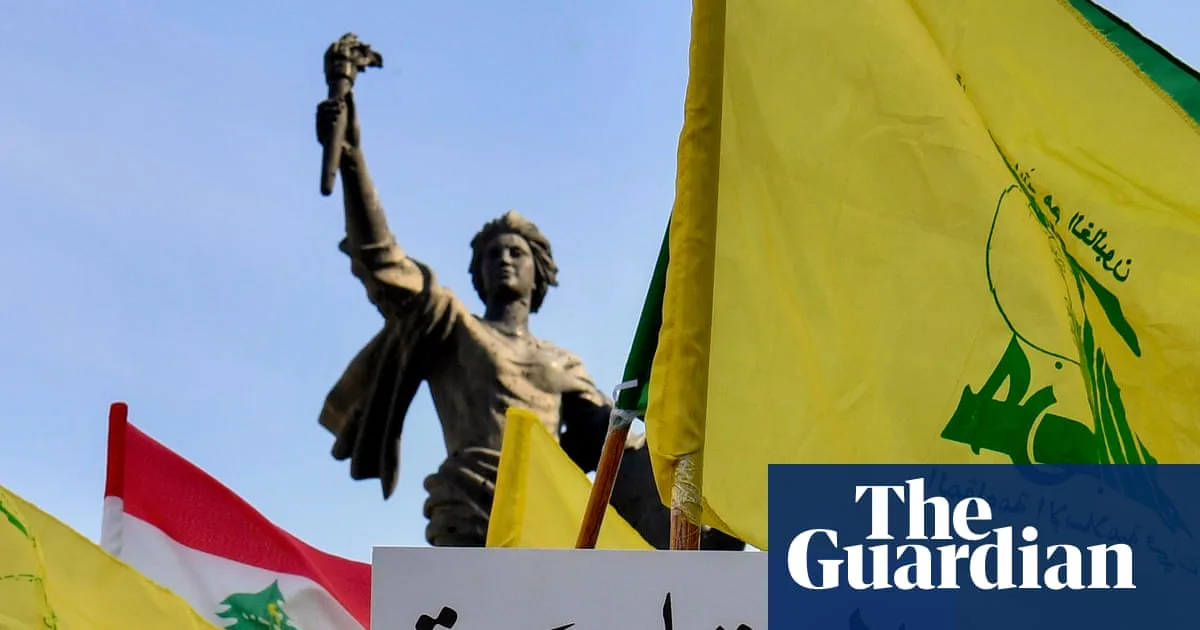
Hezbollah has rejected the US-brokered ceasefire agreed by the Lebanese and Israeli governments, throwing the future of the truce and regional peace negotiations into question. The group's leader, Naim Qassem, described the plan as a “roadmap to annihilate part of the Lebanese people” in a statement on Thursday.
Qassem demanded a complete ceasefire and the withdrawal of Israeli troops from Lebanon, warning that northern Israel would not be safe as long as Lebanese villages were being bombed. “As long as the occupation exists, the resistance will continue,” he said, urging officials to end “this farce and humiliation called direct negotiations.”
The Israeli and Lebanese governments had agreed the ceasefire on Monday night, which called for a complete cessation of fire from Hezbollah and the evacuation of all its fighters south of the Litani River. However, the Lebanese army is not a party to the conflict, and the Lebanese government has been negotiating without Hezbollah as part of its effort to reassert control. Prime Minister Nawaf Salam defended the talks, saying the negotiation track was the fastest and least costly road for Lebanon.
Hezbollah's rejection echoed demands from Tehran. The head of Iran's Quds Force, Esmail Qaani, wrote that supporting the resistance in Lebanon was a duty and that removing Israel from the region was an attainable goal. He called for Israel to withdraw to its prewar positions. Iran's foreign ministry said Lebanon was an “integral part of any ceasefire and any final agreement.”
Despite the agreement, fighting continued on Thursday. Israel carried out airstrikes in southern Lebanon and the western Bekaa valley, killing four people, while Hezbollah said it targeted Israeli soldiers in the village of Qantara. Israel's defence minister, Israel Katz, said his country had “freedom of action, backed by the United States, to strike Beirut in response to attacks.” He added that Israeli troops would remain in south Lebanon to maintain a buffer zone.
Israel controls more than 600 square kilometres of territory in southern Lebanon and has destroyed dozens of border villages, preventing hundreds from returning home. Lebanon and Israel have agreed to create “pilot zones” where the Lebanese armed forces would take exclusive control. President Joseph Aoun suggested the first pilot zone be in the area of Beaufort Castle, captured by Israeli soldiers earlier in the week.




