Historic Ceasefire Sparks Jubilant Celebrations Across Lebanon
Massive celebrations swept through Lebanon on Friday as a 10-day ceasefire with Israel took effect, creating scenes of jubilation across the nation. US President Donald Trump hailed the development as a "historic day" following intense diplomatic efforts that brought representatives from both countries together in Washington for their first direct talks in over three decades.
Streets Filled with Celebration and Return
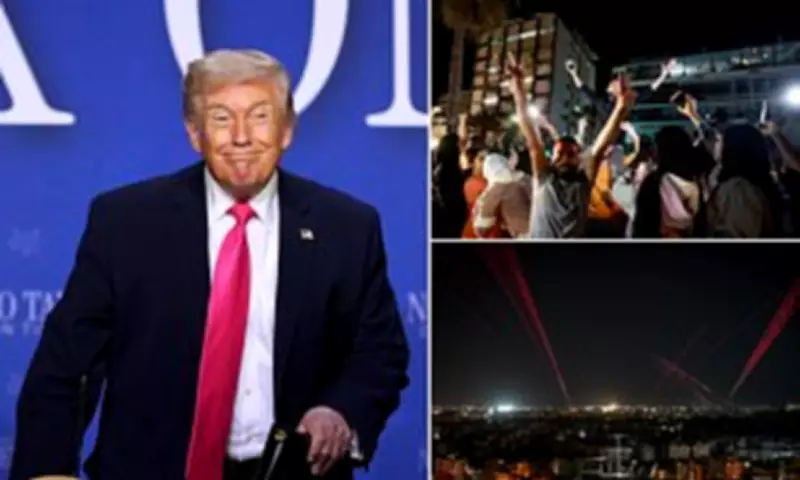
When the ceasefire officially began, barrages of celebratory gunshots echoed across Beirut as residents fired weapons into the air. Simultaneously, displaced families started returning to their homes in southern Lebanon, creating long caravans that clogged roadways as residents waved flags from vehicle windows. The night sky illuminated with lights and fireworks as celebrations continued into the evening.
President Trump took to his Truth Social platform to celebrate the diplomatic achievement, writing: "May have been a historic day for Lebanon. Good things are happening!!!" The US president announced the deal on Thursday after speaking with both Israeli and Lebanese officials, following Tuesday's historic diplomatic encounter in Washington.

Complex Ground Realities and Continuing Tensions
Despite the celebrations, the ceasefire remains fraught with complications. Israeli officials have vowed to maintain their forces in southern Lebanon, stating they would attack if threatened. Israeli Prime Minister Benjamin Netanyahu emphasized that while he agreed to the ceasefire "to advance" peace efforts, Israeli troops would not withdraw from the security zone extending six miles into Lebanon.
Hezbollah, the Iranian-backed militant group in Lebanon, responded by asserting that "Israeli occupation on our land grants Lebanon and its people the right to resist it." This stance creates significant challenges for the ceasefire's sustainability, particularly since the Israeli government has previously stated that Hezbollah was not included in the two-week ceasefire deal between the US, Israel and Iran.
Diplomatic Breakthrough After Decades
The agreement represents a major diplomatic breakthrough following the first direct talks between Israeli and Lebanese ambassadors in Washington in decades. A White House official revealed that the deal came after a meeting between the countries' ambassadors and subsequent phone calls from President Trump and Secretary of State Marco Rubio.
Trump spoke Wednesday evening with Prime Minister Netanyahu, who agreed to a ceasefire under certain terms, and later with Lebanon's President Joseph Aoun. The State Department worked with both governments to formulate a memorandum of understanding for the truce, with Trump inviting both leaders to the White House for what he called "the first meaningful talks" between the countries since 1983.
Regional Implications and Continuing Challenges
The ceasefire between Israel and Lebanon marks a significant stepping stone for US efforts to secure a peace deal with Iran. Iranian officials have stated they would not engage in a second round of peace talks with the US unless Israel entered into a ceasefire with Lebanon. Pakistan's army chief, General Asim Munir, was in Tehran on Thursday to secure a second round of negotiations ahead of the April 22 deadline.
However, reports indicate that Israeli shelling continued in the villages of Khiam and Dibbine approximately thirty minutes after the truce went into effect. Hezbollah also continued firing rockets at northern Israeli towns right up to the ceasefire's implementation, with air raid sirens sounding in some border towns less than ten minutes before midnight.
Humanitarian Impact and Future Uncertainties
Lebanese officials claim Israeli strikes have killed more than 2,100 people and displaced over one million residents, while Israeli officials report that Hezbollah's attacks have killed at least a dozen Israeli soldiers and two civilians. It remains unclear when the displaced population will be able to safely return to their homes.

The ceasefire agreement states that Israel reserves the right to defend itself "at any time, against planned, imminent, or ongoing attacks," while otherwise committing not to carry out offensive military operations against Lebanese targets. This wording suggests Israel maintains the freedom to strike at will, creating potential flashpoints for future conflict.
Broader Regional Security Concerns
Tensions continue over the strategic Strait of Hormuz, a narrow waterway through which one-fifth of the world's oil supply traverses. The US has implemented a naval blockade on Iranian ports as Iranian forces attempt to maintain control of the vital waterway. Iran's military has warned it would retaliate by blocking other important shipping routes if the US blockade continues.
Major General Ali Abdollahi Aliabadi, commander of Iran's top military center, threatened to halt all trade in the Persian Gulf, the Gulf of Oman and the Red Sea. Of particular concern is the Bab el-Mandeb, a narrow waterway in the Red Sea where Iranian-aligned Houthi militants control most of the coastline and have previously disrupted shipping.
Despite these tensions, President Trump expressed optimism about bringing Iranian officials back to the negotiating table, suggesting negotiations could begin as early as this weekend. Two Iranian sources indicated signs of compromise emerging regarding Iran's highly enriched uranium stockpile, though significant challenges remain for achieving broader regional stability.