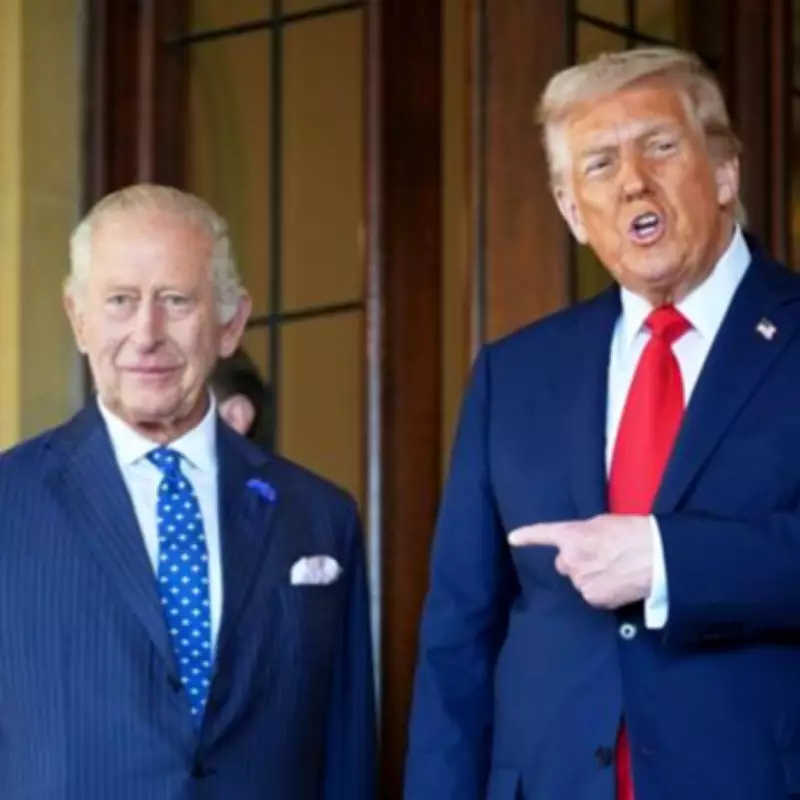
King Charles III is scheduled to meet with US President Donald Trump during a four-day state visit to the United States at the end of April, but the encounter will be held off-camera and in private, avoiding the public setting of the Oval Office. This decision comes as UK and US relations are reported to be at an all-time low, following a series of high-profile spats between Trump and other world leaders in the Oval Office.
Private Tea and One-on-One Meetings Planned
The meeting between King Charles and President Trump will take place privately, with no journalists or film crews present. According to reports, the two will first meet for a private tea hours after Charles's arrival on Monday, April 27, followed by a one-on-one session the next day at the White House. This approach is designed to keep their conversations out of the public eye and maintain privacy, contrasting with the often contentious on-camera meetings Trump has held with other leaders.
Public Speeches to Address Challenges
While the private meetings will be closed to the media, King Charles is expected to publicly address the "challenges" facing the US and UK in a scripted speech to 535 lawmakers in Congress, which will be broadcast on American television. Both leaders are also anticipated to deliver prepared speeches at a White House State Dinner during the visit. A Buckingham Palace spokesperson stated that the visit aims to "reaffirm" and "renew" the special relationship between the two nations, emphasizing that it is a partnership that has endured through many presidencies and reigns.

Background of Strained Relations
The state visit occurs amid tensions, as Trump has recently criticized UK Prime Minister Keir Starmer's response to the US war with Iran, remarking that he was "not happy with the UK" and noting "this is not Winston Churchill we're dealing with." This context adds significance to the private nature of the Charles-Trump meeting, potentially aiming to avoid further public discord.
History of Oval Office Run-Ins
The decision to avoid a public Oval Office meeting follows a string of incidents where Trump engaged in heated exchanges with world leaders in that setting. For example, Ukrainian President Zelensky had a hostile meeting with Trump in April 2025, characterized by a heated back-and-forth. Other leaders, such as German Chancellor Friedrich Merz, Saudi Crown Prince Mohammed bin Salman, and Japan's Prime Minister Sanae Takaichi, have also faced awkward or controversial moments during their Oval Office visits, including remarks about D-Day, questions about Khashoggi's murder, and jokes about Pearl Harbor.
By opting for private discussions, King Charles and President Trump may seek to foster a more constructive dialogue without the pressures of public scrutiny, as both nations navigate complex global challenges and work to strengthen their longstanding alliance.