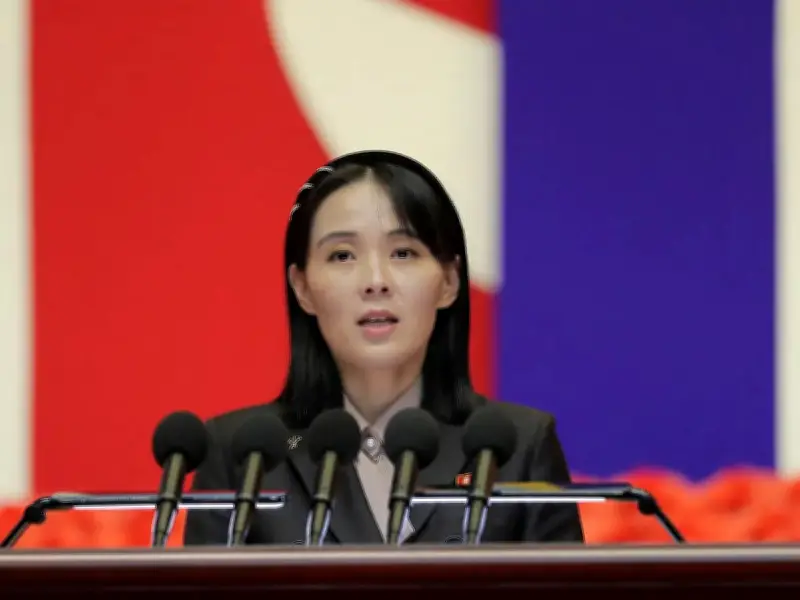
Kim Yo Jong, the sister of North Korean leader Kim Jong Un, issued a public statement on Monday accusing South Korea of firing warning shots and making warning broadcasts along the border since August, and warned that the military is considering deploying more weapons there.
Her statement came as unconfirmed rumours circulated online about her brother's health. The chairman of the China Democracy Party, Wanjun Xie, claimed that Kim Jong Un had died and that Kim Yo Jong had taken control. The claim has not been confirmed.
What Kim Yo Jong Said
Kim Yo Jong said South Korea had fired warning shots and issued warning broadcasts on multiple occasions since August, under the pretext that soldiers from her country had crossed the border.
"A grave situation is prevailing along the southern border due to the reckless behaviour of the ROK military gangsters," she said, referring to South Korea by its official name, the Republic of Korea.
She added that the military was considering "deploying more tactical strike means along the southern border". She described this as a "preemptive and suppressive measure to deal with contingency, and of resuming the loudspeaker broadcasting against the ROK."
Border Tensions and Recent Blasts
Tensions along the border have increased in recent years as North Korea added mines, barbed wire fences, anti-tank barriers and other front-line fortifications in line with its policy of terminating ties with the South.
This month, South Korea blamed North Korea for planted mines that caused blasts at the border on September 21. It urged the North to apologise and remove other mines, but North Korea denied responsibility for the explosions and warned of retaliation if provoked.
South Korea's military has also claimed that North Korean soldiers violated the border's military demarcation line 50 times this year during their fortification works. South Korea responded by firing warning shots and making warning broadcasts.
Loudspeaker Broadcasts
Loudspeaker broadcasts are a psychological warfare campaign used during the Cold War era. They have been used by both the North and South in times of confrontation.
South Korea's liberal government, which came to power last year, halted such broadcasts as part of efforts to improve relations with the North. North Korea later stopped its own broadcasts.