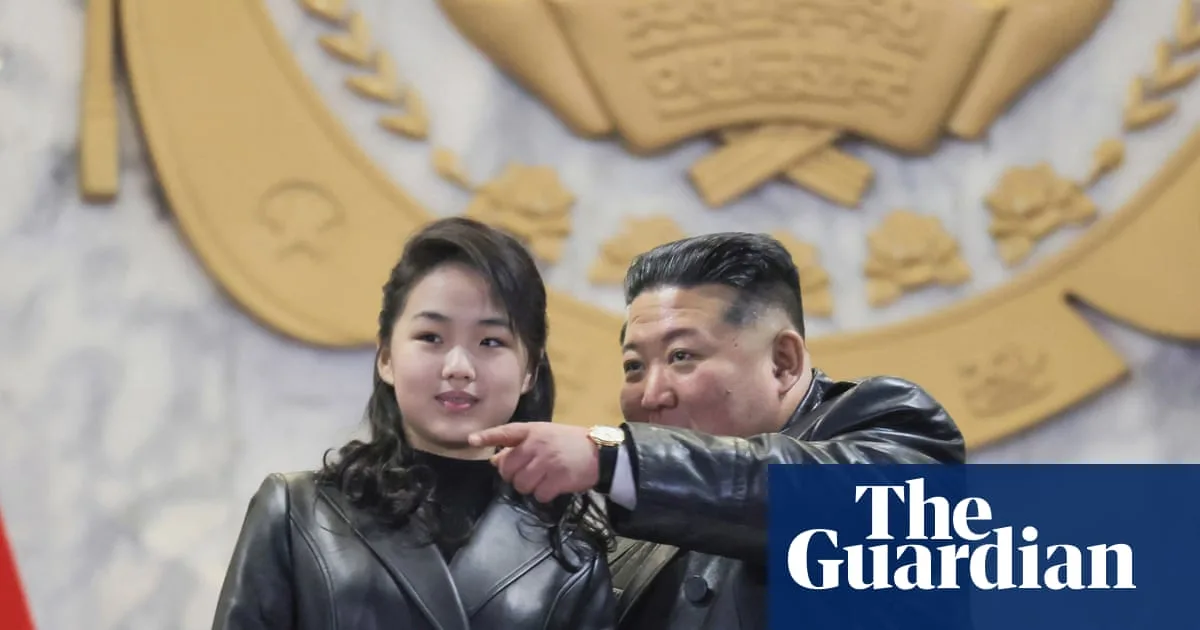
Many observers believe North Korean leader Kim Jong-un has decided that his daughter, Kim Ju-ae, will succeed him as the fourth-generation leader of the Kim dynasty. However, dissenting voices argue that the country's deeply ingrained patriarchal culture could block her path to power.
At a recent Workers' Party congress, Kim Jong-un suggested that the US and North Korea 'could get along' if Washington recognised Pyongyang as a legitimate nuclear power. But for many analysts, the event was a rare chance to speculate on the identity of the country's future leader.
Mitch Shin, a Korea analyst for the Diplomat, wrote that 'the most immediate and insurmountable barricade for Kim Ju-ae is the deeply ingrained patriarchal nature of North Korea.' He added that the country's ageing generals, many in their 60s and 70s, would likely reject a woman as 'supreme leader'.

Some experts suggest Kim may be using his daughter as a 'human shield' for the actual successor, his long-rumoured oldest son. Others argue that the principle of the Mount Paektu bloodline—conferring legitimacy on direct descendants—supersedes patriarchal norms.
South Korea's national intelligence service claimed this month that Kim Jong-un is close to naming Ju-ae as the country's future leader. Professor Leif-Eric Easley of Ewha University noted that she is 'probably not yet old enough to participate in the congress with an official party title'.
Lee Sung-Yoon of the Sejong Institute said Kim Jong-un has 'already established beyond a reasonable doubt that he is grooming his teenage daughter as his successor', pointing to her presence at dozens of official events, including a New Year's Day visit to the Kumsusan Palace of the Sun.