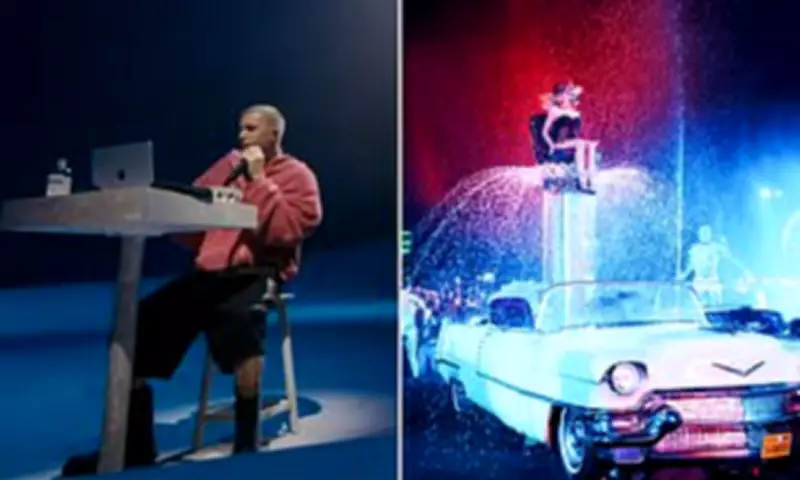
Justin Bieber made his highly anticipated stage return at Coachella on Saturday, headlining the desert festival after a three-and-a-half-year hiatus following health concerns that led him to cancel his 2022 tour. However, the comeback fell dramatically short of expectations, with many fans and critics labelling it "the worst in the festival's history." The 32-year-old singer reportedly received a staggering $10 million for his headline slot, yet delivered a performance that largely involved him singing tracks searched on a laptop, sparking widespread backlash and accusations of industry double standards.
Fans Decry Performance as Lazy and Overpaid
Social media erupted with criticism as viewers compared Bieber's low-energy set to Sabrina Carpenter's headline act from Friday. Carpenter, who was reportedly paid just half of Bieber's fee at $5 million, delivered a star-studded, Hollywood-inspired show dubbed "Sabrinawood," complete with multiple outfit changes, intricate choreography, and elaborate visuals. This stark contrast led fans to call out perceived sexism, arguing that female artists are held to higher standards. One user on X stated, "If Sabrina Carpenter did what Justin Bieber is doing right now, her career would be over," while others highlighted the disparity in effort and payment as evidence of misogyny in the music industry.
Defenders Praise Emotional and Personal Touch
Despite the backlash, some supporters defended Bieber's performance, viewing it as a heartfelt and introspective moment. They described it as him "healing his inner child," with one fan noting, "Seeing him look at his younger self with nothing but love?? Like I've never seen him this relaxed and happy performing." Others appreciated the nostalgic element, as Bieber incorporated old YouTube videos of himself singing covers from his childhood, leading up to his discovery by Usher and Scooter Braun. This segment, which included singing along to clips of his younger self, was seen by believers as a tribute to his journey and a bond with long-time fans.

Detailed Breakdown of the Controversial Set
Bieber took to the stage in a simple hoodie, eschewing a band or background dancers for a laptop and a minimal light show. His setlist spanned from newer tracks like "All I Can Take" and "Speed Demon" to classic hits such as "Baby" and "Sorry." He engaged the audience by asking for song requests via livestream comments, and performed a medley of old favorites while standing beside his laptop. The performance also featured personal songs dedicated to his wife, Hailey Bieber, including "First Place" and "Go Baby," as well as acoustic renditions of lesser-known material. He closed with his latest single, "Daisies," after a series of collaborations with guests like Dijon and Tems.
Sabrina Carpenter's Contrasting Extravaganza
In sharp contrast, Sabrina Carpenter's Coachella set was a meticulously produced spectacle. Her "Sabrinawood" concept included film-set visuals, city backdrops, and appearances by celebrities like Susan Sarandon, Sam Elliott, and Will Ferrell. She packed 20 songs into a dynamic show that shifted between scenes such as a studio and a bar, showcasing high-energy choreography and vocal prowess. This has fueled further debate over the unequal treatment and pay between male and female headliners, with many pointing to Carpenter's performance as a benchmark that Bieber failed to meet.
Industry Implications and Ongoing Discussions
The fallout from Bieber's Coachella appearance has ignited broader conversations about fairness and sexism in entertainment. Critics argue that the $10 million fee for a lacklustre performance highlights systemic issues where male artists can command high pay with minimal effort, while women must excel to earn recognition. As Coachella continues into its second weekend, with Carpenter and Bieber set to perform again, the discourse around double standards is likely to persist, challenging the music industry to address these disparities head-on.