Israeli Military Builds Up Forces at Lebanese Border Amid Regional Escalation
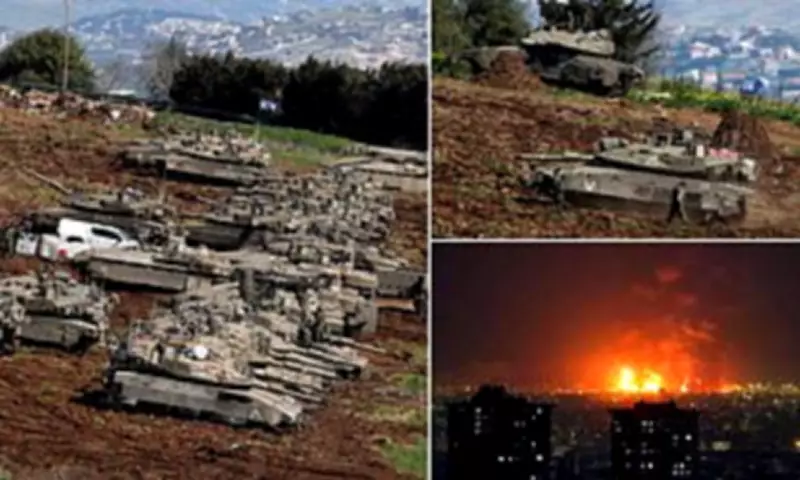
Israeli tanks have been observed massing at the nation's northern border with Lebanon, demonstrating a significant military buildup as the conflict in the Middle East continues to intensify. Soldiers were seen conducting preparations on a hill where the armored formation was positioned, signaling potential further military action in the region.
Netanyahu's Threat of 'Many Surprises'
Israeli Prime Minister Benjamin Netanyahu declared in a recent video statement that Israel possesses an "organized plan with many surprises" for its adversaries. The Israeli leader specifically addressed Iran, stating his nation aims to "destabilize the regime and enable change."
Speaking directly to members of Iran's military, Netanyahu issued a stark warning: "You are also in our sights. Whoever puts his weapon down, no harm will come to him. Whoever doesn't do that, his blood is on his head." To the Iranian people, he claimed Israel seeks not to divide the nation but rather to "free Iran."

Expanding Regional Conflict
The war, which erupted on February 28 following joint US-Israeli strikes against Iran, has resulted in substantial casualties across multiple nations. Official reports indicate at least 1,230 deaths in Iran, more than 300 in Lebanon, and approximately a dozen in Israel.
Recent Israeli strikes have targeted critical infrastructure, including oil storage facilities in Tehran that sent pillars of fire visible against the night sky. This marks the first time civil industrial facilities have been targeted in the current conflict, according to available reports.
International Responses and Diplomatic Movements
French President Emmanuel Macron will travel to Cyprus on Monday to demonstrate solidarity with the European Union nation, which was recently targeted by drone attacks. Macron plans to meet with Cypriot President Nikos Christodoulides and Greek Prime Minister Kyriakos Mitsotakis to coordinate security efforts in the Eastern Mediterranean region.
Iranian Foreign Minister Abbas Araghchi reported that a US airstrike damaged an Iranian desalination plant on Qeshm Island, warning that "the US set this precedent, not Iran." Such infrastructure is crucial for drinking water supplies in the arid Gulf region.
Humanitarian and Environmental Consequences
The Iranian Red Crescent Society reported that approximately 10,000 civilian structures have been damaged across Iran, including 7,943 residential units and 1,617 commercial properties along with medical and educational facilities. The organization has issued warnings about toxic pollutants in Tehran's air following fires at oil storage depots.
Authorities have advised residents to avoid using air conditioners, refrain from going outside immediately after rainfall due to concerns about toxic acid rain, protect exposed food, and gargle salt water to cleanse throats of oily soot particles. Tehran's governor has recommended everyone wear masks outdoors.
Regional Security Concerns
The United Arab Emirates' Defence Ministry reported intercepting 16 missiles, with a seventeenth falling into the sea, during recent attacks. While most drones were intercepted, four fell on UAE territory. The ministry stated readiness to "firmly confront" ongoing threats.
Iranian President Masoud Pezeshkian has threatened to increase attacks on US targets throughout the Middle East, stating: "When we are attacked, we have no choice but to respond. The more pressure they impose on us, the stronger our response will naturally be."
Economic Impact and Global Concerns
Iranian Parliament Speaker Mohammad Bagher Qalibaf warned that oil prices will continue to soar, inflicting pain on the global economy as long as the conflict persists. Oil prices have reached their highest levels since 2023, with Brent crude jumping 8.5% to $92.69 per barrel and US crude climbing 12.2% to $90.90 per barrel.
Qalibaf emphasized that if the war continues, "there will be neither a way to sell oil nor the ability to produce it," affecting not just the US but the entire Middle East and world due to what he called "Netanyahu's delusions."

Civilian Casualties and Cross-Border Impacts
The Iranian Health Ministry reported that US and Israeli strikes have killed 200 children and approximately 200 women among the more than 1,200 total fatalities. More than 1,000 others have been injured, including about 400 women, since the conflict began.
International civilian casualties have also occurred, with a Pakistani driver killed in Dubai when debris from an aerial interception fell on his vehicle. This marks the second Pakistani death in Dubai recently, following previous fatalities of Nepali and Bangladeshi civilians from missile debris in the emirate.
Military Developments and Strategic Targets
Israel's military announced on Sunday that it had struck a series of F-14 fighter jets that pre-revolutionary Iran purchased from the United States. The fleet, parked at Isfahan Airport south of Tehran, historically served as a pillar of Iran's air defense system. The Israeli military also reported striking detection and air defense systems, though it did not confirm whether the jets were destroyed.
As the conflict enters its second week, regional tensions continue to mount with no immediate resolution in sight, raising concerns about further escalation and humanitarian consequences across the Middle East.