
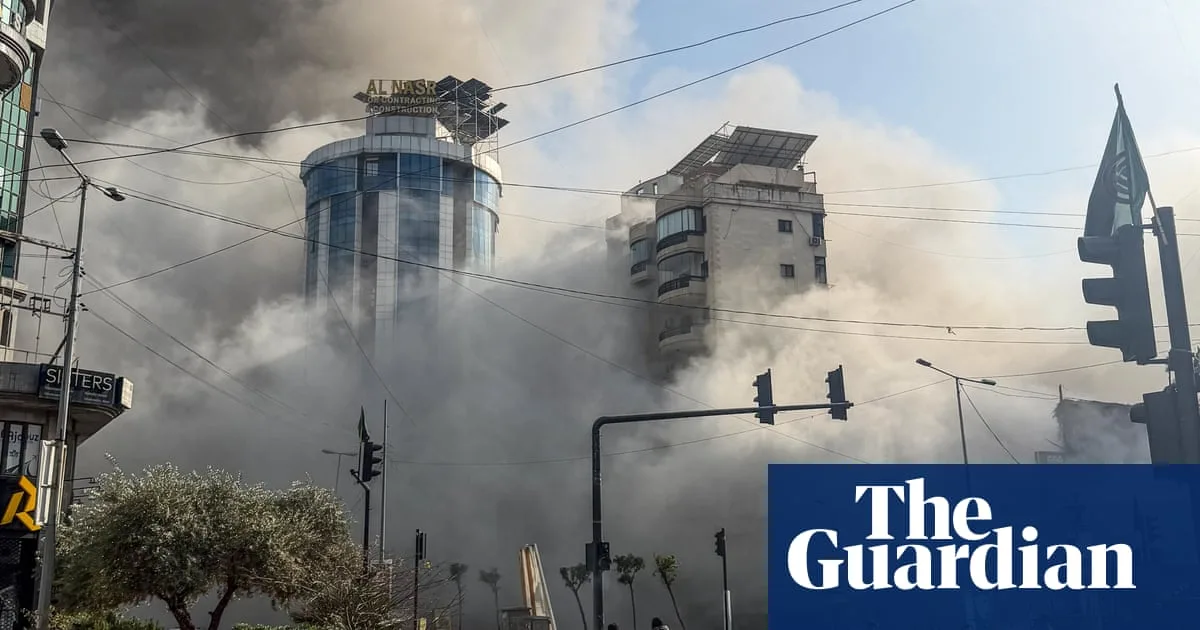
The ding of half a million phones, a pause and a collective gasp: in an instant, more than 500,000 people had been made homeless. Shooting in the air, panicked phone calls and honking filled the streets of Beirut as people began to flee. Thousands abandoned their cars and began the slow march to the sea, desperate to escape the Israeli bombs which they knew would soon fall on their homes.
The Israeli army issued its largest, most sweeping displacement order yet, for the immediate evacuation of the southern suburbs of Beirut, an area the size of lower Manhattan. By Friday, the usually vibrant area was a ghost town, the throngs of people replaced by rubble and fires from Israeli bombing. The entire country south of the Litani River, roughly 10% of Lebanon, had been put under a displacement order the day before.
“A person leaving his house can only take a few clothes and maybe a mattress. All of the beautiful memories stay behind in the house, in the neighbourhood,” said Ali Hamdan, a 31-year-old father from the Haret Hreik neighbourhood in Beirut’s southern suburbs. Hamdan did not wait for displacement orders; he immediately put his family in the car and found them an apartment in a village north of Beirut on Monday.
When the barrage started early on Friday, entire buildings were levelled and storefronts were blown in by the percussive force of the blasts. Residents across the capital city left their windows open to stop them shattering; the panes rattled throughout the morning with each of Israel’s 26 strikes. “The destruction is significant. It seems deliberate. Entire buildings are being brought down,” said Ahmad al-Khasneh, the mayor of Ghobeiri, noting that some elderly or disabled people had not been able to evacuate despite his entreaties for help from the Lebanese state.
Outside the Shia-majority areas, hearts had hardened. People viewed the displaced with suspicion, closing their doors with a justification that refugees could be secret members of Hezbollah. A landlord in Achrafieh described turning away a refugee: “He said his name was ‘Bob’, as if I couldn’t tell from his accent where he was from.” Others raised rents, taking advantage of the situation.




