Israel Launches Major Pre-Dawn Airstrike on Tehran Airport
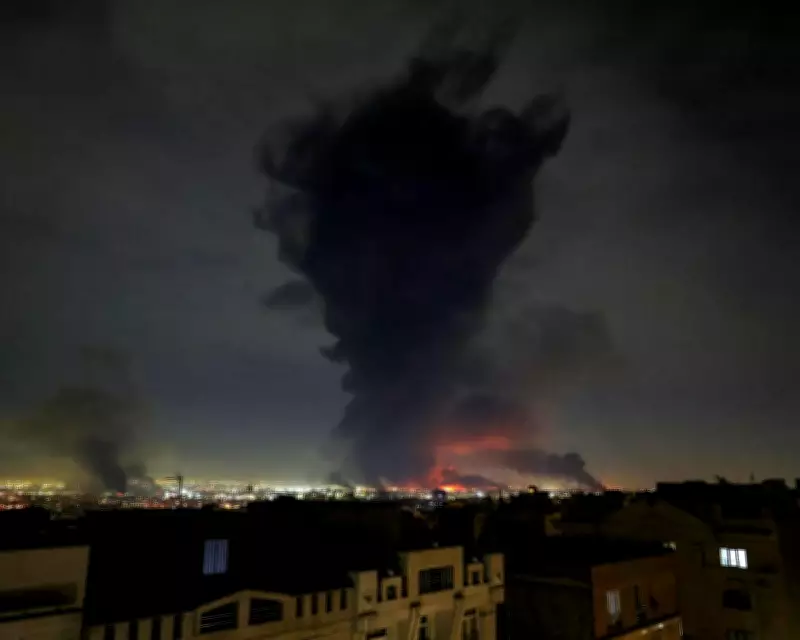
Israel has confirmed it launched a fresh wave of strikes on Iran, deploying 80 fighter jets in a pre-dawn blitz that set one of Tehran's primary airports on fire. The Israeli military stated that the targets included a military academy, an underground command centre, and a missile storage facility. Photographs from the scene showed flames and thick plumes of smoke rising from Mehrabad International Airport, one of the two main airports serving the Iranian capital.
Iran's President Rejects Trump's Surrender Demand
In a prerecorded address broadcast on state television on Saturday, Iran's President Masoud Pezeshkian firmly rejected Donald Trump's call for the country's "unconditional surrender," labelling it a "dream." Pezeshkian declared that Iran would never capitulate, responding to remarks by the US president, who asserted on Friday that only Iran's total submission could end the war. "Iran's enemies must take their dream of the Iranian people's unconditional surrender to their graves," Pezeshkian stated, escalating tensions on the eighth day of a conflict that has disrupted global oil supplies and severely impacted international air travel.
Rare Apology to Neighbouring Gulf States
Simultaneously, Pezeshkian issued a rare apology to neighbouring Gulf states for Iran's recent "actions," in an apparent effort to ease regional anger after Iranian strikes hit civilian targets in Gulf Arab countries. "I personally apologise to neighbouring countries that were affected by Iran's actions," he said. Tehran has responded to attacks on its territory by targeting Israel and Gulf Arab states hosting US military installations. Over the past week, the United Arab Emirates, Kuwait, Qatar, Bahrain, and Saudi Arabia have all reported drone and missile attacks. Pezeshkian noted that Iran's temporary leadership council had approved suspending attacks on nearby countries unless an assault on Iran originated from those states.

Regional Retaliation and Escalating Conflict
Iran retaliated on Saturday with air raid sirens sounding and explosions reported above Jerusalem, as well as in Gulf cities including Dubai and Manama. Near Riyadh, Saudi Arabia intercepted a ballistic missile aimed at an airbase hosting US military personnel. Iran's Islamic Revolutionary Guards also claimed to have targeted the oil tanker Prima in the Gulf as it attempted to pass through the Strait of Hormuz, a narrow maritime choke point that Iran has effectively closed, further straining global shipping.
Humanitarian Crisis and Casualty Figures
The war, now entering its second week, was triggered by joint airstrikes by Israel and the US that killed Iran's supreme leader, Ali Khamenei. Since then, the conflict has rapidly widened, spilling into Lebanon and reaching as far as the eastern Mediterranean and the Indian Ocean. Iran's health ministry reported at least 926 civilians killed and about 6,000 injured. Israel has intensified airstrikes in Lebanon, repeatedly targeting the southern suburbs of Beirut. Lebanon's health ministry stated at least 217 people have been killed, with Prime Minister Nawaf Salam warning of a looming humanitarian disaster. The Norwegian Refugee Council estimated about 300,000 people have fled their homes.
It remains unclear whether Pezeshkian's remarks signal a broader decision by Tehran to scale back its campaign, or what prompted the apparent shift, with reports suggesting some strikes were still being directed at Gulf states on Saturday morning. The situation continues to evolve, with global markets and international relations deeply affected by the ongoing hostilities.