Israel's ambassador to Australia says the third anniversary of October 7 is an opportunity for both countries to return to "traditional friendship". But, in the lead-up to commemorations on Wednesday marking Hamas' terror attack, leaders of Australia's Palestinian community say the federal government should do more to help the diaspora suffering since the war on Gaza.
Ambassador's call for reset
Speaking ahead of the anniversary, Hillel Newman acknowledged relations had become "strained" between Australia and Israel but wanted to see improvement. "We have challenges, but I have come with a lot of goodwill in order to try and make a positive change in the relationship, perhaps even reset the relationship and return both sides to the initial historical traditional friendship," the Israeli ambassador told Guardian Australia.
"There have been issues between our two countries. We can have differences of opinion, but we should not allow differences of opinion to overshadow and overcrowd the overall relationship. We can understand if Australia has criticism of this issue or another."
Background of strained ties
The comments come despite Israel's foreign ministry publicly criticising foreign affairs minister, Penny Wong, on social media in recent weeks, branding comments she made to the United Nations about settler violence in the West Bank a "blatant lie". It follows an earlier intervention into domestic Australian politics, where Israel urged Labor to soften criticism in a draft policy platform that condemned settler violence and a controversial death penalty law.
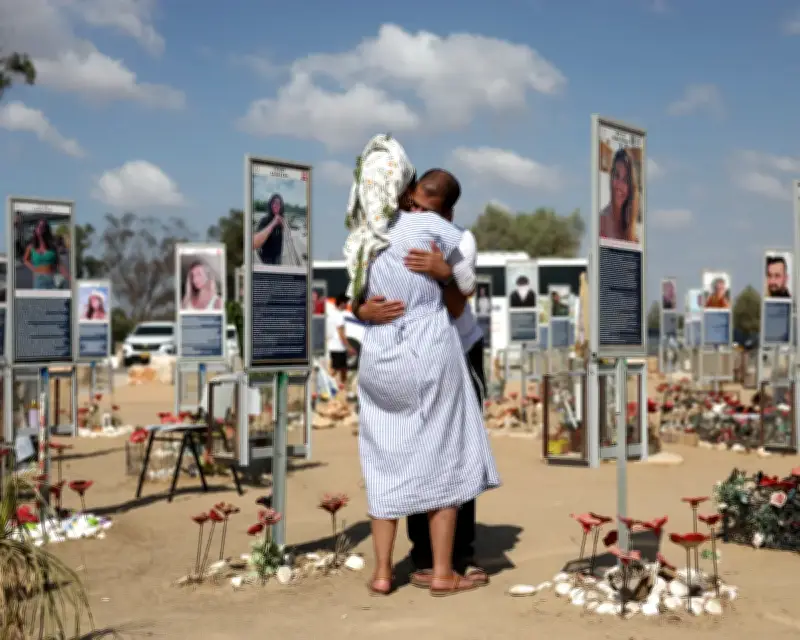
Since the 2023 attack – in which Hamas militants killed about 1,200 Israelis and 250 people were taken hostage, in what is considered the single deadliest day for Jewish people since the Holocaust – there has been a near breakdown in ties between the Israeli government and federal Labor. Israel's response to the attack and bombardment of Gaza has killed more than 74,000 Palestinians.
Australia has joined other countries in taking an increasingly stronger stance against Israel, including action alongside the UK, Canada and New Zealand to sanction Israeli politicians Itamar Ben-Gvir and Bezalel Smotrich, accusing the two of inciting violence against Palestinians. But the federal government last month stopped short of joining the UK and other partners in imposing a ban on goods from illegal settlements in the occupied West Bank.
Impact of Frankcom's death
Relations deteriorated further when Australian aid worker Zomi Frankcom was killed in a humanitarian convoy struck by Israeli drones in April 2024. Albanese and Wong slammed a decision by the Israel Defense Forces in August not to pursue criminal proceedings over Frankcom's death. Pressed on Israel's failure to release audio from the strike, Newman stressed it was an issue for the Israeli military, but that his country remained open to any request for potential reparations for Frankcom's family and remained in favour of continued discussions.
Wong has been working with the Frankcom family on an appropriate response to the decision not to press criminal charges. She said in a statement that the Australian government had condemned the Israeli government's decision not to pursue criminal proceedings against those responsible for killing Frankcom and her World Central Kitchen colleagues. "The Australian government will not stop pressing Israel for justice for Zomi and her colleagues. We continue to engage closely with the Frankcom family on further action," Wong said. "7 October is a day of profound grief and remembrance. We mourn those who were killed in the Hamas terrorist attacks, including Australian Galit Carbone, and all those who have suffered from antisemitic violence around the world."
Community and political reactions
The Australia Palestine Advocacy Network president, Nasser Mashni, said the impact from three years' of war was measured in two places at once: Gaza and in the diaspora. "In Australia, the impact is a quieter but a relentless erosion of our place in this country," he said. "Underpinning every discussion that happens about 'us', but without 'us', is a nagging suggestion that we don't belong, that we must prove we are Australian, and even human. This is the domestic footprint of genocide: protesting a demand for its end, and stopping Australia's complicity in it, is more controversial than supporting it."
In 2025, a UN commission found that Israel is committing genocide in Gaza, citing tens of thousands of civilian deaths and massive destruction. Israel strongly denies accusations of genocide. The Greens leader, David Shoebridge, said Australians would reflect on the devastating toll of violence. "The attacks on October 7 were condemned by the Greens at the time, as our party has a deep belief in peace and non-violence," he said. "It is that same core value that means we condemn the ongoing genocide in Gaza and ethnic cleansing in the West Bank."
The cooler relations between Israel and Australia come against a backdrop of antisemitic attacks in Australia, as the nation prepares to face the first anniversary of the Bondi massacre on 14 December. Fifteen people were killed by a father-son duo who opened fire on a Hanukkah celebration. A royal commission sparked by the Bondi attack is due to release its final report on 18 December.
The Executive Council of Australian Jewry co-chief executive Alex Ryvchin said the October 7 attack and the "unsatisfactory responses" to it meant "troubled, uncertain times lie ahead for us all". "But if the jihadists thought mass terror at home and abroad would bring about some global capitulation by Israel and Jewish communities or that the majority of Australians would turn on their Jewish friends and neighbours, they have failed dismally," he said. The shadow defence minister, James Paterson, said the October 7 attack had changed Australia in "terrible ways" and culminated in the Bondi attack. "Fixing this societal cancer will take years of sustained effort from the entire community, from the prime minister down," he said.