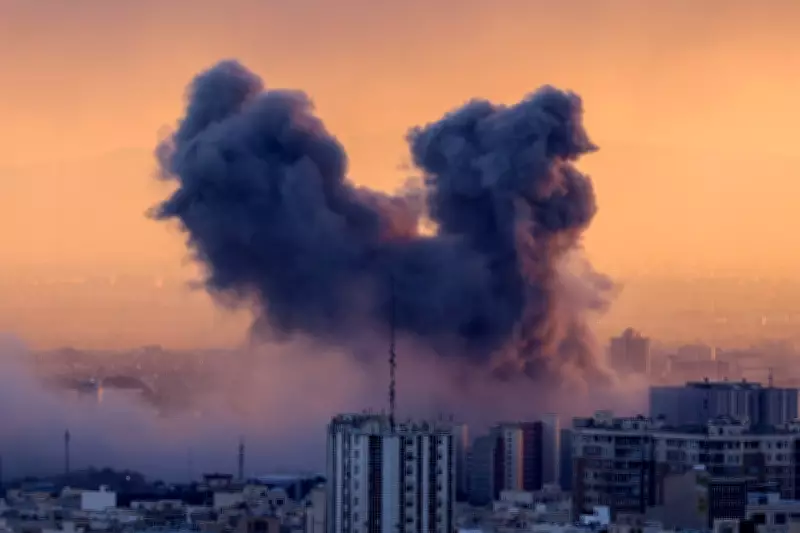
Iran's 'New Cards' in Potential War with US and Israel: Strategic Options Analyzed
Iran has issued a stark warning that it has prepared "new cards" for potential deployment on the battlefield, as fears intensify that a fragile two-week ceasefire with the United States may collapse without a lasting peace agreement. The announcement comes amid heightened regional tensions and military posturing.
Diplomatic Warnings and Military Preparations
Mohammad-Bagher Ghalibaf, Tehran's parliamentary speaker and lead negotiator, accused former US President Donald Trump of seeking to "justify renewed warmongering" through what he described as an imposed siege and ceasefire violations. In a pointed social media statement, Ghalibaf declared, "We do not accept negotiations under the shadow of threats, and in the past two weeks, we have prepared to reveal new cards on the battlefield."
This rhetoric emerges despite US claims of having significantly depleted Iran's missile stockpiles and launch capabilities. Prior to the ceasefire, Iran's Revolutionary Guards demonstrated sustained offensive capacity, firing a continuous stream of missiles and drones at targets across the Gulf region.

Potential Strategic Moves: Closing Vital Shipping Lanes
One of the most discussed possibilities involves Iran leveraging its alliance with the Houthi rebel group in Yemen to potentially close the Bab-El-Mandeb Strait. This strategic waterway connects the Red Sea to the Gulf of Aden and the Indian Ocean, serving as a crucial artery for global trade, including substantial energy shipments.
Houthi officials have previously threatened closure, with one stating, "If Sana'a makes the decision to close the Bab al-Mandeb, no force would be able to reopen it." The group has called for an end to US policies obstructing peace. Historical data indicates that approximately nine percent of global seaborne-traded petroleum passed through this strait in 2017, highlighting its economic significance.
While the Houthis have conducted attacks on commercial shipping since the Gaza conflict began, a complete strait closure would represent an unprecedented escalation, with uncertain operational feasibility.
Cyber Warfare and Infrastructure Threats
Security agencies have amplified warnings about potential cyber attacks by Iran-affiliated proxies, particularly targeting water and energy facilities. Jeffrey Hall, an Environmental Protection Agency administrator, emphasized the severe risks, noting, "Cyberattacks on drinking water and wastewater systems directly threaten public health and community resilience. A single breach can disrupt treatment or introduce contaminants, damage equipment, and erode public trust."
Multiple US agencies, including the FBI, National Security Agency, and Cybersecurity and Infrastructure Security Agency, have supported advisories on this threat. Iran has a documented history of cyber operations, including alleged involvement in a major Turkish power outage in 2015 and breaches of Israeli government websites in 2022.
Political Retaliation and Assassination Risks
In response to the assassinations of former Supreme Leader Ayatollah Ali Khamenei and other high-ranking Iranian officials in US-Israeli strikes, Tehran may pursue political retaliation. This could involve targeting diplomatic, consular, or trade missions of the US and allied nations, or potentially carrying out assassinations of key individuals linked to these countries.
Renewed Attacks on Gulf Energy Infrastructure
Iran could resume its campaign against energy sites and critical infrastructure across the Gulf, which has already inflicted substantial economic damage. According to Atlantic Council analysis, approximately 83 percent of Iran's total missile and drone strikes during the conflict have targeted Gulf Cooperation Council countries, with the United Arab Emirates particularly affected.
Consulting firm Rystad Energy estimates that Iranian attacks have damaged up to $58 billion worth of energy infrastructure. Targets have included oil and gas production facilities, refineries, and pipelines in Gulf Arab states, while Israel has struck natural gas and petrochemical facilities in Iran.

Fatih Birol, executive director of the International Energy Agency, reported that more than 80 energy facilities have been attacked since US-Israeli strikes ignited the war on February 28, with over a third severely damaged.
As tensions simmer, the international community watches closely to see which of Iran's "new cards" might be played if diplomatic efforts fail and hostilities resume.