Iran's Ancient Jewish Community Defies Conflict as Synagogue Destroyed
On the evening of 6 April, Asef, a 65-year-old member of Tehran's Jewish community, joined fellow worshippers at the Rafi' Nia synagogue for a Passover service. Despite ongoing US-Israeli bombing campaigns targeting Iran, the community bravely gathered to observe their religious traditions in the heart of the Iranian capital.
Passover Celebration Precedes Destruction
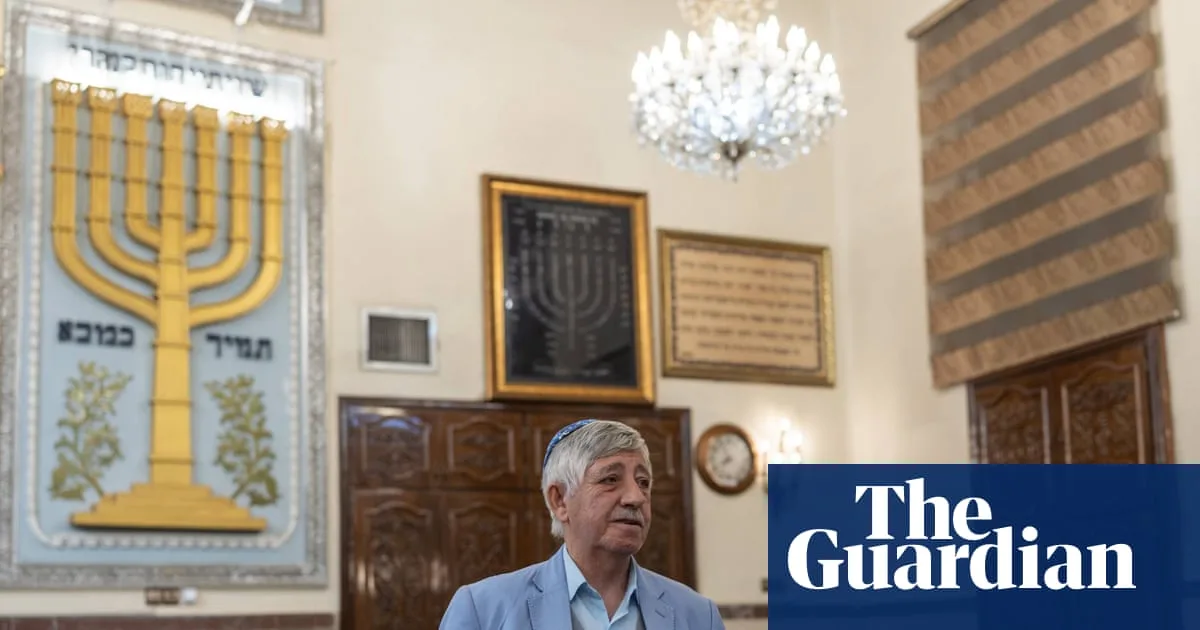
Inside the dimly lit hall adorned with Persian carpets and mint green curtains, Torah verses were recited and prayers murmured quietly. Asef, wearing a kippah with his shirt neatly tucked in, sat among the men while women occupied a separate section. The atmosphere remained reverent though noticeably subdued given the external threats.
"We didn't let the conflict stop us from celebrating," Asef emphasized, noting the community's determination to maintain Passover traditions despite wartime difficulties. After the service concluded after dark, he returned home through unusually quiet streets.
The following morning brought devastating news: an Israeli airstrike had completely destroyed the Rafi' Nia synagogue while Asef prepared for work. The Israeli military described the destruction as "collateral damage" from a strike targeting a commander, but this explanation provided little comfort to the affected community.
Recovery Efforts and Historical Loss
Synagogue members immediately began sifting through rubble and debris, recovering what religious artifacts they could salvage. Three Torah scrolls and several religious books were extracted from shattered brick and twisted rebar, but significant historical volumes remained buried beneath the wreckage.
"It's all under the rubble, including some of our historical volumes," lamented Homayoun Sameh, a member of parliament who heads the Jewish Association of Iran. He visited the destruction site and condemned the attack as disrespectful to their faith, while clarifying that Iran's Jewish community maintains poor relations with the Israeli government.
Remarkably, no injuries occurred despite a staff member being present in the synagogue office during the bombing. The community's outrage contrasted sharply with official Israeli justifications for the destruction.
Complex Identity in Regional Conflict
Iran hosts the Middle East's largest and oldest Jewish community outside Israel, with roots extending approximately 2,500 years to Assyrian and Babylonian exiles. This ancient community now finds itself caught between Iranian authorities who frequently employ antisemitic rhetoric against Israel and an Israeli government claiming to protect Jewish interests globally.
Independent journalist Antony Loewenstein, author of The Palestine Laboratory, observed: "Many in the Jewish community are understandably cautious of outsiders, self-censorship is common, some are what I'd call quiet Zionists while others are fiercely critical of Israeli crimes against Palestinians and opposed to Zionism."
The community's population has dramatically declined from approximately 100,000 before Iran's 1979 Islamic Revolution to between 10,000-15,000 today, concentrated primarily in Tehran, Isfahan, and Shiraz. Despite this reduction, those remaining maintain about thirty synagogues alongside schools, kosher restaurants, and supermarkets.
Constitutional Protections and Limitations
Judaism receives constitutional recognition and protection in Iran, though Jews face restrictions on certain high government and military positions. This creates a complex reality where religious practice continues openly while political participation encounters barriers.
Younes Hamami Lalehzar, the community's 61-year-old chief rabbi who works as an internal medicine doctor at Tehran's Jewish hospital, represents families who chose to remain in Iran after the revolution. His merchant family from Yazd has long maintained proud dual Iranian and Jewish identities.
Loewenstein noted that many community members oppose recent Israeli destruction of Iranian infrastructure, viewing the synagogue bombing as confirmation that "Israel and Netanyahu don't really care about their fate."
Resisting External Pressures
Approximately two decades ago, Israel offered cash incentives to encourage Iranian Jewish emigration, attempting to prompt mass relocation. The Society of Iranian Jews firmly rejected what they termed "immature political enticements," declaring their national identity was not for sale.
This sentiment persists today, as demonstrated during a recent Shabbat service at Tehran's Sukkat Shalom synagogue. Setareh, a 60-year-old woman describing herself as a "proud Iranian," noted that synagogues remain unguarded and open throughout the day, even during wartime.
"Muslim and Jewish communities live here together, we're not separated. We all live together in peace," affirmed Ayman, a 35-year-old community member. "We are all Iranians and this is our home."
The community's resilience continues despite the physical destruction of their sacred spaces, maintaining traditions that have persisted for millennia while navigating the complex political landscape of modern Middle Eastern conflicts.






