Iran School Strike: 175 Killed in US-Israeli Bombing Campaign
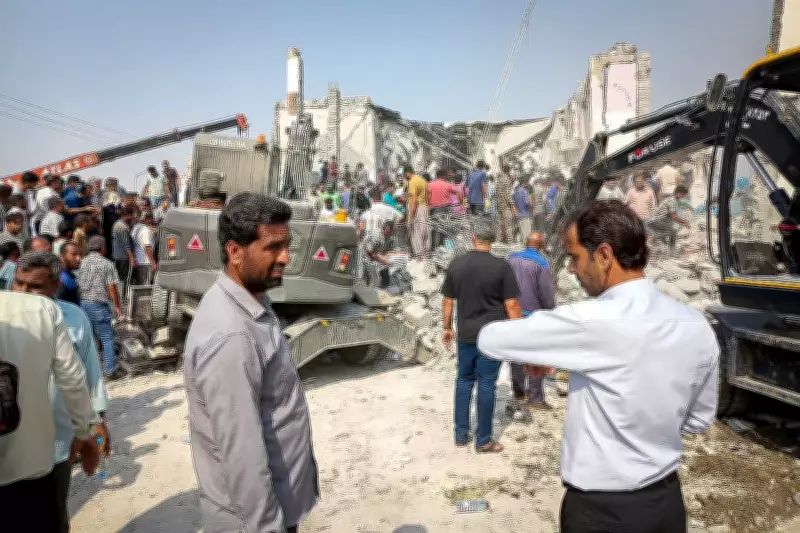
At least 175 people, predominantly young schoolgirls, were killed in an airstrike on a primary school in Iran, according to local authorities. The Shajareh Tayyebeh girls' elementary school in Minab, located in Iran's southern Hormozgan province, was destroyed during a joint US-Israeli bombing campaign launched on February 28. While independent verification of the death toll is pending, this attack is feared to be the single deadliest incident in the ongoing conflict.
Details of the Missile Strike
Local authorities reported that the school was struck by a missile on the first day of the US-Israeli strikes in the southern city of Minab. The attacks in the area commenced around 10am IRST (6am GMT), with Iranian authorities noting initial strikes at approximately 10:45am local time. Social media reports began emerging at around 11:30am. Iran operates on a six-day working week from Saturday to Thursday, with Friday as the only official day of rest, meaning the school was fully occupied when it was hit.
The school was situated just 200 feet away from a nearby naval base belonging to the Islamic Revolutionary Guard Corps (IRGC). Satellite imagery reveals those buildings reduced to rubble. The school reportedly had no association with the IRGC for the past nine years and was marked by colourful walls and paintings. Footage circulating on social media showed the building completely destroyed, with remnants of school books visible among the debris.

Initial reports claimed five fatalities, with the death toll later rising to 85. By Saturday evening, officials stated that 108 students had been killed. On Sunday evening, local prosecutors announced the death toll had increased to 165, with a further 95 injured. The most recent reported death toll stands at 175.
US and Israeli Responses
In the days following the incident, several statements have been issued by both US and Israeli officials. A spokesman for US Central Command, Tim Hawkins, initially said on Sunday, March 1: "We take these reports seriously. The protection of civilians is of utmost importance, and we will continue to take all precautions available to minimise the risk of unintended harm."
The Israeli military stated at the same time that it was "not aware" of the incident. US Secretary of Defense Pete Hegseth told reporters on Wednesday, March 4, that the matter was under investigation, stressing that the United States military does not target civilians, but stopping short of a denial.
Hegseth's map of the first 100 hours of America's military operation against Iran showed American attacks around the Minab region, while a similar map of Iranian strikes showed no equivalent Iranian strike in the area over the same period. When asked whether the deaths resulted from a US strike, White House Press Secretary Karoline Leavitt told reporters later the same day: "Not that we know of."
Leavitt continued: "The United States of America does not target civilians, unlike the rogue Iranian regime that targets civilians, that kills children … and uses propaganda quite effectively. And unfortunately, many people in this room have fallen for that propaganda."
A US investigation is underway, but early evidence has pointed towards American involvement. Military investigators, using evidence from data analysts reviewing satellite imagery, video footage, and social media, believe the school was hit by a precision strike and may have been struck more than once. Maps from the Department of Defense also show two Iranian air defence targets surrounding the school's location, within what the Pentagon describes as a "U.S./Israeli strikes" zone.
Outside military analysts have suggested that the Pentagon's AI-driven targeting—or human error failing to check whether target maps were up to date—may have played a role. The Pentagon referred requests for comment to US Central Command, with a CENTCOM official stating: "It would be inappropriate to comment given the incident is under investigation."

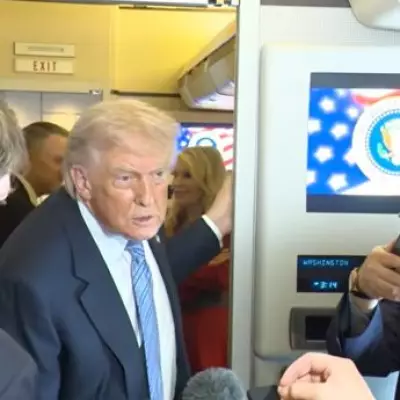
President Donald Trump, when asked about the incident a week later, blamed Iran: "No, in my opinion, based on what I've seen, that was done by Iran." New footage that emerged ten days after the attack appeared to show a Tomahawk missile striking the ground near the school.
President Trump doubled down on Monday, stating: "I will say that the Tomahawk, which is one of the most powerful weapons around, is used by, you know, it's sold and used by other countries, you know that. And whether it's Iran, who also has some Tomahawks, they wish they had more, but, whether it's Iran or somebody else, the fact that a Tomahawk – a Tomahawk is very generic, it's sold to other countries. But that's being investigated right now."
Israel's ambassador to the United Nations, Danny Danon, said on Monday that Israel is looking into the incident but does not believe its military is involved. An Israeli government source told CBS News that Israel was not behind the attack and added that its military was not operating near the school.
Iranian Reaction
Iranian President Masoud Pezeshkian condemned the airstrikes and expressed condolences to the impacted families. In a statement reported by Iranian news agency Tasnim, he said: "I share the heavy sorrow of the victims' families, the noble people of Minab, and all of Iran, and I stand with them in this grief. This savage act adds another black page to the record of countless crimes by the aggressors, a memory that will never be erased from our nation's history."
Pezeshkian called on rescue, medical, and relevant authorities to offer "immediate and continuous assistance to the injured and the families of the fallen." Foreign Minister Abbas Araghchi added: "The destroyed building is a primary school for girls in the south of Iran. It was bombed in broad daylight, when packed with young pupils. Dozens of innocent children have been murdered at this site alone. These crimes against the Iranian People will not go unanswered."
International Reaction
Humanitarian organisations, including the United Nations and UNESCO, have condemned the strikes and suggested they violate international law. California Governor Gavin Newsom accused Trump of focusing more on discussing a White House ballroom renovation than on the military campaign, which he said was carried out without congressional authorisation.
Newsom stated last Wednesday: "We have to reconcile why our bombs were used, or Israeli bombs, were used to kill children, young girls at a school."
UNESCO said it was "deeply alarmed by the impact of the ongoing military escalation in the Middle East on educational institutions, students, and education personnel." They continued: "The killing of pupils in a place dedicated to learning constitutes a grave violation of the protection afforded to schools under international humanitarian law. Attacks against educational institutions endanger students and teachers and undermine the right to education. In accordance with its mandate and with United Nations Security Council Resolution 2601 (2021), UNESCO recalls the obligations of all parties to protect schools, students and education personnel."