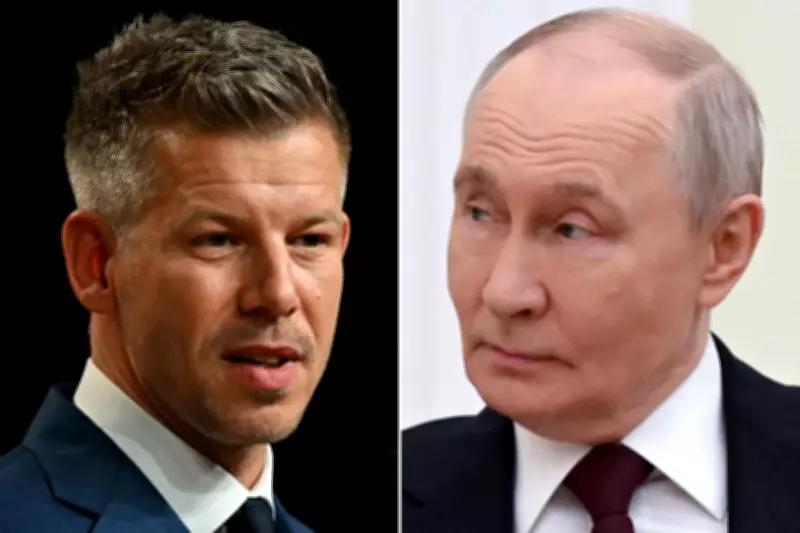
Hungary's New Leader Emerges as Unexpected Putin Ally Amid EU Tensions
In a surprising twist following Viktor Orban's electoral defeat, Hungary's new prime minister, Peter Magyar, is demonstrating a nuanced but substantial alignment with Russian interests that could bolster Vladimir Putin's strategic position in Europe. While Orban's departure was initially celebrated as a shift away from Moscow, Magyar's policies on energy and Ukraine suggest a continuity that benefits the Kremlin.
The Complex Landscape of European Energy and Ukrainian Support
Magyar has declared readiness to lift Hungary's veto on a crucial €90 billion EU loan to Ukraine, but with a significant condition: the resumption of Russian oil supplies via the Druzhba pipeline. This Soviet-era infrastructure, shut down after a Russian drone strike in January, has become a focal point of diplomatic friction. Hungary and Slovakia have accused Ukraine of politically motivated refusal to repair the pipeline, drawing Brussels into the dispute.
The European Union, desperate to secure economic lifelines for Kyiv, has committed funds and technical assistance to reopen Druzhba, despite contradicting its own pledge to phase out Russian oil by 2027. This development highlights the intricate balance between supporting Ukraine and maintaining energy security.

Energy Contracts and Economic Realities
Hungary's long-term gas contracts with Kremlin-owned Gazprom, extending to 2036 with "take-or-pay" terms worth approximately $2.5 billion annually, remain firmly in place. Signed under Swiss law, these agreements are difficult to undo, and Magyar campaigned partly on protecting Hungarians from rising energy costs. Additionally, the Paks-2 nuclear plant, a €12.5 billion project by Russian state-owned Rosatom with significant Moscow financing, continues regardless of political preferences in Budapest or Brussels.
Simultaneously, Spain has quietly increased its imports of Russian liquefied natural gas (LNG), with March figures nearly doubling to a historic record of almost 10,000 GWh. This surge, exceeding levels seen during the 2023 energy crisis, underscores Europe's ongoing reliance on Russian energy amid global instability.
Russian Economic Pressures and Military Ambitions
Despite temporary windfalls from higher oil prices and sanctions relief for crude shipments to India, Russia's economy faces profound challenges. Robert Nigmatulin, a prominent academician of the Russian Academy of Sciences, publicly highlighted Russia's "lowest per capita incomes in Europe" and noted that 40% of the national budget is consumed by the war in Ukraine, crippling the country without clear benefits.
Russian Central Bank chair Elvira Nabiullina acknowledged unprecedented labor shortages and economic restrictions, while Ukraine's defence intelligence reports indicate Russia is preparing a fresh assault in southeastern Ukraine, aiming to capture the entire Donbas region by September. With 680,000 troops deployed and increased production of Iskander ballistic missiles, the conflict shows no signs of abating.
The Irony of European Funding
A supreme irony persists: Europe financially supports Ukraine's defence against Russian aggression while simultaneously funding Putin's war machine through energy payments. This duality is starkly visible in Hungary, where Magyar's pragmatic approach to energy security aligns with broader European trends of diversification amid global tensions.
As Ukraine targets Russian oil and gas facilities with daily strikes, the Kremlin's export capacity remains intact, fueled by demand from India, China, and Europe. Magyar's pledge to hold a referendum on Ukraine's EU accession, potentially amounting to a veto, further complicates the geopolitical landscape, suggesting that Hungary's new leadership may prove as consequential for Putin as its predecessor.