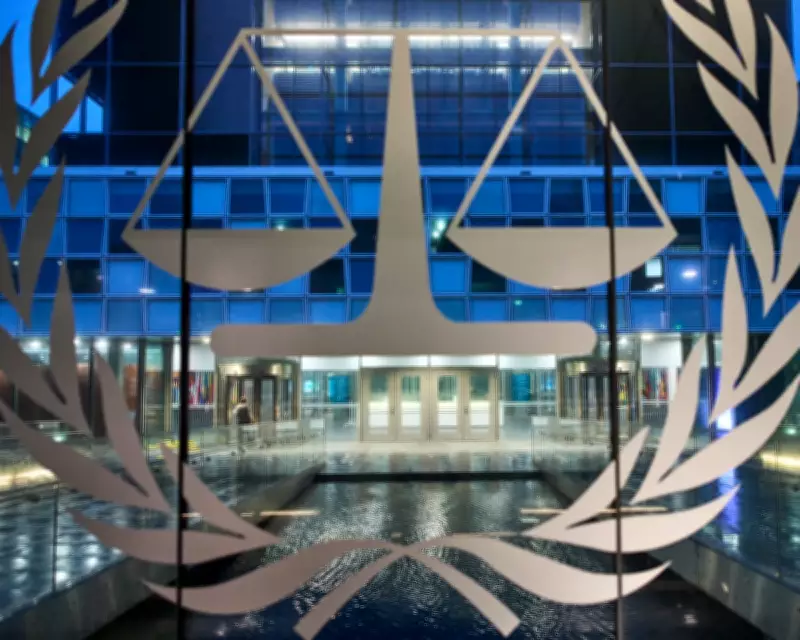
A former prosecutor at the International Criminal Court (ICC) has called for an EU-wide statute to block what she described as 'thuggish' and 'bullying' US sanctions imposed on members of the court, warning that the measures are designed to drive the institution into oblivion.
US Sanctions on ICC Officials
In February 2025, the United States imposed sanctions on 11 ICC officials, including nine judges and the chief prosecutor, as well as three Palestinian organisations. The move was in response to the ICC's 2024 decision to issue arrest warrants for members of the Israeli cabinet, including Prime Minister Benjamin Netanyahu. The sanctions include travel bans and asset freezes, effectively locking judges out of the European financial system and making it impossible for them or their families to lead normal lives.
Bensouda's Condemnation
Fatou Bensouda, who served as ICC prosecutor from 2012 to 2021, addressed a meeting of the Rights Forum, a prominent Dutch non-governmental organisation, in The Hague. She stated: 'These are coercive attempts to interfere with the independent exercise of judicial and prosecutorial functions established under international law. If the international community does not respond with seriousness, institutional resolve and practical solidarity, the consequences will extend far beyond The Hague.'

Without explicitly naming the US, she added: 'To deploy such instruments against prosecutors, judges or court officials who are engaged in judicial functions in the pursuit of accountability for the most egregious crimes represents a profound conceptual distortion. It is thuggish and inappropriate, and it should be called out for what it is. It transforms disagreement with legal process into crippling economic coercion to meet political ends. It is bullying, coercion and power politics through other means.'
Criticism of Dutch Government
Bensouda accused ICC-affiliated states of 'largely slow and timid reactions, inactions and empty gestures of support, without tangible backing and pushback against coercive measures.' There is growing anger that the Dutch government, as host to the ICC in The Hague, has done little to protect judges facing crippling sanctions or individual intimidation.
Bensouda, now serving as the Gambian high commissioner to the UK, revealed she had been subjected to organised intimidation during her tenure at the court and believed her subsequent career path had been affected.
Warning of Institutional Risk
She also warned that preparations must be made now for sanctions being imposed on the court itself as an institution. 'We should ask ourselves an uncomfortable question,' she said. 'If highly qualified professionals conclude that service at the ICC carries unacceptable personal and financial risk, what happens to the future capacity of the institution? What happens when sanctions become normalised as tools of judicial intimidation? What happens when banks decline services, insurers withdraw coverage, technology providers hesitate to engage and external experts fear association with the court? And this is not hypothetical.'
Call for Structural Resistance
Bensouda called for 'structural resistance,' urging state parties to establish coordinated legal, defence and indemnification mechanisms for sanctions. 'State parties cannot respond merely with expressions of concern. Supportive statements are no longer enough. Concrete proposals are necessary,' she said.
She emphasised: 'No prosecutor, judge, registrar or investigator acting within lawful mandate should face personal financial ruin because of politically motivated sanctions. States should create protected banking and financial channels for the court, its personnel and authorised contractors. The EU should move to trigger the EU blocking statute.'
She also called on state parties to adopt domestic legislative safeguards to prevent enforcement cooperation with coercive measures directed against lawful ICC activity. 'The Rome Statute system cannot depend solely on moral solidarity. It requires operational solidarity,' she added.

Dutch Government's Role
The Dutch government has signed an agreement with the ICC committing to ensure the security, safety and protection of people indispensable to the court. However, progressive Dutch MPs claim the coalition government has done little in practice to defend the ICC, leaving the task to other countries, notably Spain.
US Justification
The US says it has sanctioned the ICC officials for directly engaging in efforts by the ICC to investigate, arrest, detain or prosecute Israeli nationals without Israel's consent. Bensouda argued that the US had distorted sanctions, turning them from a legitimate instrument into a tool for wholly inappropriate political signalling. 'The purpose of personal sanctions is not merely punitive, it is deterrent. It is intended to create fear. It is intended to isolate,' she said.
She concluded: 'The ICC is not a hostile government. It is not an armed group. It is not a terrorist organization. It is not a sanctions evader. It is a critical judicial body. And using sanctions against judicial actors represents a dangerous misuse of a tool originally justified for fundamentally different purposes.'