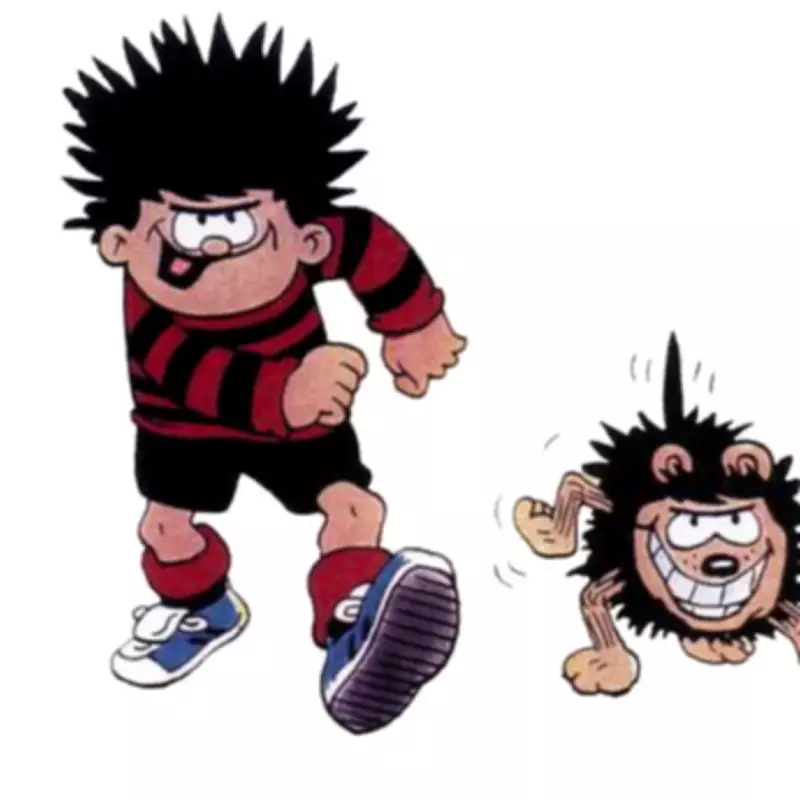
Dennis the Menace Celebrates 75 Years of Mischief and Mayhem
The iconic troublemaker Dennis the Menace is marking a remarkable milestone this month, celebrating 75 years since his first appearance in the beloved British comic The Beano. With his spiky hair, loyal dog Gnasher, and a penchant for pranks, Dennis has entertained generations of readers, and his popularity shows no signs of waning as The Beano continues to sell tens of thousands of copies weekly.
The Secret to Dennis's Longevity: Naughtiness and Nostalgia
According to Steven Marchant, a learning coordinator at The Cartoon Museum in London, Dennis's enduring appeal lies in his ability to tap into our inner rebel. "I think even as an adult there is a part of you that wants to be a bit naughty," says Marchant, 62. "People like to live out their slight criminal tendencies vicariously, and Dennis fits the bill. Kids love his knockabout antics and, of course, the fart jokes!" He adds that parents appreciate the clever artwork and snappy dialogue, while the satisfying comeuppances at the end of stories resonate with all ages.
Chris Murray, Professor of Comics Studies at the University of Dundee, home to The Beano publisher DC Thomson, calls this birthday a "remarkable achievement." He notes that while many characters have similar longevity, Dennis stands out by still starring in his original comic. "The Beano is one of the great survivors of what was once a vibrant British comics industry," Murray explains. "Dennis is a rebellious child who often gets the better of adults, and that will always strike a chord with young readers."

From Childhood Passion to Academic Pursuit
Both Marchant and Murray have deep personal connections to comics. Marchant, originally from Wolverhampton, recalls reading old Beano annuals from his grandmother's cupboard in the 1950s. "Comics were my thing as a kid; they entranced me," he says. His passion led him to study art, work for major companies like the BBC and British Airways, and eventually teach cartoon art classes.
Murray, 50, director of the Comics Studies Creative Research Hub, shares an early memory of his Uncle Dougie delivering comics from a pub in Dundee. "To this day, I can't hear the hiss of hydraulics from an articulated lorry without thinking 'it's comics time!'" he laughs. His academic career now focuses on comics as a medium for exploring complex issues, praising their accessibility through pictures and speech bubbles.
Evolution of a Menace: Adapting to Modern Times
Dennis first appeared in The Beano in March 1951, getting into trouble for failing to keep off the grass. By 1954, he sported his iconic red and black striped jumper in colour, and in 1968, Gnasher joined the fray. Over the decades, Dennis has evolved to stay relevant. "The Dennis of the 1950s was quite different to the Dennis of the 1980s, and both are a bit different from today," notes Murray. In the 1990s, concerns about his menacing behaviour led to adjustments, such as toning down treatment of characters like Walter the Softy.
Today, Dennis is "a bit more hapless rather than deliberately naughty," according to Marchant, and stories have modernised—for example, it's now inferred his mum might be a jewel thief. A panel of youngsters regularly advises The Beano on playground trends, ensuring the comic remains fresh. The brand has expanded online, with merchandise and an animated show, Dennis and Gnasher Unleashed.
A Cultural Icon with Lasting Impact
Steven Butler, 43, author of The Diary of Dennis The Menace series, credits comics with helping him overcome childhood reading struggles. "They are a very underrated literary tool," he says. Butler describes Dennis as an "anarchic imp" whose naughtiness is in pursuit of fun, not malice, appealing to both kids and adults. He recounts meeting a fan with tattoos of Beano characters, highlighting the character's cross-generational devotion.

Rob Glenn, Executive Director of Kids Community Growth at The Beano, calls the 75th birthday "a cultural moment." "For every generation, Dennis embodies the fun, carefree childhood everyone remembers," he says. The milestone is marked by a special anniversary issue and a commemorative 50p coin from the Royal Mint, priced from £15.
Looking ahead, Murray is confident Dennis will endure. "I'm sure they will continue to be a reflection of our society and culture, and a rebellious challenge to authority," he predicts, though he jokes about regretting he won't be around to see the next 75 years. As Dennis's legacy proves, a little mischief goes a long way in capturing hearts across generations.