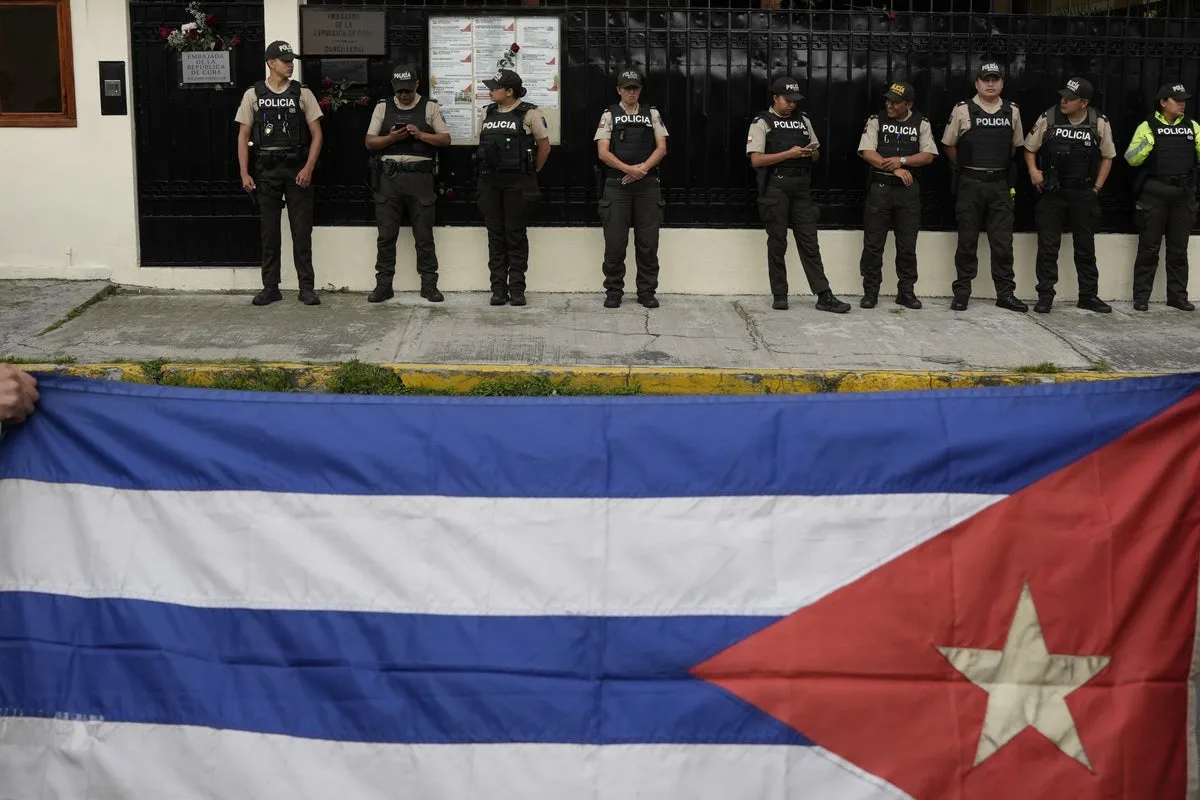
Cuba Closes Embassy in Quito Following Ecuador's Diplomatic Expulsion
Cuba has officially shut down its embassy in Quito, the capital of Ecuador, after the Ecuadorian government ordered its diplomatic staff to leave the country within a 48-hour deadline. The move marks a significant escalation in diplomatic tensions between the two nations, with Cuba condemning the action as "unilateral and unfriendly."
Diplomatic Staff Depart After Flag Removal
On Friday, March 6, 2026, the Cuban diplomatic mission departed Ecuador as the deadline set by President Daniel Noboa's administration expired. Before their exit, the Cuban flag was removed from the embassy building located in northern Quito, symbolizing the end of official diplomatic operations. In a statement released the same day, Cuba's Foreign Ministry confirmed the cessation of all embassy functions and expressed regret over Ecuador's decision, which it described as an abrupt and hostile measure.
Ecuador Declares Diplomats Persona Non Grata
The diplomatic rift began on Wednesday when Ecuador declared Cuba's ambassador, Basilio Antonio Gutiérrez, and his staff "persona non grata," giving them 48 hours to depart. Ecuador's Ministry of Foreign Affairs cited international diplomatic law, specifically the Vienna Convention, which allows countries to expel diplomatic personnel without providing an explanation. However, no specific reason was given for the expulsion, leaving the motives unclear amid growing regional tensions.
Paper Burning Incident and Social Media Reaction
Shortly after the announcement, a man was observed on the roof of the Cuban Embassy in Quito burning a bag of papers in an oven. The Associated Press witnessed the incident, and President Noboa later posted a video of it on social media, commenting bluntly, "A paper barbecue." This act has fueled speculation about the nature of the documents destroyed and added a dramatic visual element to the unfolding diplomatic dispute.
Broader Geopolitical Context and U.S. Influence
The expulsion occurs against a backdrop of heightened geopolitical activity in Latin America. It comes just days before U.S. President Donald Trump is scheduled to meet with several conservative Latin American leaders, including President Noboa, in Florida. This timing aligns with increased U.S. pressure on nations that sell oil to Cuba, which Trump recently labeled a "failed nation." Additionally, tensions have risen following the January 3 capture of former Venezuelan President Nicolás Maduro, a key Cuban ally, during a U.S. military operation in Caracas. These events suggest that the diplomatic rift may be influenced by broader strategic shifts and U.S. foreign policy objectives in the region.
The closure of the Cuban embassy in Quito represents a notable deterioration in bilateral relations, with potential implications for diplomatic engagements and regional alliances. As both countries navigate this dispute, observers are closely monitoring how it will affect future interactions and the stability of Latin American diplomacy.