
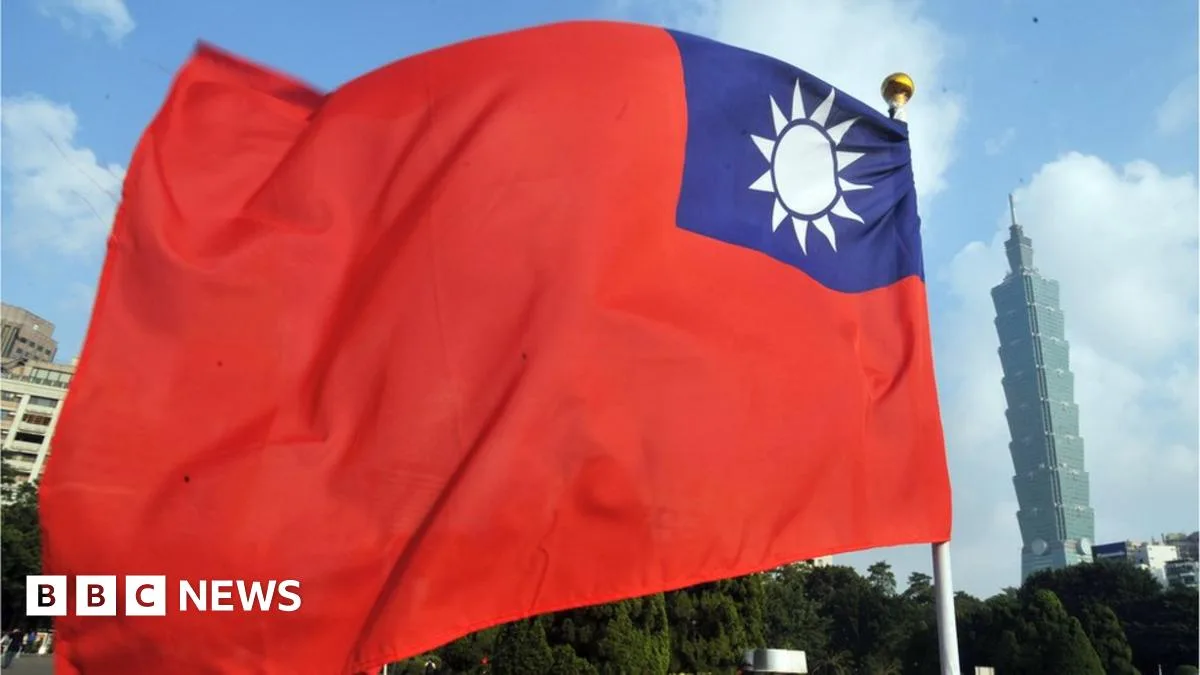
China has launched major military drills around Taiwan for the second time this year, simulating a full-scale attack on the island. The exercises come just days after Taiwanese President William Lai delivered his first National Day speech, and follow earlier drills held shortly after Lai was sworn in.
The manoeuvres reinforce the core issue: China's claim over self-governed Taiwan. Beijing regards the island as a breakaway province that will eventually be reunified with the mainland, and has not ruled out the use of force to achieve this. However, many Taiwanese consider themselves part of a separate nation, though most favour maintaining the status quo—neither declaring independence nor uniting with China.
Taiwan's first known settlers were Austronesian tribal people, believed to have come from modern-day southern China. Chinese records from AD239 mention an expeditionary force sent to the island, a fact Beijing uses to support its territorial claim. After a brief period as a Dutch colony, Taiwan was administered by China's Qing dynasty before being ceded to Japan in 1895. Following World War Two, Japan surrendered and relinquished control, and Taiwan was officially considered occupied by the Republic of China (ROC) with allied consent.
In 1949, after the Chinese Civil War, Chiang Kai-shek and about 1.5 million supporters fled to Taiwan, establishing a dictatorship that lasted until the 1980s. Taiwan then transitioned to democracy, holding its first elections in 1996. It now has its own constitution, democratically elected leaders, and approximately 300,000 active troops.
Diplomatic recognition shifted in 1971 when the UN recognised Beijing, and the US formally established ties with China in 1979. Today, only 12 countries recognise Taiwan. China proposed a 'one country, two systems' model, which Taiwan rejected. In 2005, China passed an anti-secession law asserting the right to use 'non-peaceful means' if Taiwan attempts to secede. Relations soured further after the 2016 election of Tsai Ing-wen from the Democratic Progressive Party, which favours independence. China cut official communications, citing her refusal to endorse the concept of a single Chinese nation. Current President William Lai has not declared formal independence but insists Taiwan is already independent, keeping tensions high.




