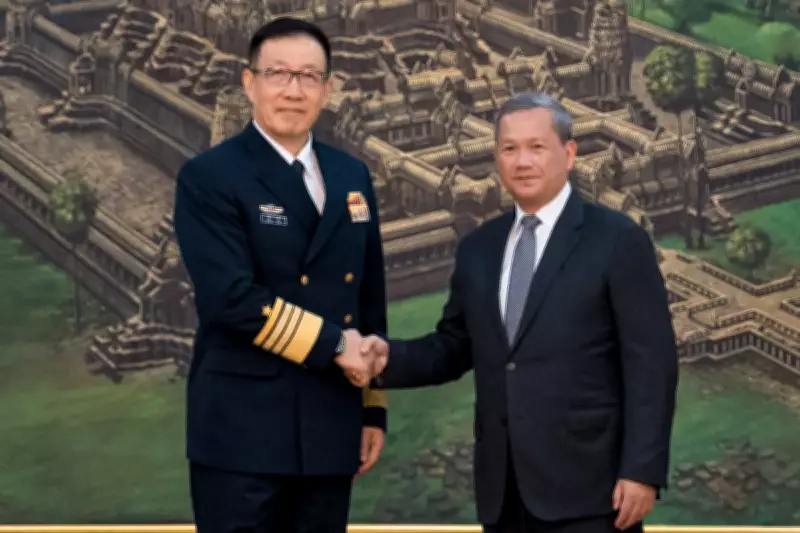
China and Cambodia have officially launched their first "2+2" Strategic Dialogue Mechanism, a high-level meeting that brings together both nations' foreign and defense ministers to solidify mutual political and security alliances. This landmark event, held on Wednesday, marks a significant step in deepening the comprehensive strategic partnership between the two countries.
High-Level Diplomacy in Action
Chinese Foreign Minister Wang Yi and Defense Minister Dong Jun traveled to Cambodia to engage in talks with their Cambodian counterparts, Foreign Minister Prak Sokhonn and Defense Minister Tea Seiha. The dialogue is a direct result of an initiative proposed by Chinese President Xi Jinping during his state visit to Cambodia in April last year, aimed at bolstering bilateral relations and expanding China's influence in Southeast Asia.
This ministerial-level "2+2" format was first introduced with Indonesia last year, reflecting China's ongoing efforts to strengthen its diplomatic and security networks across the region. Following the Cambodia visit, Wang Yi is scheduled to continue his diplomatic tour with stops in Thailand and Myanmar, as announced by the Chinese Foreign Ministry on Tuesday.

Expanding Cooperation and Addressing Concerns
During their stay in Cambodia, the Chinese ministers are also set to hold separate meetings with Senate President Hun Sen and Prime Minister Hun Manet. After the joint "2+2" meeting, Wang Yi will engage in in-depth discussions with Prak Sokhonn on Thursday to focus on implementing existing cooperation frameworks and contributing to regional peace, security, and stability.
While Cambodian officials have not released immediate details from the meetings, the close ties between the two nations are well-documented. China stands as Cambodia's largest investor and aid donor, with bilateral trade reaching $19.73 billion last year, heavily favoring China. This relationship has positioned Cambodia as Beijing's closest political partner in Southeast Asia.
Strategic Implications and Regional Tensions
The strengthening of China-Cambodia relations has raised suspicions among analysts and the U.S. government, particularly regarding the Chinese-funded upgrade of Cambodia's Ream Naval Base. Located on the Gulf of Thailand, the base saw the completion of a new pier for larger ships, a dry dock for repairs, and other enhancements last year.
Washington has publicly expressed concerns that Beijing may have been granted exclusive privileges to use the base as a strategic military outpost, though Cambodian officials, including Prime Minister Hun Manet, have repeatedly denied these allegations. At the base expansion's opening in April last year, Hun Manet explicitly stated that the project was not hidden from other countries.
In a notable development, the USS Cincinnati, with a crew of about 100, became the first U.S. Navy warship to dock at the renovated facility three months ago, highlighting the ongoing geopolitical tensions and the base's strategic importance in the region.