
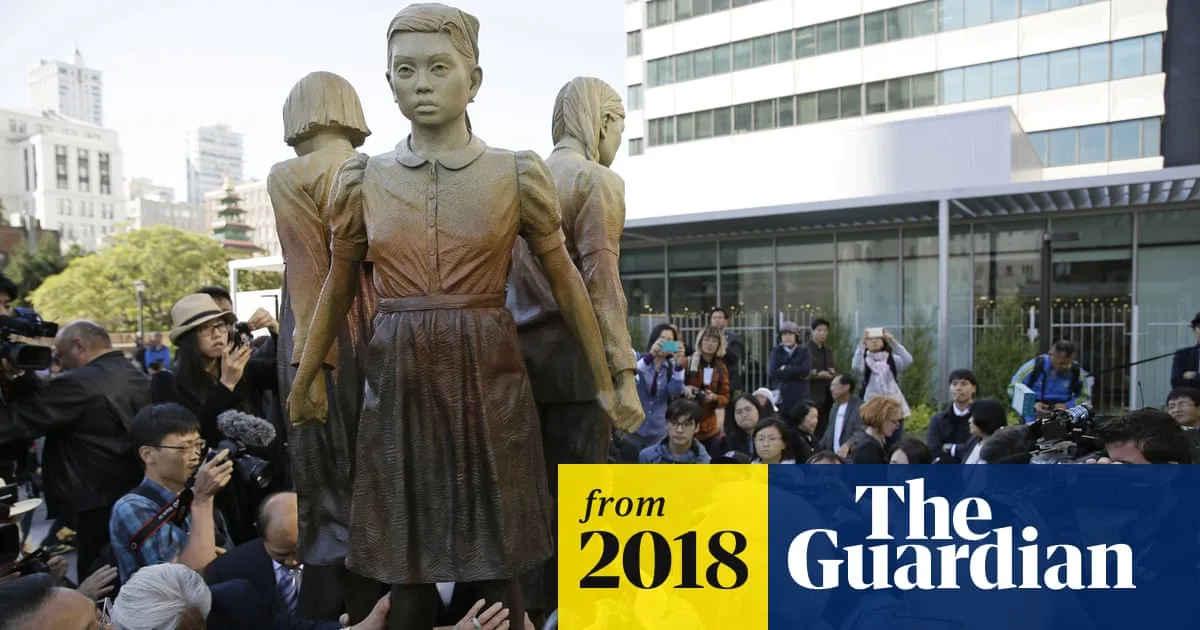
The Japanese city of Osaka has formally ended its six-decade sister city relationship with San Francisco, citing the presence of a statue in the US city that symbolises the wartime use of sex slaves. Mayor Hirofumi Yoshimura terminated the ties this week, after San Francisco agreed to accept the statue, erected last year in Chinatown by a private group, as public property.
The statue depicts three women from China, Korea and the Philippines, representing those forced to work in brothels for the Japanese Imperial Army from the early 1930s until 1945. In a ten-page letter to San Francisco Mayor London Breed, Yoshimura said historians disagreed about the extent of the army's involvement and described claims in the statue's inscription as lacking historical evidence. He also suggested that attention should be broadened to memorialise all women sexually abused by soldiers worldwide.
The statue was accepted by Breed's predecessor, Edwin Lee, in 2017, prompting complaints from Yoshimura that the move had destroyed mutual trust. He postponed the formal severing of ties following Lee's death in December. Breed's office said it was "unfortunate" that Yoshimura had decided to end the relationship, which began in October 1957.
Campaigners accused Yoshimura of attempting to rewrite history. Lillian Sing, co-chair of the Comfort Women Justice Coalition, said breaking the relationship was "outrageous and absurd," adding that it showed how afraid the Osaka mayor and the Japanese prime minister are of truth. The statue is the first of its kind in a major US city, though a similar one was erected in Glendale, California, in 2013.
The use of public spaces for such memorials has drawn criticism in Japan, which says it contravenes the spirit of a 2015 agreement between Tokyo and Seoul. That agreement included an apology from Japan but no legal responsibility, and set up a 1 billion yen fund for survivors. South Korean President Moon Jae-in last month described the fund as "dysfunctional" and suggested the money could be returned to Japan.




