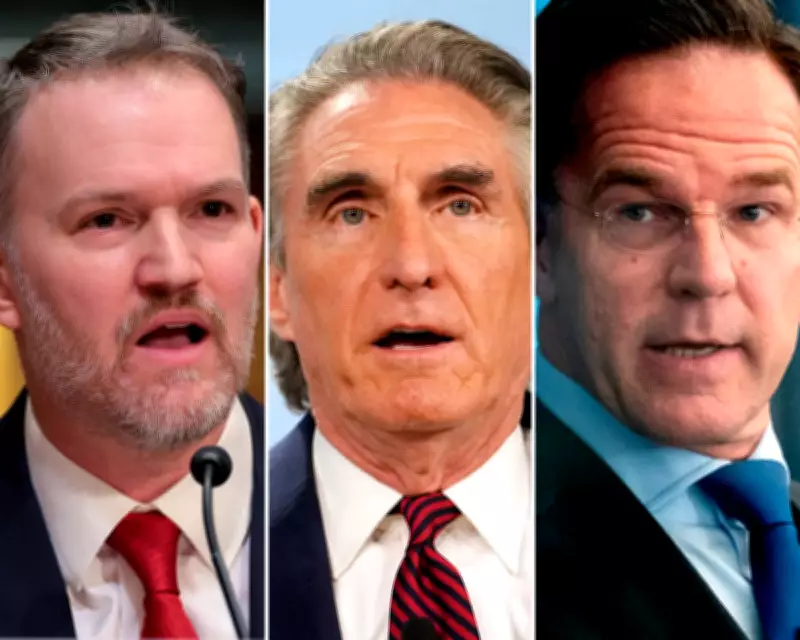
The 72nd meeting of the Bilderberg group, an elite and secretive policy conference long shrouded in conspiracy theories, convened over the weekend at the opulent Salamander hotel in Washington DC. A tight security cordon encircled the venue, shielding the notoriously media-shy summit from public view. As usual, the guest list was packed with prime ministers, military leaders, tech billionaires, and heads of major investment firms, all gathering for closed-door discussions on global affairs.
A Gathering Amid NATO Turmoil
This year's Bilderberg conference occurred at a time of immense crisis and uncertainty for NATO, the alliance the group has intellectually supported since the 1950s. With former President Donald Trump repeatedly threatening to withdraw from what he calls the "paper tiger" of NATO, the "Trans-Atlantic Defence-Industrial Relationship"—a key agenda item—has reached a strained breaking point. Notably, NATO chief and Bilderberg regular Mark Rutte arrived fresh from a "very frank" conversation at the White House, highlighting the high-stakes backdrop.
Despite Trump's bluster about abandoning NATO, there were no signs of American withdrawal from Bilderberg. On the contrary, American representatives were present in force, underscoring the group's enduring influence. Wall Street titans, including CEOs from KKR and Lazard, along with corporate leaders from companies like Pfizer, met privately with senior politicians close to the president. This blend of big business lobbying and secretive public-private sector interaction aligns perfectly with Trump's brand of crony-capitalism.

Key Figures and Wartime Themes
Trump's trusted officials were well-represented, with Interior Secretary Doug Burgum and trade guru Robert Lighthizer in attendance. They were joined by economic ally Jason Smith, chair of the influential House Ways and Means Committee, and Army Secretary Dan Driscoll, known as Trump's "drone guy." With the conflict in Iran dominating headlines, the conference took on a wartime flavour, featuring agenda items like the "Future of Warfare."
Participants included four-star Admiral Samuel Paparo, head of the US Indo-Pacific Command, and a strong contingent from the private military sector. Eric Schmidt, former Google CEO and a Bilderberg insider, led this group, advocating for drone warfare. Schmidt recently told the Financial Times that "future wars are going to be defined by unmanned weapons," with AI-targeted drone swarms. Companies like Anduril Industries, represented by co-founder Brian Schimpf, and Palantir, with CEO Alex Karp, thrive in this overlap between drones and AI, further embedding tech influence in defence strategies.
Notable Absences and Intelligence Ties
Remarkably, billionaire tech investor Peter Thiel, a steering committee member since 2008, was absent from this year's meeting—an unprecedented occurrence. Thiel, who largely funds the lavish Washington gatherings through the American Friends of Bilderberg Inc alongside Eric Schmidt, has deep ties to the Trump administration and growing influence within the group. His operation at the intersection of big finance and intelligence, notably through Palantir's CIA-backed origins, mirrors Bilderberg's own history, which was founded by British and American intelligence agencies.
This year, three intelligence directors attended, including MI6 head Blaise Metreweli, highlighting the group's enduring connections to espionage. Thiel's absence meant missing out on key strategising, talent spotting, and ideological debates on topics like "China" and "the West," as well as exclusive access to policymakers such as the president of Finland and the head of the IMF.
Press Silence and Arctic Signals
It remains a mystery why the press largely ignores Bilderberg, despite its status as a major annual summit with numerous senior politicians. This year's event featured newsworthy aspects, such as the presence of Vivian Motzfeldt, former Greenlandic foreign minister and ex-speaker of the Inatsisartut. As the first Greenlander at Bilderberg, her attendance signalled to the Trump administration that Greenland has powerful allies within the Trans-Atlantic partnership, likely contributing to discussions on "Arctic Security."

Without press oversight, the specifics of these conversations remain unknown, leaving the public to speculate on the outcomes. The secretive nature of Bilderberg continues to fuel intrigue, as global elites shape policies away from public scrutiny.