Australia's Diplomatic Tightrope in the US-Iran Conflict
As Australia becomes increasingly entangled with the United States military apparatus, a pressing question emerges: can the nation avoid being drawn into a broader war? The recent US-Israel strikes on Iran have starkly illustrated the perils of being both an enemy and an ally of America, highlighting a complex geopolitical landscape where traditional alliances are tested.
The Challenge of Expressing Discomfort Without Provocation
According to Dr Lachlan Strahan, a former Australian high commissioner and author of The Curious Diplomat, Australia and other traditional US allies are deeply unsettled by the unfolding conflict. He notes that the actions, initiated without a clear strategic endpoint, represent another unpredictable and muscular policy from the Trump administration. Strahan emphasises the difficulty in restraining such a dynamic and chaotic situation, with retaliatory strikes already spreading across the Middle East.
The Australian government has confirmed that three Australian service personnel were aboard a US nuclear-powered submarine that sank an Iranian warship in the Indian Ocean. While officials insist no Australians participated in offensive actions, their presence on the crew that killed Iranian sailors underscores Australia's indirect involvement. This revelation came after a two-day delay in public disclosure, raising concerns about transparency.

Global Impacts and Allied Concerns
The conflict has resulted in casualties across multiple nations, including Iran, Israel, Lebanon, Iraq, and Syria, with US soldiers also among the dead. Beyond the immediate human toll, the war has triggered significant disruptions to fuel prices, stock markets, and global trade routes, amplifying its far-reaching consequences.
Strahan points out that even steadfast allies, except for Israel, were kept in the dark about US plans. He criticises Trump's tendency to ignore allied input and publicly criticise leaders like the UK's Keir Starmer. This behaviour forces Australia to navigate a delicate balance: opposing Iran's regime while privately questioning the US approach due to unpredictable secondary effects.
The Aukus Deal and Military Integration
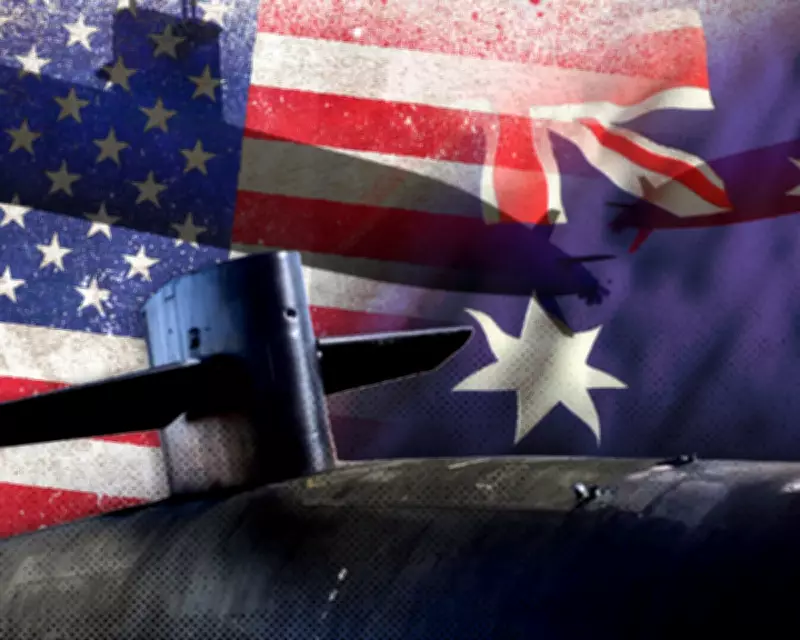
The Aukus agreement, a forecast $368 billion deal for Australia to acquire nuclear-powered submarines from the US, further complicates matters. Strahan argues it backs Australia into a corner, with substantial defence budgets committed for decades, making retreat or alternatives difficult. Historically, Australia has relied on a "great and powerful friend" for security, but Trump's unconventional presidency challenges this reliance, with advisors described as a mix of sycophants and clowns.
Annette Brownlie from the Independent and Peaceful Australia Network calls for Australia to condemn the conflict's escalation, emphasising that attacking Iran undermines peace and stability. She stresses the Iranian people's right to self-determination without foreign interference, questioning whether Australia values its sovereignty or succumbs to US pressure.
Deepening Enmeshment with US Military
Australia's integration into the US military-industrial complex is extensive, including a $1.6 billion upgrade to RAAF base Tindal to host US bombers, expanding roles at Pine Gap for intelligence gathering, and growing US troop presence. The Aukus submarines symbolise a deepening dependency, binding Australia to the world's largest navy.
Brownlie warns that Australia's complicity through bases like Pine Gap, which provide targeting data for US strikes, necessitates a clearer independent stance. She urges drawing a line to refuse facilitation of what she terms an illegal war, asserting that sovereignty should not be compromised despite deep alliance ties.
In summary, Australia faces a critical juncture: finding a way to signal opposition or discomfort with US actions without inciting Trump's ire, all while managing its entrenched military and diplomatic commitments in a volatile global environment.