
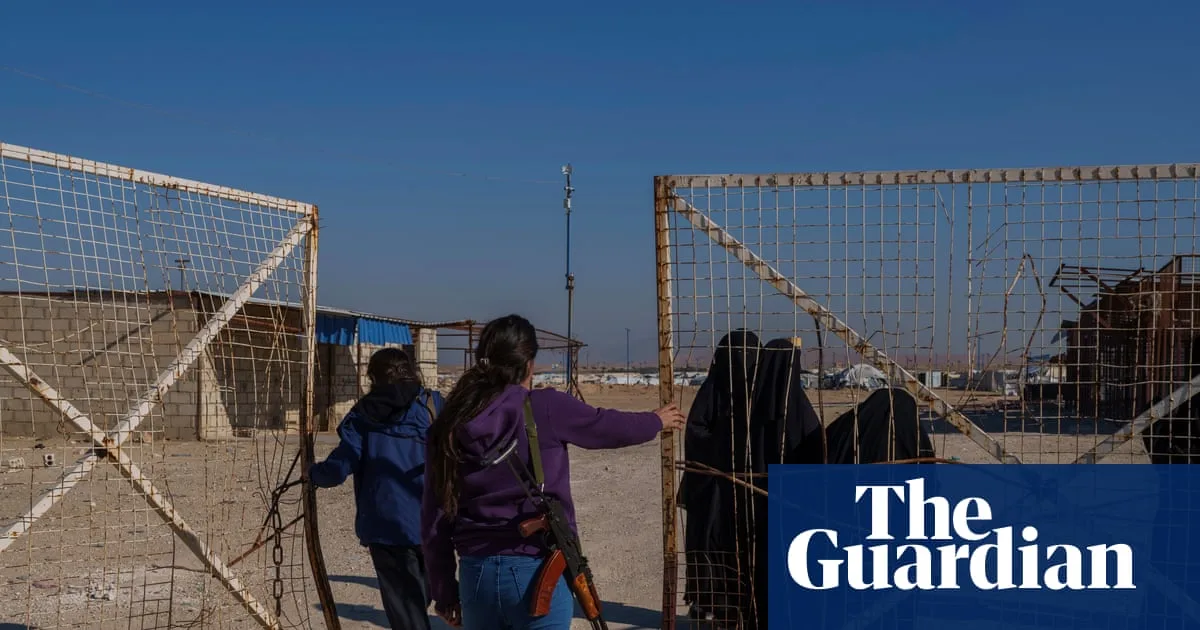
Two Australian women and four children have escaped the notorious al-Hawl detention camp in north-east Syria and made their own way back to Victoria, without government assistance. The group travelled more than 500km to cross the Lebanese border, where they obtained Australian documents in Beirut before undergoing identity and security screenings and flying commercially to Australia last week.
The escape highlights ongoing concerns about the safety of Australians still held in Syrian camps. About 40 Australians, mostly children, remain in detention camps in north Syria, including 34 in the Roj camp near the Turkish border. They are the wives, widows, and children of slain or jailed Islamic State fighters, and none has been charged with a crime.
Sources familiar with the return say the ad hoc escape endangered the children and that the women were arrested in Lebanon when trying to cross the border. They argue that government-sponsored repatriations are safer, allowing for support services and security preparations. Advocates have long called for organised repatriations, warning that leaving women and children to navigate unstable Syria is dangerous.
Conditions in the camps are dire, with widespread hunger, disease, and violence. A US state department report described a 'volatile security' situation and a 'health emergency'. Unicef and Save the Children report limited services, inadequate shelters, and severe trauma among children, who are vulnerable to radicalisation.
The Australian government has conducted two limited repatriations: eight orphaned children in 2019 and four women and 13 children in 2022. A federal court challenge by Save the Children to compel repatriation failed, but the court noted that with political will, bringing the women and children back would be straightforward. Save the Children Australia's chief executive, Mat Tinkler, welcomed the return but urged the government to act for those still trapped.




