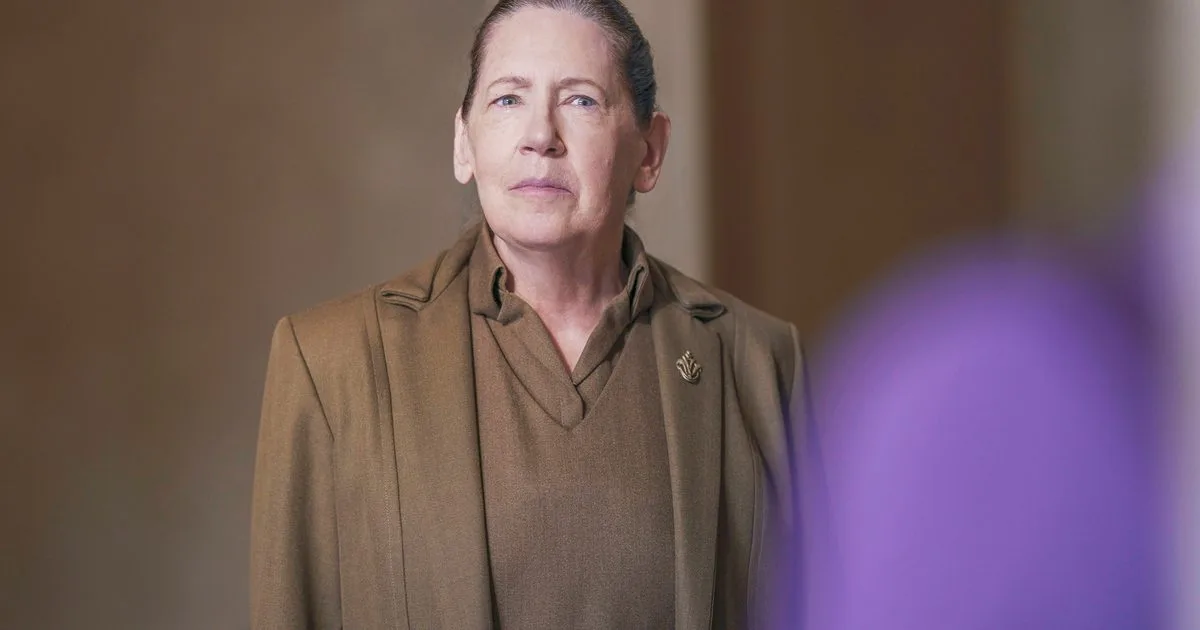
Aunt Lydia's Moral Complexity in The Testaments: Villain or Hero?
Aunt Lydia's Morality in The Testaments: Good or Bad?

Aunt Lydia's Moral Ambiguity in The Testaments Sparks Viewer Debate

Audiences of The Testaments on Disney+ are deeply engaged in questioning the true nature of Aunt Lydia, a pivotal character from The Handmaid's Tale universe. This sequel series, set four years after the original show's finale, follows privileged young girls in Gilead as they train to become Wives under Aunt Lydia's guidance, portrayed by Ann Dowd. Unlike her previous depiction as a harsh authoritarian, she now appears softer and more benevolent, leading many to ponder her real intentions and whether she remains a villain.

The Evolution of Aunt Lydia from The Handmaid's Tale

In The Handmaid's Tale, Aunt Lydia was unequivocally portrayed as a villain, enforcing Gilead's brutal policies at the Red Center. She coerced women into becoming Handmaids, subjected them to state-sanctioned rape, and meted out severe punishments, such as causing Janine Lindo to lose an eye and leading a stoning. However, glimpses into her pre-Gilead past revealed a more human side, and the series finale hinted at her awakening after witnessing the hypocrisy of Gilead's Commanders through the mistreatment of women at Jezebels.

Aunt Lydia's Transformation in The Testaments

The Testaments continues this political awakening, showing Aunt Lydia as a venerated figure post-Boston uprising, with a statue in her honor at the school. Her softer demeanor stems from her elevated power position, distancing her from the frontline cruelty of Gilead's policies. Crucially, the novel reveals her secret role: documenting war crimes and atrocities by Commanders to bring down Gilead from within. She also unites June Osborne's daughters, Daisy Nichole and Agnes Jemima, to expose the regime, ultimately leading to its collapse.

Wide Pickt banner — collaborative shopping lists app for Telegram, phone mockup with grocery list

Actress Ann Dowd has commented on this shift, describing Aunt Lydia as a "changed person" in The Testaments, with a gentler self emerging. The story delves into her survival instincts during Gilead's takeover, where she did whatever necessary to avoid a worse fate, adding layers to her character.

Assessing Aunt Lydia's Morality: Do the Ends Justify the Means?

The central question of whether Aunt Lydia is good or bad in The Testaments is complex and nuanced. Her earlier actions in The Handmaid's Tale were undeniably villainous, causing immense suffering. Yet, in The Testaments, she works covertly to dismantle Gilead, suggesting a redemptive arc. This moral ambiguity challenges viewers to consider if her ultimate goal of overthrowing a tyrannical regime excuses her past brutality. The series and novel present her as a figure of contradiction, embodying both complicity and resistance in a dystopian world.

The Testaments airs weekly on Hulu and Disney+, keeping audiences captivated by this intricate character study.

Pickt after-article banner — collaborative shopping lists app with family illustration




