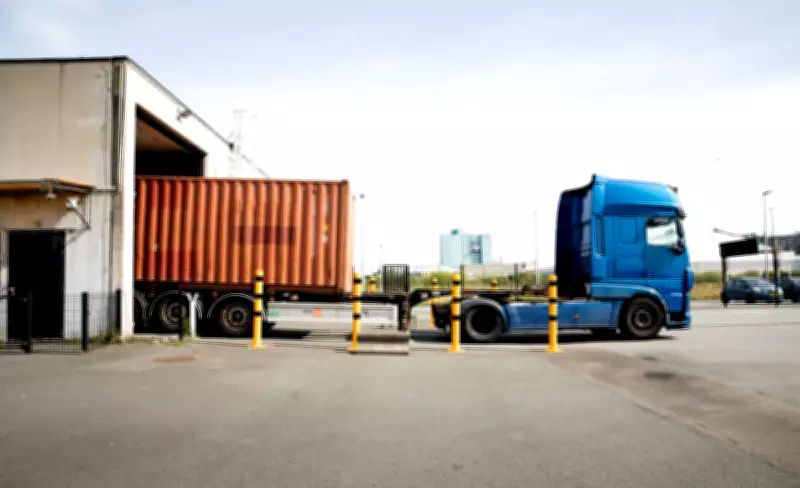
At the border inspection post in the port of Antwerp, customs officer Sara Van Cotthem carefully slices open a cardboard box to reveal an aluminium stepladder made in China. Under harsh fluorescent lights, she checks the paperwork and taps the ladder with a magnet to verify it is truly aluminium. This routine operation is typical for customs at Antwerp, one of Europe's primary commercial gateways, which handled the equivalent of 13.6 million 20-foot containers last year. Once everything is confirmed in order, the lorry laden with identical boxed ladders proceeds to Germany.
However, not all inspections are so straightforward. Beyond routine attempts to evade duties or import counterfeit goods, customs officers confront relentless efforts by violent criminals to smuggle drugs, particularly cocaine, into Europe. Antwerp is a major entry point for cocaine: authorities seized 483 tonnes of the drug between January 2019 and June 2024, the highest among 17 ports reporting to the European Union Drugs Agency. The port, Europe's second largest, has been impacted by soaring cocaine production in South America, especially Colombia, and a shift in focus by Dutch drug gangs from Rotterdam to Belgium.
The Cat and Mouse Game of Drug Smuggling
Much of the cocaine arriving in Belgium is believed to be transported to the Netherlands for further distribution, but enough remains to cause serious harm. Homegrown criminals have established a foothold in the lucrative trade, prompting judges to warn that Belgium risks becoming a narco-state, with international drug crime threatening social stability. Although cocaine seizures at Antwerp fell to 55 tonnes in 2025 from a record 121 tonnes in 2023, the problem remains formidable. "It is like a cat and mouse game," says Van Cotthem. "Every time, the smugglers find new ways to smuggle the drugs."

Nearby, six brand-new mobile scanners are ready to check suspect containers at any time. Customs authorities purchased nine scanners to expedite checks and minimise the risk of drug gangs extracting drugs before inspection. In 2025, 65,000 risky containers were scanned at Antwerp, up from the previous year, with a goal of eventually scanning 350,000 to 400,000 containers using fixed conveyor-belt machines.
Sophisticated Scanning and Evolving Tactics
Scanning technology is becoming more sophisticated in response to inventive methods used by criminal gangs to disguise drugs. Cocaine was traditionally packed around fruit, but recent discoveries include cocaine mixed with orange juice or coal, disguised in fake pineapples, embedded in cardboard boxes and textiles, or hidden inside wooden beams and paving stones. Antwerp customs officers spend at least a year training to spot telltale marks on scanned containers, such as breaks in patterns or "something off" in the spaces between goods.
Drug traffickers are also changing their modus operandi, according to Kristian Vanderwaeren, head of customs and excise in Belgium. Smugglers are shifting routes, for example, sending South American cocaine to Europe via west Africa to outwit risk protocols based on country of origin. In 2025, Ghana became the third most significant country of origin for drug seizures in Belgium, behind Ecuador and Costa Rica, while Colombia slipped to fifth place. Smugglers are also avoiding major ports by dropping illegal cargo at sea, using "mother vessels" to transfer cocaine to smaller boats or tossing waterproof bundles with floats and GPS trackers for later recovery. Police have identified these practices as far south as the Canary Islands and up to the Kattegat strait.
It may only be a matter of time before drugs can be sent across the Atlantic without any crew. Europol reported that semi-submersible vessels equipped with antennas and modems "are likely already capable of crossing the Atlantic without a crew onboard." Drug traffickers have also used private jets; Vanderwaeren recalled Brazilian authorities intercepting a cocaine-laden private jet destined for Belgium. His agency is exploring ways to intercept aircraft, drones, and submarines, but acknowledges the difficulty and need for military support.

Increased Enforcement and Waterbed Effect
Authorities have hired more police, including a specialised unit to combat smuggling in the port. "We are very tough, we have put in many more state capabilities in order to tackle the problem," Vanderwaeren says. As Antwerp and nearby Rotterdam have tightened controls, smuggling has shifted to France and Spain, creating a "waterbed effect." Spain reported a record 123 tonnes of seizures in 2024, while France reported a doubling of impounded cocaine from 2023 to 2024. "You see more seizures in Spain, you see more seizures in France, because it's getting tougher and tougher for the Antwerp mob to enter their stuff into the port," Vanderwaeren notes.
Letizia Paoli, chair of criminal law and criminology at KU Leuven, says nobody knows for sure how much cocaine is entering Antwerp. She believes smugglers are now targeting less-protected ports and changing tactics. "Traffickers more rarely send multiple tonnes in a shipment, but rather they send more shipments with small amounts in order to distribute the risk," she says. This hypothesis is supported by data showing a rise in seizures of cocaine under 100g and a decrease in large hauls between 2023 and 2025 at Antwerp.
Paoli considers claims that Belgium is becoming a "narco state" unfounded, as drug-related corruption remains "quite rare" and "low-level," especially compared with countries like Mexico and Honduras. Moreover, she found a low level of drug-related violence in Belgium, though she empathises with the warnings. Cocaine use remains widespread. "Cocaine remains widely available at a very high level of purity," Paoli says. "The drug traffickers here do not even bother to cut the cocaine with other substances, they sell it almost pure at 80%, 90% purity, which didn't happen in the past. So this suggests that there is really more cocaine that they can get rid of."
With academic colleagues, she estimated in 2021 that EU consumers were using 160 tonnes of the drug, which police consider an underestimate. Even if it were much higher—say, 250 tonnes—she suggests that could still easily blend into legal trade: 2.1 billion tonnes of goods enter EU seaports each year from the rest of the world. Given this, she says: "You have to come to the conclusion that one way or another, the traffickers will find a way."