Exclusive Report: Airspace Closures Severely Disrupt British Evacuation Efforts from Middle East
The British government's urgent mission to airlift tens of thousands of its citizens from the escalating Middle East conflict is encountering significant operational hurdles. Serious restrictions on airspace and commercial flights are severely hampering the organisation of mercy flights from key Gulf states, including Oman and Abu Dhabi.
Critical Air Corridor Effectively Closed
According to David Mumford of the international aviation operations specialist Opsgroup, a vital flight corridor across the Gulf has been "effectively closed" due to the conflict. This closure is forcing aircraft onto longer, less efficient routes, resulting in substantially increased flight times and greater fuel consumption. The diversion of flights is creating a logistical bottleneck at a time when rapid evacuation is paramount.
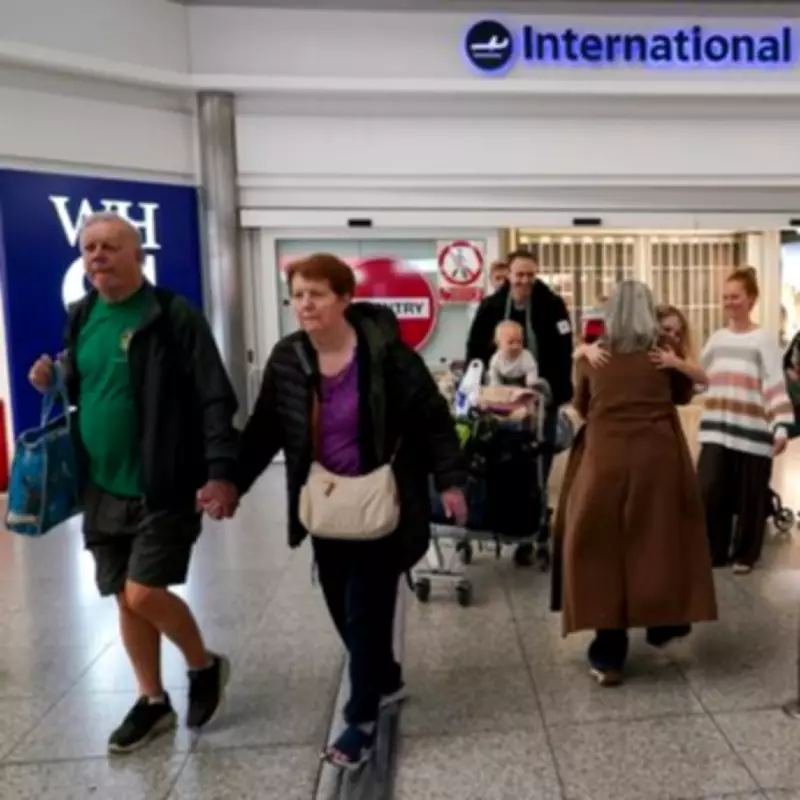
Muscat in Oman has emerged as a critical hub for those attempting to flee the region. Over the weekend, airports in Muscat and Abu Dhabi witnessed a multinational exodus, with German, Italian, Slovenian, Czech, and Belgian nationals all joining the scramble to leave.

Personal Stories of Escape and Uncertainty
The human impact of these disruptions is starkly illustrated by the experiences of evacuees. A group of Irish teachers—Damian Lafferty, 28, from Galway; Emily Clifford, 25, from Limerick; and Rachel Carimes, 26, from Wicklow—opted for a gruelling 12-hour coach journey from Abu Dhabi to Muscat to secure a flight home.
"We were watching the missiles coming down and the defences were very good, but we decided to get out," recounted Damian. Their school in Abu Dhabi had initially implemented Covid restrictions with online lessons before declaring an indefinite holiday. He praised the Irish government's evacuation efforts, securing them seats on a repatriation flight.
"It's at times like this you are glad to be Irish because they really do help. The Irish embassy have been brilliant," he added. While Damian's teaching contract has concluded, his colleagues Emily and Rachel express a desire to return to work once the situation stabilises.
Rachel described the surreal atmosphere: "It was scary and yet people went about their normal lives. You got warnings about the missiles coming in even in the middle of the night."
Strategic Importance of Oman and Government Response
Oman's relative accessibility is a key factor in its role as an evacuation nexus. Unlike airports in Dubai, Abu Dhabi, and Doha, the Foreign Office has not issued a travel advisory against the area surrounding Oman's airport. It remains reachable by a roughly 300-mile road journey from both Dubai and Abu Dhabi.
The situation has prompted high-level government concern. The Prime Minister recently chaired a Cobra emergency committee meeting, acknowledging the profound anxiety felt across the UK. He stated that people are "worried sick about their family and friends who are caught up" in a conflict he warned "could continue for some time."
Wider Evacuation Challenges for Other Nationals
The logistical nightmare extends beyond British and Irish citizens. Kathrin Zisch, a 53-year-old German mother of two, faced delays returning to Frankfurt for work. Stranded in Oman, she was forced to work remotely before finally securing a flight to Germany via Istanbul.
"My son got back but I had to wait," she explained. "My husband is training pilots here and he will keep on working." Her story underscores the complex, protracted nature of the evacuation process for all foreign nationals caught in the region.
As the conflict persists, the challenges of coordinating large-scale airlifts under restricted flight conditions continue to mount, leaving thousands awaiting safe passage home.