
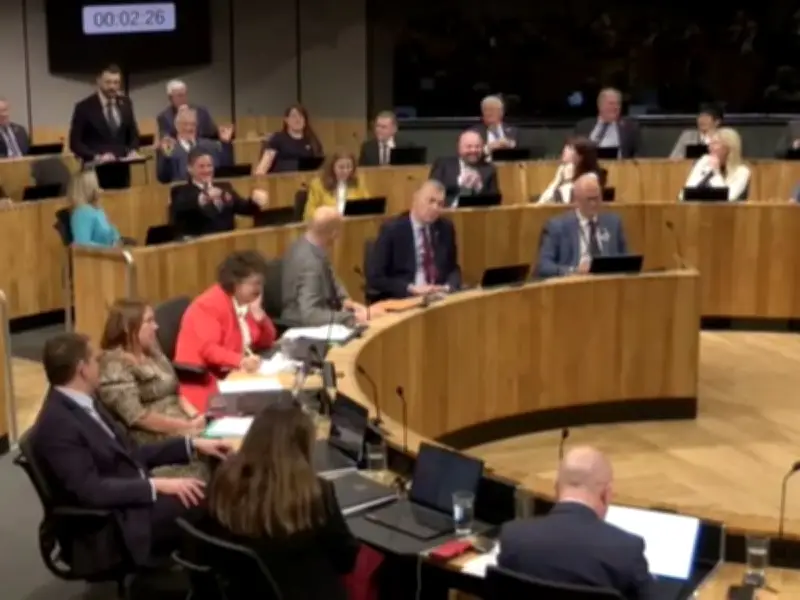
The Senedd has passed the Welsh Government's supplementary budget, with 54 votes in favour and 39 against, following a deal between Plaid Cymru and Labour. The vote on Tuesday evening came after the minority Plaid administration had failed to pass its earlier supplementary budget in July, a loss finance minister Elin Jones described as "painful".
Deal reached after summer talks
Labour, now in opposition after May's historic election defeat, had said it would not support the July budget because the administration had not allocated enough money to additional learning needs (ALN). However, Plaid ministers held discussions with Labour over the summer, and last month it was announced that an extra £60m would be spent on supporting children with ALN. By voting for the extra spending plans on Tuesday, Labour gave the minority Plaid government the numbers it needed.
The plans also included Plaid's original supplementary budget allocations, including £100m for the NHS to bring down waiting times, £55m for childcare, and £15m for free school meals. This spending can now go ahead.
Reform and Conservatives oppose
Reform and the Welsh Conservatives said they would not support the budget, accusing Labour of "propping up Plaid as Plaid has done for them for 27 years". Reform's finance spokesman Cai Parry-Jones said the supplementary budget "should absolutely not have the approval" of the Senedd. He welcomed the additional funding for ALN but said the vast majority of the spending in the budget was that which Labour had voted down months ago.
During the debate, Reform members shouted "puppets" and made motions suggesting Labour Senedd members were being moved by strings. Mr Parry-Jones said: "The only possible theory I can give [as to why Labour are now supporting the supplementary budget] is the members sitting on those Labour seats are not in charge of Welsh Labour. Mark Drakeford said on the BBC that you might have made the wrong decision not to support the first budget and soon after you cut a cheap deal to support the budget. Ken [Skates], who is really pulling the strings in Welsh Labour?" Mr Parry-Jones also called for foreign spending to be cut back.
Government defends agreement
First Minister Rhun ap Iorwerth had previously said his party had learned lessons following the failure to pass the supplementary budget in July, with the Plaid leader promising to "improve the way we engage with others". Finance minister Elin Jones began the debate on Tuesday "by recognising the constructive discussions that have taken place in recent weeks with the Labour group".
"This agreement reflects a willingness to engage constructively, listen carefully, and focus on practical solutions rather than political division," she added. Ms Jones said reaching an agreement on ALN funds was more important than "continuing to disagree and not spending any" additional funds.
Huw Thomas MS, speaking on behalf of the Labour group, told the Senedd: "We think it's probably an understatement to say the process of agreeing a supplementary budget has been more difficult than it should have been."
Next steps for the budget
The supplementary budget sets out how the administration plans to spend in-year adjustments equating to around £345m, while next year's substantive £27bn budget will go before the Senedd for the first time on November 17. Labour has said that doing a deal with Plaid for the supplementary budget does not mean they will do any deal for that, and negotiations are ongoing.
Looking forward to the budget, Mr Thomas said: "We have demonstrated through negotiations that constructive opposition can deliver meaningful results. The alternative - and I direct these remarks to the Reform and Tory members - would starve our public services of what they need, and perhaps that is what they want. We will approach the main budget in exactly the same constructive spirit."




